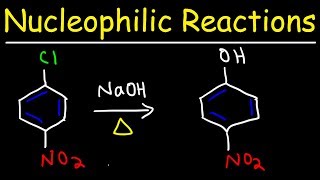
Nucleophilic Aromatic Substitution - Benzyne Intermediate and Meisenheimer Complex
Explore nucleophilic aromatic substitution reactions, including Meisenheimer complex and benzyne intermediate mechanisms, with practice problems and detailed explanations.
Organic Chemistry - Alcohol and Ether Mechanisms and Reactions
Explore alcohol and ether mechanisms and reactions in organic chemistry, covering key concepts and processes for a deeper understanding of these important compounds.
Catalyzing Organic Synthesis - The Inaugural Sir Geoffrey Wilkinson Annual Lecture
Explore catalysts for organic synthesis, from novel coupling processes to functional group introduction, enhancing pharmaceutical development and sustainable chemistry advancements.
Organic Chemistry Questions and Answers
Explore organic chemistry concepts through past questions and answers, gaining insights into key theories and problem-solving techniques.
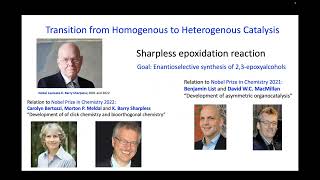
Exploring Potential Energy Surfaces with the Unified Reaction Valley Approach (URVA)
Explore potential energy surfaces using the unified reaction valley approach (URVA) for advanced chemical reaction analysis and understanding.
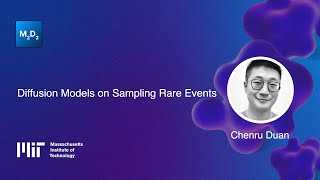
Diffusion Models for Sampling Rare Events in Chemistry
Explore advanced diffusion models for generating transition state structures in chemical reactions, accelerating reaction mechanism discovery and network exploration.
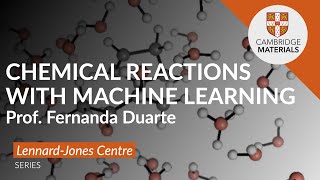
Exploring Chemical Reactions Through Automation and Machine Learning
Explore efficient strategies for generating machine learned potentials to study reaction mechanisms in gas-phase and solution, achieving ab initio accuracy with minimal computational investment.
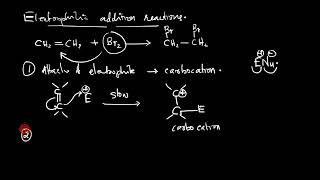
Electrophilic Addition Reactions - Introduction
Explore electrophilic addition reactions, their mechanisms, and applications in organic chemistry.
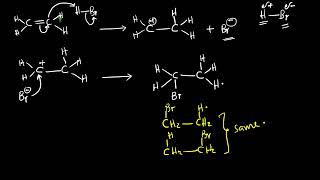
Addition of Hydrogen Halide to Ethylene
Learn about the addition reaction of hydrogen halide to ethylene, exploring mechanisms, products, and key principles of this fundamental organic chemistry process.
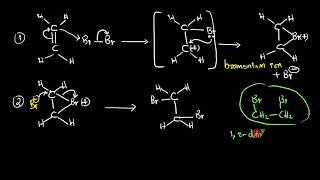
Addition of Bromine to Double Bonds
Explore the mechanism and principles behind bromine addition to double bonds in organic chemistry reactions.
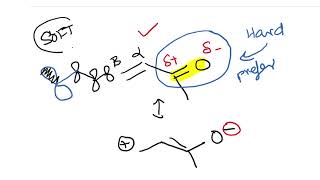
Conjugate Addition: Hard and Soft Nucleophiles - Lecture 48
Explore conjugate addition reactions, focusing on hard and soft nucleophiles and their interactions with α,β-unsaturated carbonyl compounds.
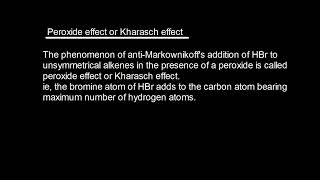
Peroxide Effect or Kharasch Effect
Explore the Peroxide effect and Kharasch effect, understanding their mechanisms and applications in organic chemistry.