Finding and Fixing Slow Code - Ray Tracing Series
Optimize ray tracing performance through multithreading and code analysis. Learn techniques to identify bottlenecks and improve efficiency in C++ implementations for faster rendering.
Path Tracing - Introduction to Ray Tracing Series
Explore path tracing in ray tracing, including accumulation techniques and sample gathering. Learn to create photo-realistic digital imagery with optimized C++ implementation and GPU acceleration.
Materials and Physically Based Rendering - Ray Tracing Series
Explore materials and physically based rendering in ray tracing. Learn about material systems, accumulation, and optimization techniques for efficient rendering in C++.
Perspective in 3D - Vector Math and Ray Tracing for Financial Data Analysis
Explore vector math, ray tracing, and creative engineering as Perspective's expression language is repurposed for 3D graphics, blending financial analysis with game engine concepts.

Optimizing a Ray Tracer by Building a Bounding Volume Hierarchy (BVH)
Optimize ray tracing performance by building a Bounding Volume Hierarchy (BVH). Learn techniques like GPU-friendly data structures, iterative traversal, and surface area heuristics to render complex scenes efficiently.
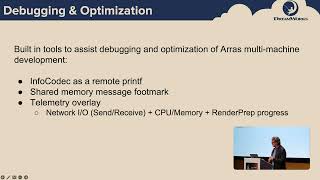
Arras - MoonRay's Distributed Computational Framework for Ray-Trace Rendering
Explore Arras, a scalable framework enabling distributed computations for ray-trace rendering. Learn how it enhances MoonRay's capabilities, allowing for unlimited computational power and accelerating processor-intensive operations in film production.
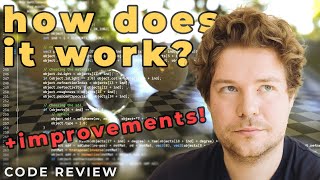
Path Tracer Code Walkthrough in C++ and OpenGL - Code Review
Detailed walkthrough of a C++/OpenGL path tracer implementation, exploring code structure, optimization techniques, and rendering concepts for graphics programming enthusiasts.
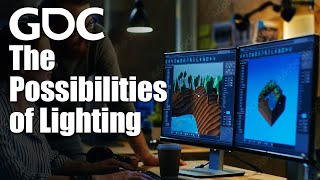
Making Connections: Real-Time Path-Traced Light Transport in Game Engines
Explore real-time path-traced lighting in modern game engines, focusing on hardware-accelerated ray tracing and ReSTIR algorithms. Learn theoretical and practical aspects for implementation in Unreal Engine 5.
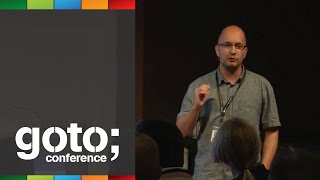
Massive Acceleration through the Many-core Processor
Explore the potential of graphics cards for massive hardware acceleration, from historical developments to future prospects, with insights on production code and best practices.
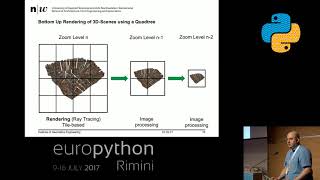
Rendering Complex 3D-Geodata Using pyRT
Explore pyRT, a Python-based ray tracer for rendering large 3D city models. Learn about processing, caching, and serving massive geospatial data for scalable 3D scene rendering in web-based solutions.
PyRT - Computer Graphics in Jupyter Notebooks for Fun and Teaching
Explore pyRT for raytracing in Jupyter notebooks, creating 2D animations, visualizing algorithms, rendering geodata, and generating 3D graphics with Python.
Welcome to 3D - An Introduction to WebGL Introductions
Explore 3D rendering concepts, WebGL basics, and essential terminology. Learn about rendering methods, shaders, materials, and mathematical foundations for better understanding 3D graphics.
Shared Memory and Parallel Programming with JavaScript
Explore SharedArrayBuffer and Atomics for parallel programming in JavaScript. Learn to boost performance, utilize CPU cores, and write safe code with shared memory. Includes TurboScript intro and live demo.
Wrap Your Illustrator 3D in Real World-ish Materials
Learn to apply realistic 3D materials in Illustrator, exploring textures, roughness, metallic properties, and advanced techniques like shadow bounds and ray tracing for enhanced visual appeal.
Ray Tracing: Delivering Immersive Gaming Experiences on Arm GPUs
Explore ray tracing on Arm GPUs: learn techniques for realistic shadows, reflections, and refractions in mobile gaming. Discover Vulkan APIs, optimization tips, and best practices for immersive experiences.
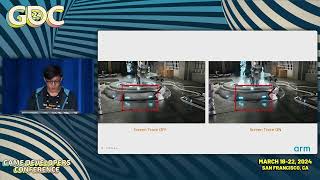
Steel Arms - Bringing Lumen to Immortalis GPUs
Unlock Lumen integration secrets for Arm Immortalis GPUs. Master high-level lighting pipeline and optimization techniques for ray tracing through the "Steel Arms" demo experience.
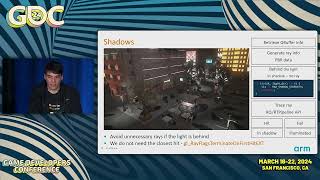
Realistic Mobile Graphics with Optimized Ray Tracing
Explore Vulkan Ray Tracing for mobile 3D graphics, focusing on hybrid rendering techniques and optimizations for enhanced realism in shadows and reflections without sacrificing performance.
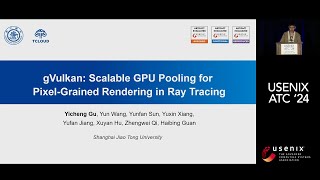
gVulkan - Scalable GPU Pooling for Pixel-Grained Rendering in Ray Tracing
Innovative multi-GPU acceleration for Vulkan-based ray tracing, enabling cloud offloading and dynamic workload balancing for enhanced rendering performance and scalability.
Rendering with NVIDIA Iray and Raytracing Fundamentals - Part 21
Discover the fundamentals of raytracing and NVIDIA Iray rendering in Daz Studio, including optimal settings configuration, denoising techniques, and practical workflow tips for creating stunning 3D renders.
Ray Tracing for Adreno GPUs on Turnip - Building Bounded Volume Hierarchy Trees
Dive into GPU ray tracing acceleration with Turnip, exploring BVH tree construction and implementation challenges for Qualcomm's Snapdragon 8 Gen 2 Adreno GPUs.

Neural Scene Representations for Learning-based View Synthesis and Its Applications
Explore neural scene representations for efficient image generation, novel view synthesis, and advanced applications in computer graphics and 3D vision.