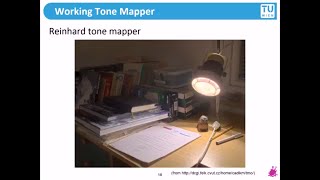
Rendering - Tone Mapping Basics
Explore tone mapping techniques for converting radiance to RGB in rendering, covering dynamic range, naive and effective mappers, and common misuses.

Ray Tracing - How NVIDIA Solved the Impossible
Explore NVIDIA's groundbreaking advancements in ray tracing technology, revolutionizing real-time graphics with innovative algorithms and techniques for stunning visual realism.

Unbiased and Consistent Algorithm Classes in Photorealistic Rendering - Lecture 31
Explore photorealistic rendering algorithms, their classifications, and expected behaviors. Learn about biased/unbiased and consistent/inconsistent methods in global illumination.
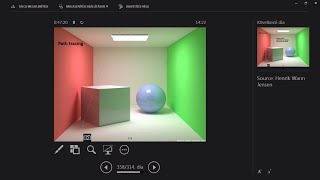
Path Tracing and Next Event Estimation - TU Wien Rendering Lecture 25
Explore path tracing and next event estimation techniques for solving the rendering equation, enhancing light source handling in computer graphics and 3D visualization.
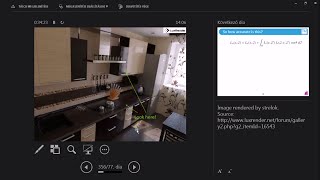
Rendering Equation Properties - TU Wien Rendering Lecture 15
Exploring the Holy Rendering Equation's properties, including its infinite dimensions and singularities, and discussing approaches to solve this complex problem in computer graphics.
Hard and Soft Shadows in Rendering - TU Wien Lecture 9
Explore the physics behind hard and soft shadows through shadow ray computation and Monte Carlo integration, enhancing your understanding of advanced rendering techniques.
Introducing the Ray Tracing Pipeline - Ray Tracing Series
Explore the ray tracing pipeline, including PerPixel, TraceRay, ClosestHit, and Miss functions. Learn implementation techniques and test the pipeline with reflection rays.
Rendering Multiple Objects - Ray Tracing Series
Learn to render multiple objects in a ray tracing scene, including structuring the scene, positioning spheres, and adapting the renderer for improved efficiency and realism.
Adding an Interactive 3D Camera System - Ray Tracing Series
Learn to implement an interactive 3D camera system for ray tracing, covering camera mechanics, class creation, ray direction calculations, and integration into a ray tracing application.
Lighting and Shading - Ray Tracing Series
Explore lighting and shading techniques in ray tracing, including color representation, sphere intersection, normal vectors, and mathematical calculations for realistic rendering.
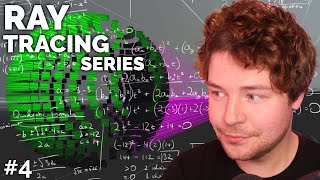
How Ray Casting and Sphere Intersection Works - Ray Tracing Series
Explore ray casting and sphere intersection in ray tracing, covering setup, visualization, calculations, lighting, and optimization techniques for creating photo-realistic digital imagery.
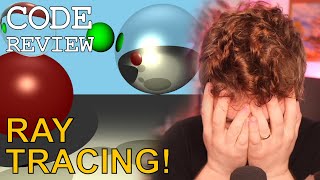
Ray Tracing Code Review
Explore ray tracing implementation with code review, focusing on optimizations, scene construction, and multi-threading techniques for efficient rendering.

Coding Adventure: Ray Tracing
Explore custom ray tracing renderer creation using C# and HLSL in Unity, covering key concepts like cameras, shaders, reflections, and advanced rendering techniques.
Computational Imaging Systems and Optical Design - Webinar
Explore computational imaging systems, diffractive optics, and neural network-based reconstruction in this advanced signal processing webinar by Prof. Wolfgang Heidrich from KAUST.
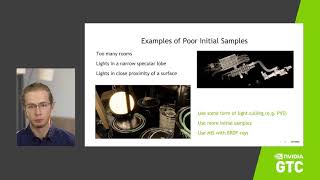
Light Resampling in Practice with RTXDI - Part 2
Explore practical light resampling with RTXDI, covering dynamic mesh lights, emission profiles, and ReSTIR techniques to effectively sample millions of area lights for improved rendering quality.
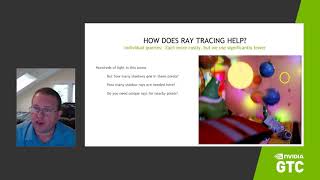
Rendering Games with Millions of Ray Traced Lights
Explore advanced ray tracing techniques for rendering games with millions of lights, focusing on importance sampling and resampling methods to achieve stunning visual effects efficiently.
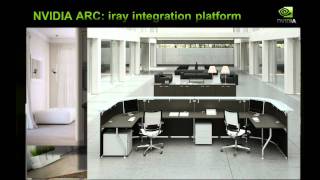
Advanced Rendering Solutions - NVIDIA ARC and Frameworks
Explore NVIDIA's advanced rendering solutions, including mental ray, iray, and OptiX. Gain insights into integrating and accelerating graphics pipelines for cutting-edge visual effects and simulations.
Visual Rendering Techniques - Session 26
Explore advanced techniques in visual rendering, covering cutting-edge methods for creating realistic and immersive digital imagery in various applications.
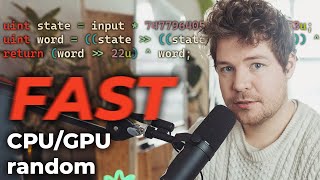
FAST Random Number Generation in 3 Lines of Code - Ray Tracing Series
Learn to implement fast random number generation in just 3 lines of code for ray tracing applications, with a focus on GPU optimization and performance in C++.
Emission and Emissive Materials - Ray Tracing Series
Explore emission and emissive materials in ray tracing, enhancing your ability to create realistic lighting effects and improve the visual quality of rendered scenes.

Faster Ray Tracing with Multithreading - Ray Tracing Series
Explore multithreading techniques to optimize ray tracing performance. Learn how to implement parallel processing for faster rendering and improved efficiency in C++ ray tracing algorithms.