Just-So Stories for AI - Explaining Black-Box Predictions
Explore state-of-the-art strategies for explaining black-box AI predictions, discussing interpretability challenges and insights into human decision-making and ethical implications.
Practical Cyborgism - Machine Learning for Bro Logs
Explore machine learning techniques for analyzing Bro logs, focusing on supervised and unsupervised methods to enhance cybersecurity threat detection and analysis.

Fast Analytics On Big Data
Explore fast analytics on big data using an open-source platform for in-memory distributed data processing, enabling efficient predictive modeling and analytics on large-scale datasets.
No Silver Bullet - Multi Contextual Threat Detection via Machine Learning
Explore multi-contextual threat detection using machine learning, covering big data processing, modeling adversaries, and building custom solutions for defense at scale.
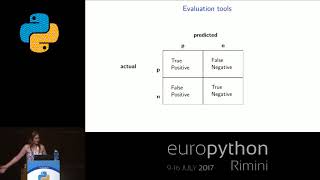
Baby Steps in Short-Text Classification with Python
Explore short-text classification using Python, from problem approach to model deployment. Learn about Naive Bayesian models, alternative algorithms, and practical implementation in production environments.
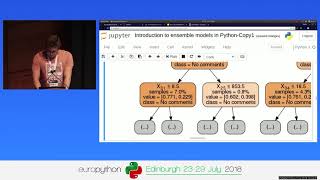
Walking the Random Forest and Boosting the Trees
Explore tree-based ensemble models like Random Forest and Gradient Boosting, understanding their theory and implementation in Python for effective data science applications.
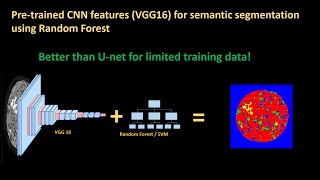
Pretrained CNN Features for Semantic Segmentation Using Random Forest
Explore semantic segmentation using VGG16 features and Random Forest, offering improved results for limited training data compared to U-net.

10 Decision Trees are Better Than 1 - Random Forest and AdaBoost
Explore tree ensembles: Random Forest and AdaBoost. Learn bagging, boosting techniques, and their benefits. Apply knowledge to breast cancer prediction using example code.

SQL for Efficient Data Organization in Machine Learning
Explore JoinBoost, a Python library transforming tree training algorithms into SQL queries for efficient ML on normalized databases, offering improved performance and scalability.
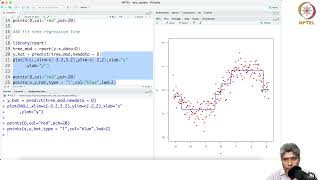
Hands-on R: Implementing Tree Regression and Random Forest with Simulated Data
Implement tree regression and random forest techniques using simulated data in R, gaining practical experience with these powerful machine learning algorithms.
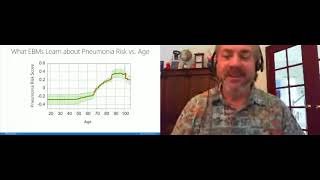
The Importance of Intelligibility in Machine Learning for Healthcare - Avoiding Black-Box Models
Explore intelligible machine learning models for healthcare, balancing accuracy and interpretability. Learn to understand, validate, and edit models for safe deployment in critical applications.
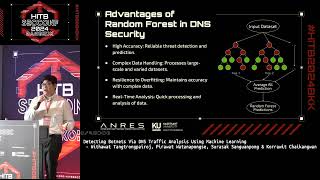
Detecting Botnets via DNS Traffic Analysis Using Machine Learning
Discover advanced techniques for detecting botnet-infected devices through DNS traffic analysis, combining natural language processing and machine learning for enhanced network security monitoring.
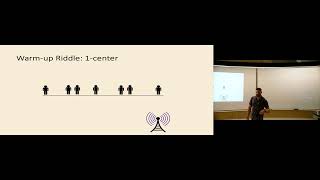
Coresets and Decision Trees for Machine Learning Optimization
Discover how coresets can optimize decision tree algorithms, boost computation speed by 10x, and maintain accuracy in machine learning applications through geometric partitioning techniques.
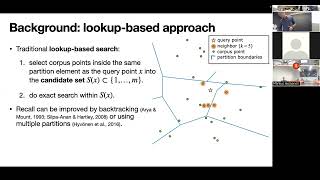
Multilabel Classification Framework for Approximate Nearest Neighbor Search
Explore multilabel classification for approximate nearest neighbor search, enhancing space partitioning trees and enabling supervised classifiers as index structures for ANN search.
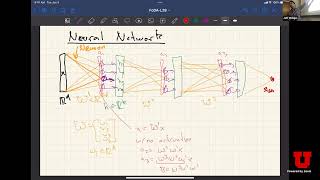
Classification Methods: KNN, Decision Trees, and Neural Networks - Lecture 28
Dive into essential machine learning classification methods, exploring KNN algorithms, decision trees, random forests, and neural networks for practical data analysis applications.

Machine Learning Course for Beginners - Theory
Comprehensive introduction to machine learning theory, covering algorithms, neural networks, and computer vision topics through engaging whiteboard animations designed for beginners.
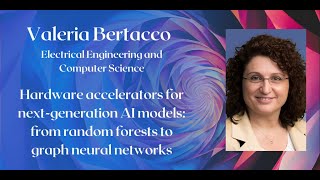
Hardware Accelerators for Next-Generation AI Models - From Random Forests to Graph Neural Networks
Explore hardware acceleration techniques for AI models, focusing on random forests and graph neural networks, with insights into advanced computational architectures and optimization.