Boosting and Ensembles in Machine Learning - Lecture 19
Dive into advanced boosting and ensemble techniques in machine learning, exploring methods to combine multiple models for improved predictive performance and robustness.
LLMs for Automated Data Science - Introducing CAAFE for Context-Aware Automated Feature Engineering
Discover how CAAFE leverages large language models to enhance automated feature engineering in data science, improving model performance through context-aware feature generation and semantic understanding.
Reproducible Machine Learning and Experiment Tracking Pipeline with Python and DVC
Learn to build reproducible machine learning pipelines using Python and DVC. Track experiments, manage data versions, and compare model metrics for improved ML workflow efficiency.

Build Your First Machine Learning Model in Python
Learn to build a machine learning model in Python using scikit-learn. Covers data loading, splitting, model building with linear regression and random forest, comparison, and visualization.
Debiasing Random Forests for Treatment Effect Estimation
Explore techniques for debiasing random forests in treatment effect estimation, focusing on resource allocation in election campaigns and get-out-the-vote experiments.

AdaBoost, Clearly Explained
Clear explanation of AdaBoost algorithm, covering key concepts like decision stumps, sample weighting, and ensemble learning. Ideal for those familiar with decision trees and random forests.
Feature Importance in Machine Learning - Permutation Importance with ELI5
Explore permutation importance in machine learning, understanding its significance and application through hands-on examples using ELI5 for Random Forest models.
Overfitting, Underfitting, and Random Forests in Machine Learning - Day 10
Explore overfitting, underfitting, and random forests in machine learning. Learn to build accurate models and apply these concepts to improve your ML skills.
Tuning Random Forest Hyperparameters with Tidymodels
Learn to optimize random forest models using tidymodels, exploring hyperparameter tuning techniques with San Francisco tree data for improved predictive performance.

Approaches to Fraud Detection - Autoencoder and Isolation Forest - Fraud Detection Using ML
Learn fraud detection techniques using KNIME, including random forest, autoencoder, and isolation forest. Explore methods for both labeled and unlabeled data, with practical demonstrations and insights on implementation.
Predicting Power Generation from Windmill Using Machine Learning
Explore machine learning techniques to forecast windmill electricity generation based on wind speed, direction, and turbine characteristics. Learn decision trees and random forests for renewable energy prediction.

Classifiers Under Attack: Evasion Techniques and Defensive Strategies
Exploring vulnerabilities in machine learning classifiers for security applications, demonstrating evasion techniques, and discussing methods to enhance robustness against adversarial attacks.
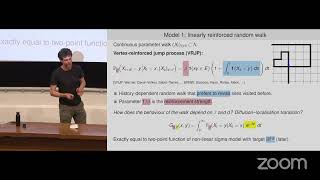
Spin Systems with Hyperbolic Symmetry
Explore spin systems with hyperbolic symmetry, their origins, applications in probabilistic models, recent findings, and open questions in this advanced mathematical discussion.

Model Explanation and Prediction Exploration Using Spark ML
Explore techniques for explaining non-linear models, showing feature contributions, and performing what-if analysis using Spark ML. Implement these methods to enhance model interpretability and enable interactive prediction exploration.
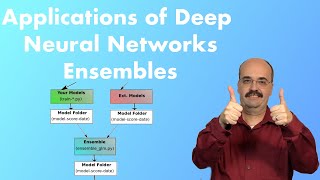
Neural Networks with Ensembles for TensorFlow and Keras
Learn to create and evaluate ensemble models using random forests and deep neural networks with TensorFlow, Keras, and scikit-learn. Explore feature importance and perturbation ranking techniques.
Introduction to XGBoost - Machine Learning Tutorial
Comprehensive tutorial on XGBoost: from basic principles to hands-on implementation. Learn gradient boosting, parameter tuning, and model evaluation for real-world machine learning applications.

Understanding and Overcoming the Statistical Limitations of Decision Trees
Explores decision trees' statistical limitations, proposes FIGS algorithm to improve performance, and demonstrates its effectiveness in clinical decision-making and other real-world applications.

Random Tessellation Forests: Overcoming the Curse of Dimensionality
Explore random tessellation forests in machine learning, overcoming dimensionality challenges through innovative partitioning methods and directional distributions for improved statistical performance.
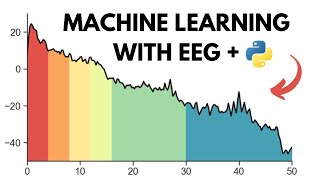
Machine Learning with EEG Time-Series - Easy Python Project - Part 0
Learn to classify EEG data between awake and asleep states using Python and random forest. Covers data loading, preprocessing, feature engineering, and machine learning implementation.
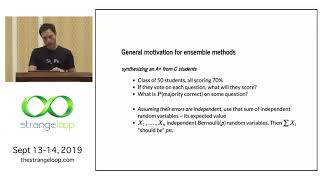
Why Do Tree Ensembles Work?
Explore the statistical properties and effectiveness of decision tree ensembles in classification and regression, covering algorithms, bias-variance decomposition, and advanced interpretations.
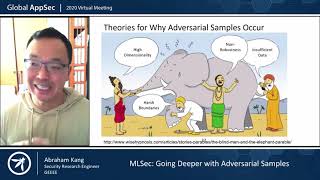
MLSec Going Deeper
Explore advanced machine learning security concepts, including adversarial samples, attack strategies, and defensive techniques for various ML models.