Understanding Scanner Utilization with Metadata Extraction - Pradeeban Kathiravelu
Real-time DICOM metadata extraction for analyzing scanner utilization in radiology. Niffler framework enables accurate performance metrics, supports ML pipelines, and improves resource management in healthcare networks.
Denoising Diffusion Models for Denoising Diffusion MRI - Tiange Xiang
Explore innovative self-supervised denoising techniques for diffusion MRI using denoising diffusion models. Learn about a three-stage framework integrating statistic-based theory for improved medical imaging quality.
Generative Models With Domain Knowledge for Weakly Supervised Clustering
Explore deep generative models for weakly supervised clustering, incorporating domain knowledge and survival data to guide algorithms towards medically meaningful findings in biomedical datasets.
Curation and Analysis of Annotated Medical Images Across Institutions - Xiaoyuan Guo
Explore techniques for curating and analyzing annotated medical images across institutions, focusing on data sharing challenges, anomaly detection, and OOD-aware image retrieval for improved dataset quality and future analysis.
Beyond Testset Performance - Strategies for Clinical Deployment
Strategies for deploying AI in clinical settings, addressing challenges beyond test performance. Explores model reliability, distribution shifts, and human-AI collaboration for real-world medical applications.
Self-Training - Weak Supervision Using Untrained Neural Nets for MR Reconstruction - Beliz Gunel
Exploring untrained neural networks for MR reconstruction, comparing self-training and weak supervision methods to improve performance with limited data while addressing slow inference times.
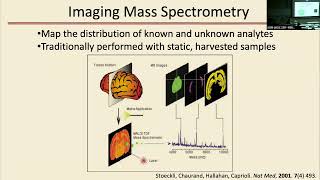
Spatial SILAC - Developing Isotopic Zip Codes for Drug Development in 3D Cell Cultures
Explore innovative drug development techniques using Spatial SILAC in 3D cell cultures, presented by Prof. Amanda Hummon from Ohio State University.
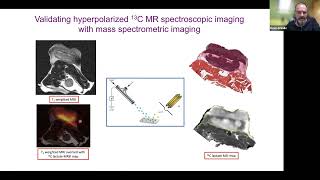
Imaging Tumor Metabolism - From Mouse to Man
Explore cutting-edge techniques for imaging tumor metabolism, from preclinical mouse models to human applications, with insights from a leading expert in biomedical magnetic resonance.
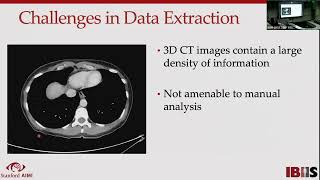
Disease Prediction Using Medical Imaging and Deep Learning - Summer 2022
Explore innovative techniques for predicting diseases using medical imaging and deep learning, focusing on opportunistic approaches with existing data for improved patient outcomes.
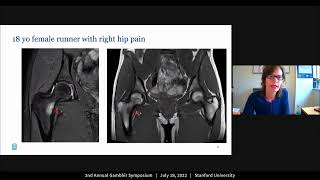
New Insights into the Bone-Fat Connection
Explore the latest research on the intricate relationship between bone health and fat metabolism, uncovering potential implications for osteoporosis and obesity.
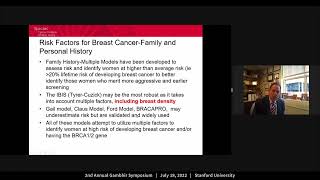
Genetic Factors in Breast Cancer Screening and Imaging
Explore genetic factors influencing breast cancer screening and imaging techniques with expert insights from Dr. Bruce Haffty, enhancing understanding of personalized risk assessment.
The Future of Radiology and Integrated Diagnostics - Building on Sam Gambhir's Vision
Explore the future of radiology and integrated diagnostics, building upon Sam Gambhir's visionary work in this keynote address by Dr. Garry Gold, moderated by Joe Wu.
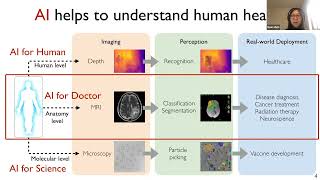
Time Before Birth: A Look at Developing Human Brain
Explore the developing human brain before birth through advanced imaging techniques and machine learning models, offering insights into fetal neurodevelopment and potential clinical applications.
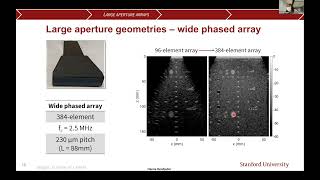
Theragnostic 3D Ultrasound Imaging System for High-Resolution Image-Guided Therapy - Winter 2022
Explore a theragnostic 3D ultrasound system for high-resolution image-guided therapy. Learn about ultrafast imaging, large aperture geometries, and optimizing image-guided gene delivery. Discover applications in breast imaging and beyond.
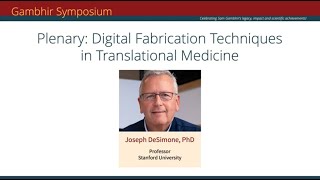
Digital Fabrication Techniques in Translational Medicine - Plenary Talk
Explore digital fabrication techniques in translational medicine with Dr. Joe DeSimone's plenary talk, highlighting innovative approaches in Stanford Radiology.
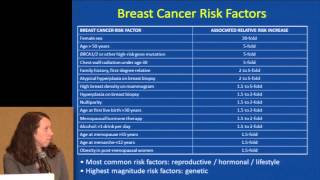
Breast Cancer Genetics, Risk, and Screening
Explore breast cancer risk factors, screening methods, and genetic considerations with Stanford experts. Learn about breast density, imaging technologies, and the latest recommendations for early detection and prevention.
Latest Advances in Lung Cancer Screening and Treatment
Stanford experts discuss new lung cancer screening guidelines for ex-smokers and innovative treatments like minimally invasive surgery, targeted therapies, and precise radiation therapy.

Latest Advancements in Breast Cancer
Explore cutting-edge breast cancer screening and treatment advances with Stanford specialists, covering genetic testing, imaging technologies, and innovative therapies for early detection and improved outcomes.
South Asian Coronary Artery Disease: Risk Factors and Prevention Strategies
Explore the unique cardiovascular risks for South Asians, their underlying mechanisms, and Stanford's SSATHI program aimed at reducing coronary artery disease in this population.
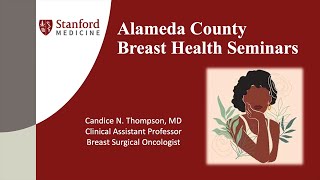
Early Detection of Breast Cancer in Black Women
Comprehensive exploration of breast cancer risks for Black women, covering screening methods, self-exams, and advocacy strategies to improve early detection and survival rates.
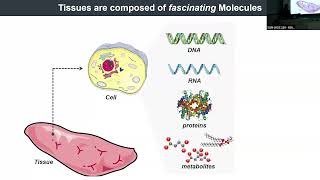
Mass Spectrometry Analysis in Cancer Research - Winter 2023
Explore cutting-edge mass spectrometry techniques for cancer research, focusing on direct analysis methods and their applications in basic and translational studies.