Stochastic Gradient Descent and Backpropagation
Explore stochastic gradient descent, backpropagation, and neural network implementation in PyTorch. Learn practical tricks, basic modules, and gradient computation for effective deep learning.

PyTorch - A Modern Library for Machine Learning with Adam Paszke
Explore PyTorch's capabilities in machine learning, from research to production. Learn about its innovative solutions for efficient inference and its versatility across various ML scenarios.
Pre-Processing Audio with Different Durations
Learn to preprocess audio data with varying lengths using PyTorch and torchaudio. Master techniques for cutting and zero-padding waveforms to standardize input for machine learning models.
Implementing and Training a Neural Network with PyTorch
Build and train a feed-forward neural network using PyTorch to classify MNIST digits. Learn data management, network implementation, and training loop creation in this hands-on tutorial.
ODSC East 2016 - Building Neural Networks at Twitter with Autograd
Explore building flexible neural networks using autograd, a tool that simplifies gradient computation and enables easy experimentation with new model architectures at Twitter.

Generative Python Transformer Model Released - The Off-Brand Github Copilot
Explore GPyT, an open-source alternative to Github Copilot. Learn how to use this generative Python transformer model for code autocompletion and generation across various programming tasks.
Train a PyTorch Neural Network Step-by-Step - PyTorch Deep Learning
Learn to build and train a PyTorch neural network for image classification, achieving 85% accuracy on Fashion MNIST. Covers data preparation, network architecture, loss functions, optimization, and model visualization.
PyTorch Datasets, DataLoaders and Transforms - GPU Series Part 3
Explore PyTorch's data handling tools: Datasets, DataLoaders, and Transforms. Learn to prepare, visualize, and optimize data for GPU-accelerated deep learning using Fashion-MNIST dataset.
Introduction to Tensors - PyTorch with GPU Series Part 2
Explore tensor initialization, GPU usage, operations, memory sharing, and profiling in PyTorch for efficient deep learning model development.
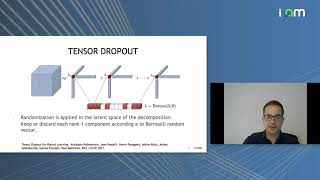
Efficient Tensor Representation for Deep Learning with TensorLy and PyTorch
Explore tensor methods for deep learning, improving performance, speed, and robustness. Learn practical implementation using TensorLy-Torch for video and image classification tasks.

Leaner and Greener AI with Quantization in PyTorch - Suraj Subramanian
Discover how quantization in PyTorch can make AI models lighter, faster, and more power-efficient without compromising accuracy. Learn techniques and workflows from an ML expert at Meta AI.
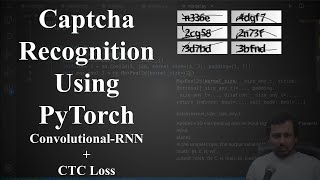
Captcha Recognition Using PyTorch - Convolutional-RNN + CTC Loss
Learn to implement a Convolutional-RNN model for captcha recognition using PyTorch. Covers data preparation, model architecture, CTC loss, and training/inference processes.
How to Convert Almost Any PyTorch Model to ONNX and Serve It Using Flask
Learn to convert PyTorch models to ONNX format and deploy them using Flask, focusing on a BERT sentiment model. Gain practical skills in model conversion and API development.
How to Train a Deep Learning Model Using Docker
Learn to train deep learning models using Docker, NVIDIA runtimes, and PyTorch for melanoma classification on a single GPU, with practical code implementation and troubleshooting tips.
Building an Entity Extraction Model Using BERT
Learn to build an entity extraction model using BERT, transformers library, and PyTorch. Covers dataset preparation, configuration, training, and prediction for creating custom entity extraction solutions.
Taking Machine Learning to Production with MLflow - New Features and Best Practices
Explore MLflow's latest features for productionizing machine learning, including model management, CI/CD, data schemas, and integration with PyTorch for seamless deployment and operation of ML applications.

Productionizing Machine Learning Pipelines with Databricks and Azure ML
Jumpstart ML projects with Databricks and Azure ML. Learn to build, track, and deploy production-ready pipelines using tools like MLflow, TensorFlow, and PyTorch for efficient, reproducible data science workflows.

Scaling Up AI Research to Production with PyTorch and MLFlow
Explore PyTorch's latest advancements in AI research and production, including distributed training, model optimization, and deployment using MLFlow, with insights on scaling and efficiency.
VQ-GAN - PyTorch Implementation
Implement Vector Quantized Generative Adversarial Networks (VQGAN) using PyTorch, covering encoder, decoder, codebook, discriminator, and transformer stages for high-resolution image synthesis.
Training StyleGAN2 ADA PyTorch Images with Low GPU Memory - NVIDIA GEFORCE RTX 3060 Ti
Learn to train StyleGAN2 ADA PyTorch on NVIDIA GEFORCE RTX 3060 Ti with limited GPU memory. Optimize settings, increase swap space, and adjust evaluation metrics for efficient 256x256 GAN training.

Training a GAN on Your Own Images - StyleGAN2 ADA PyTorch
Learn to install and use NVIDIA StyleGAN2 ADA for PyTorch on Windows 10, including setup, training, and image generation with new Ampere GPUs. Step-by-step guide for both beginners and advanced users.