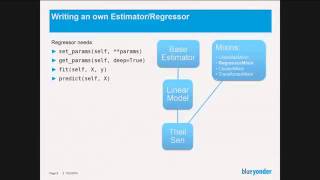
Extending Scikit-Learn with Your Own Regressor
Learn to extend Scikit-Learn by implementing a robust Theil-Sen estimator, exploring its advantages over ordinary least squares and understanding Scikit-Learn's design and contribution process.
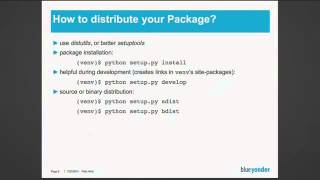
How to Setup a New Python Project
Learn best practices for structuring Python projects, configuring setup.py, and using tools like Git and Versioneer for efficient development and version control.
PyPy Status Talk - No No, PyPy Is Not Dead
Explore PyPy's latest developments, including JIT compiler, garbage collection, NumPy, Python 3 compatibility, CFFI, and STM research, showcasing its continued evolution and performance improvements.
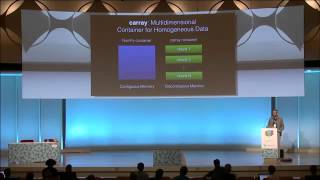
Out-of-Core Columnar Datasets
Explore tabular data implementations in Python, comparing on-disk and in-memory solutions. Learn about performance impacts of row-wise vs column-wise storage, chunking, and compression for big data analysis.

Writing Awesome Command-Line Programs in Python
Learn to create robust command-line programs in Python, covering structure, libraries, and best practices for input/output, configuration, and user interfaces. Enhance your skills in developing efficient CLI tools.
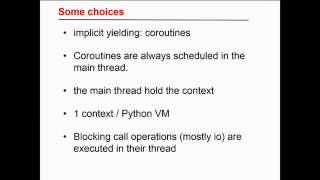
Concurrent Programming with Python and My Little Experiment
Explore concurrent programming in Python, from asyncore to asyncio, and discover a unique experiment porting Go's concurrency model. Learn about various solutions and their implementations.
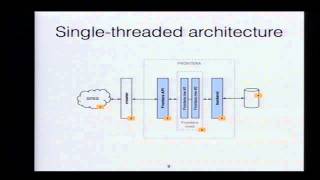
Frontera - Open Source Large-Scale Web Crawling Framework
Introduction to Frontera, an open-source framework for building large-scale web crawlers. Learn about its features, architecture, and how to create distributed crawlers using Scrapy, Kafka, and HBase.

PyPy and the Future of the Python Ecosystem
Explore PyPy's role in enhancing Python's ecosystem, addressing competition from newer languages, and discussing strategies to maintain Python's versatility while improving performance.
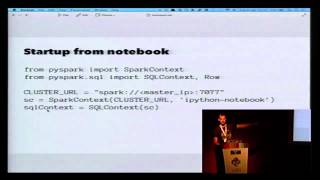
PySpark and Warcraft Data
Explore PySpark's capabilities for analyzing World of Warcraft auction data, comparing performance with other tools and demonstrating its application in processing large datasets efficiently.
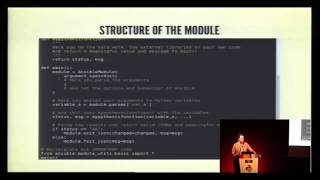
Extending and Embedding Ansible with Python
Aprenda a extender y embeber Ansible con Python, explorando la API, creación de módulos, scripts de inventario dinámico y plugins para mejorar la automatización y gestión de configuraciones.
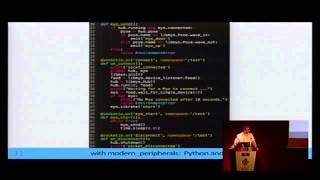
With Modern Peripherals - Python and Flask
Explore innovative human-computer interaction using Myo Armband, Leap Motion, and EyeTribe. Learn to integrate these devices with Python and Flask for gesture-controlled and eye-tracking web applications.
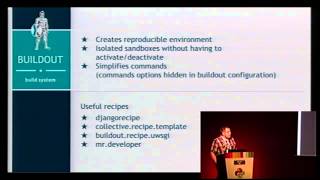
Continuous Deployment for Webapps Based on Django
Learn to implement continuous deployment for Django webapps using open-source tools. Discover how to automate code changes, overcome challenges, and deploy features multiple times daily.
Python in the World of Retail and Mail Order
Explore Python's application in retail, featuring demand forecasting and order quantity calculations. Learn about testing, configuration, parallelization, and deployment using popular packages.
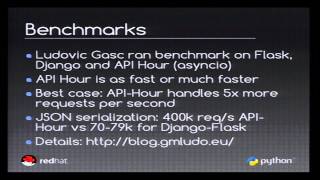
AsyncIO Community, One Year Later
Explore asyncio's growth since Python 3.4: thriving community, diverse libraries, production use cases, and performance insights. Learn about its evolution and ecosystem.
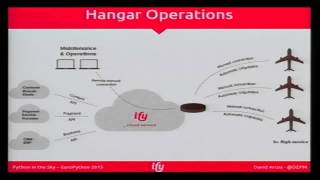
Python in the Sky - In-Flight Entertainment with Python
Explore building a Python-based in-flight entertainment system, addressing unique challenges at 10,000 meters and discussing architecture decisions for eventual connectivity.
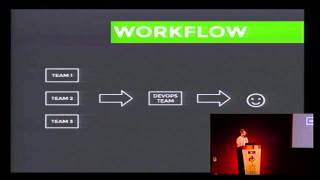
The Salt Route
Explore DevOps best practices and common pitfalls in configuration management, server provisioning, and Django deployment using SaltStack, based on PeopleDoc's startup experience.
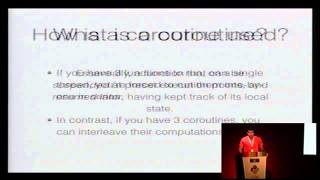
Parallelism Shootout - Threads vs Asyncio vs Multiple Processes
Explore threading, multiprocessing, and asyncio for efficient parallel data downloading. Compare mechanics and performance of each approach for handling numerous URLs.
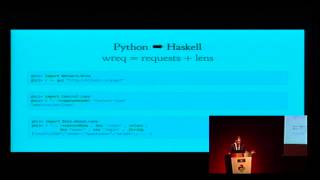
Through the Lens of Haskell - Exploring New Ideas for Library Design
Explore Haskell's unique approach to library design, gaining insights to inspire innovative problem-solving in Python. Discover alternative perspectives for tackling common programming challenges.
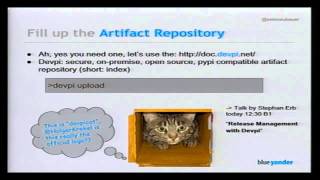
A Pythonic Approach to Continuous Delivery
Explore a Pythonic approach to continuous delivery, bridging the gap between development and operations using open-source tools like Ansible, Devpi, and Jenkins for efficient software deployment.
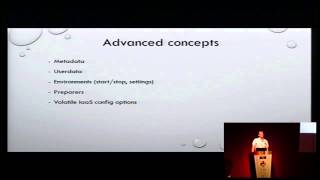
Argus - The Omniscient CI
Explore Argus, a powerful CI framework for scenario-based testing across platforms. Learn to create custom recipes, leverage introspection, and generate in-depth analysis logs for robust project testing.
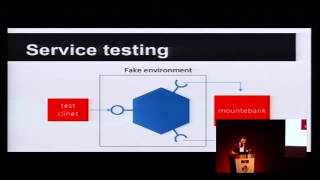
Python Microservices on PaaS Done Right
Learn to design, implement, and deploy robust Python microservices on PaaS platforms. Explore infrastructure setup, real-time metrics, Python's advantages, and performance comparisons.