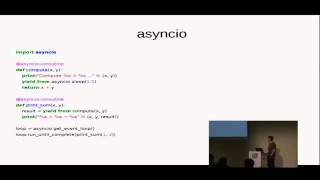
Using Asyncio - aka Tulip - for Home Automation
Explora el uso de asyncio en Python 3.4 para automatización del hogar, abordando dispositivos como Raspberry Pi y sensores, y comparando con soluciones anteriores basadas en Twisted.
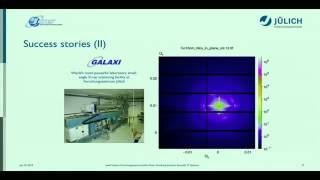
Scientific Visualization with GR
Explore scientific visualization with GR framework, covering 2D graphs to 3D scenes. Learn integration techniques, performance optimization, and real-world applications in this comprehensive overview.
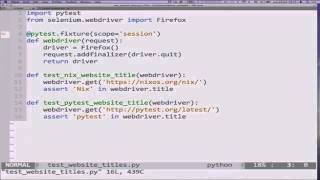
Introduction to Pytest
Discover pytest's pythonic approach to testing, featuring assert statements and fixtures for managing dependencies. Learn setup, key features, and migration tips for both new and existing projects.
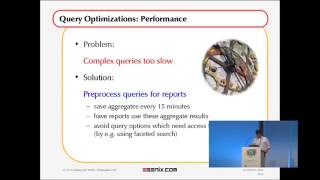
Advanced Database Programming with Python
Explore advanced database programming with Python, covering locks, distributed transactions, and transaction isolation for robust production environments.
Probabilistic Programming in Python
Learn probabilistic programming in Python using PyMC3 for flexible statistical modeling, automated parameter estimation, and uncertainty quantification in data science and scientific research.
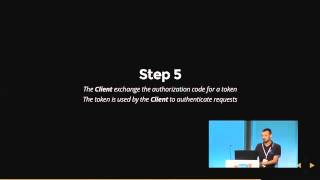
How to Make a Full Fledged REST API with Django OAuth Toolkit
Learn to create robust REST APIs using Django, Django REST Framework, and Django OAuth Toolkit for secure, efficient backend communication with mobile apps.
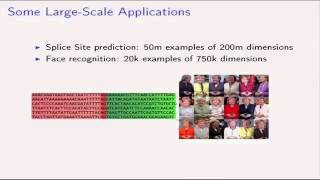
The Shogun Machine Learning Toolbox
Explore the Shogun Machine Learning Toolbox, a powerful framework for data analysis and prediction. Learn key ML concepts, algorithms, and practical applications through intuitive visualizations and Python examples.
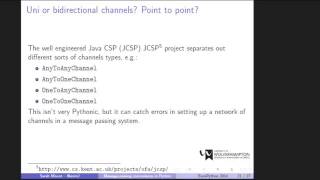
Message-Passing Concurrency for Python
Explore message-passing concurrency in Python, comparing various libraries and techniques to avoid common pitfalls like deadlocks and race conditions. Learn about python-csp for Pythonic implementation.
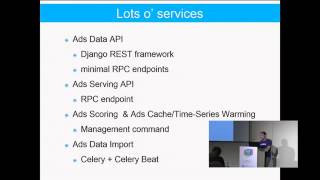
How Disqus is Using Django as the Basis of Our Service Oriented Architecture
Explore Disqus' journey in leveraging Django for Service Oriented Architecture, covering deployment strategies, data patterns, and real-world examples of successful implementation.
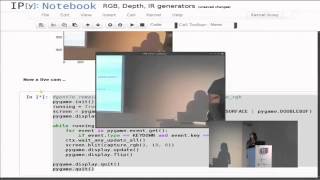
3D Sensors and Python - A Space Odyssey
Explore 3D sensor integration with Python, creating natural user interfaces for games and applications using PyOpenNI, PyGame, and WebGL. Hands-on demos and practical insights included.
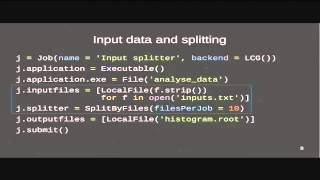
Ganga - An Interface to the LHC Computing Grid
Explore Ganga, a Python-based interface for CERN physicists to manage and distribute data analysis tasks across global computing resources, from local machines to worldwide centers.
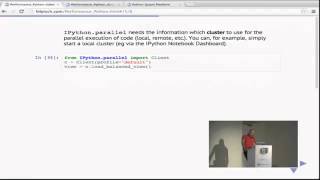
Performance Python for Numerical Algorithms
Explore techniques for optimizing numerical algorithms in Python, including vectorization, multi-threading, parallelization, and dynamic compiling. Practical examples using NumPy, Numba, and other libraries.
Using All These Cores - Transactional Memory in PyPy
Explore transactional memory in PyPy for safe multithreading without the Global Interpreter Lock. Learn about implementation, performance, and potential future impacts on Python programming.
Post-Mortem Debugging with Heap-Dumps
Learn advanced post-mortem debugging techniques using heap dumps in Python, enabling detailed analysis of program state for effective defect resolution.
Building Realtime Web Applications with WebRTC and Python
Learn to build real-time web applications using WebRTC and Python, exploring signaling systems implementation with Google AppEngine's Channel API and Flask with gevent for persistent connections.
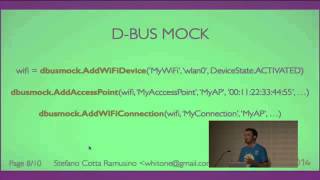
GNU - Linux Hardware Emulation with Python
Explore hardware emulation on GNU/Linux using Python, covering inotify, D-Bus mocker, and udev monitoring to detect and simulate device events for testing procedures.
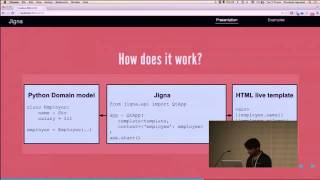
Jigna - A Seamless Python-JS Bridge to Create Rich HTML UIs for Python Apps
Learn to create rich HTML user interfaces for Python apps using Jigna, a seamless Python-JS bridge. Explore two-way data binding and rendering options in Qt widgets or web browsers.
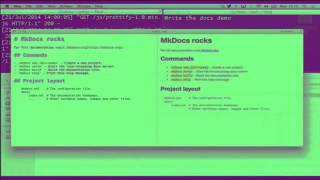
Documenting Your Project with MkDocs
Learn to create, style, and publish project documentation using MkDocs, a Markdown-based tool. Compare MkDocs with Sphinx and explore its inner workings and benefits for developers.
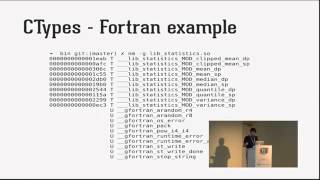
Extending Python - What Is the Best Option for Me?
Explore options for extending Python with external libraries: Native Extensions, Ctypes, and CFFI. Learn principles of shared libraries and CPython internals for informed decision-making.
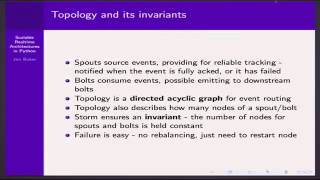
Scalable Realtime Architectures in Python
Explore scalable realtime architectures using Python with Storm, Kafka, and ZooKeeper. Learn about partitioning, retries, and idempotence for building robust, fault-tolerant systems that process continuous data streams.

Cutting-Edge APIs Using Hypermedia at BSkyB
Explore hypermedia-enabled APIs, their implementation using Flask and HAL, and the scalability benefits for expanding businesses. Compare with traditional APIs and learn practical advantages.