
AI- Friend or Foe? AlphaGo's Impact on the World of Go
Explores AlphaGo's impact on Go strategy, professional players, and the game's future, discussing AI's role in revealing new techniques and challenging traditional approaches.
Fun Research in Computer Vision and Robotics
Explore computer vision and robotics research, from face analysis to smart headlights, with insights on making research fun and productive using the "Think like an amateur, do as an expert" approach.

The Science of Play - C4 Public Lectures
Explore how video games can enhance public understanding of science, featuring insights on game design, learning outcomes, and the potential to make science as engaging as popular entertainment.

The Life and Death of a Drop - C4 Public Lectures
Explore the fascinating physics of droplet formation, breakup, and splashing, revealing surprising insights into fluid dynamics and their importance in nature and everyday life.
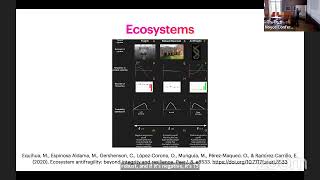
Antifragility - Dynamical Balance
Explore antifragility, dynamical balance, and their applications in software, creativity, and AI. Gain insights into measuring fragility and understanding robust systems.

Practice Makes Perfect - Learning from Massive Data
Explore how computers learn from massive data to perform tasks like spelling correction and translation, rivaling human capabilities through example-based learning.

The Challenge of Obesity and a Systems Approach to Solutions
Explore the complex obesity epidemic, its global impact, and innovative systems approaches for prevention and policy solutions. Learn about multifaceted factors and cutting-edge research in this field.
Computational Tools for Biology: Sandboxes to Think and Play With
Explore computational tools for biology, focusing on Gelbox - a simulation for teaching gel electrophoresis. Learn about DNA nanotechnology, science communication, and the power of interactive simulations in research and education.

Game Design Panel - IPFest 2019
Unscripted conversation with renowned game designers exploring innovative approaches and insights into the art and science of game design.
Scaling Science with Free and Open Cyberinfrastructure
Explore scaling scientific research using free, open cyberinfrastructure. Learn about data deluge, democratization of data, and advances in computational capabilities to unleash your inner data scientist.
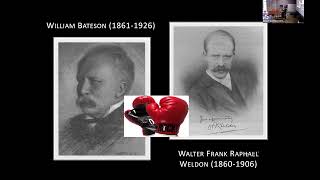
Disputed Inheritance: The Battle over Mendel and the Future of Biology
Explore the historical battle over Mendel's genetics and its impact on modern biology. Uncover how alternative theories could have reshaped our understanding of inheritance and DNA.
Sentiment Analysis with-without NLTK Python
Learn to perform sentiment analysis in Python, covering text cleaning, tokenization, emotion detection, and visualization, with optional NLTK integration for advanced analysis.
Webpack & TypeScript Setup
In this course, you will learn about Webpack and TypeScript setup. You will learn about Webpack installation, Webpack configuration file, Webpack dev server, using ES6 modules, and source maps.

16-Bit Virtual Machine in JavaScript
Learn to build a 16-bit virtual machine in JavaScript, covering memory access, stack mechanics, I/O, assembly language, parsing, code generation, and advanced topics like bank switching and interrupts.

Introduction to Database Systems
This course introduces the students to the various theoretical and practical principles involved in the design and use of databases systems with the help of database management systems (DBMS) and the SQL Standard.
React Skeleton Screens Tutorial
In this tutorial, you will learn about React Skeleton Screens. You will learn about setup, fetching data, base skeleton component, skeleton article, skeleton profile, light and dark themes, and animations.
Sapper Tutorial - Crash Course
Learn Sapper framework basics, including routes, layouts, server-side rendering, data preloading, and form handling in this comprehensive crash course.
SQL Summer Camp
In this series of videos, Kaggle Data Scientist, Rachael, will walk you through how to use SQL.
Next.js & Contentful Tutorial
Learn to build a dynamic website using Next.js and Contentful, covering setup, data modeling, image handling, styling, deployment, and advanced features like static regeneration and custom pages.
Deno Jump-Start Tutorial
In this Deno tutorial series, we'll get up and run with Deno and use it to create a simple API.

Marketing Analytics
Learn R programming and advanced marketing analytics techniques, including consumer behavior, segmentation, pricing, forecasting, and data-driven decision-making for business success.