Regular Types: From Stepanov to C++ Concepts
Explore the evolution of regular types from Stepanov's principles to C++ concepts. Learn their importance in STL design and everyday programming for intuitive, well-constrained code.
Random Variables as Types - Lecture 11
Explore random variables as types in Julia programming, covering Gaussian distributions, sampling, abstract types, and generic programming for probability distributions.

Improving the Life-Cycle of Tensor Algorithm Development with ITensors
Explore advanced tensor algorithm development in Julia, focusing on generic programming strategies for efficient computation across CPU, GPU, and QPU architectures using the ITensors framework.

The Power of the Where Clause in Rust - Exploring Trait Bounds
Explore the power of Rust's "where" clause for generic programming, learning to write clean, flexible, and sound code through creative use of constraints and advanced examples.
Writing a Crate for Kahan Summation in Rust - Meetup Talk
Learn to implement Kahan summation in Rust, extending iterators over floats with a new method. Explore floating-point precision, generic programming, and Rust's trait system in this practical coding walkthrough.

Templates in C++
Learn to create flexible and reusable code with C++ templates, exploring their syntax, implementation, and practical applications in modern software development.

The Builder Pattern and Typestate Programming in Rust
Explore the Builder Pattern in Rust, its advantages, and how Rust's type system enhances its implementation. Learn about typestate programming and practical applications.

Hands-on With Dynamic Dispatch Traits in Rust - Rust Tutorial for Developers
Explore dynamic dispatch for trait objects in Rust, comparing it to generic implementations. Learn about supertraits and their benefits in encapsulating behaviors from multiple child traits.

Polymorphic Reachability Types: Tracking Freshness, Aliasing, and Separation in Higher-Order Generic Programs
Explore polymorphic reachability types for tracking freshness, aliasing, and separation in higher-order generic programs. Gain insights into advanced type systems and their applications in programming languages.
Generic Programming in C++ - A Real-World Example
Explore the design and implementation of hex/unhex functions for Boost.Algorithm, examining key decisions and showcasing practical generic programming techniques in C++.
How C++20 Can Simplify std - tuple
Explores C++20 features like Concepts, attributes, and syntax extensions to simplify std::tuple implementation, enabling high-performance generic wrapper types with less complex code.
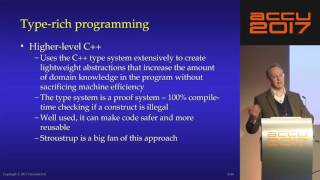
The C++ Type System Is Your Friend
Explore how C++ type system and templates can create efficient, safe, and reusable code through lightweight abstractions, type-rich APIs, and zero-overhead template techniques.
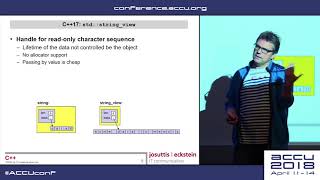
C++ Templates Revised
Explore modern C++ templates, discussing new features, style recommendations, and practical implications for application programmers in generic programming.
Reflection - Compile-Time Introspection of C++
Explore compile-time introspection in C++, covering reflection concepts, language support, and practical applications for developing powerful generic algorithms through class property analysis.
Generic Programming Without Writing Your Own Templates
Explore C++17 and C++20 features for generic programming without templates, including std::span, std::variant, and std::any. Learn to write reusable, efficient code using modern C++ techniques.
C++20 Concepts
Explore C++20 Concepts: their impact on code readability, design approaches, and compile-time performance. Learn to formulate requirements and compare with traditional polymorphism techniques.
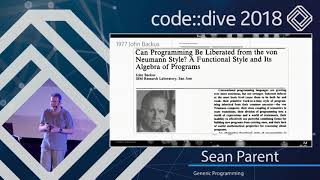
Generic Programming
Explore the origins, concepts, and impact of Generic Programming on software development, featuring insights from industry pioneers and its influence on C++ evolution.

C++ - λ Demystified
Explore C++ lambdas: implementation, compiler-generated code, and practical applications. Gain insights for efficient coding, especially in embedded systems.
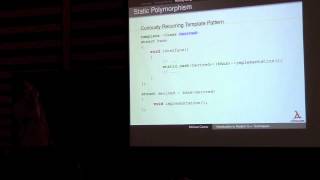
Introduction to Modern C++ Techniques - Part I
Explore advanced C++ techniques including concepts, traits, policy classes, CRTP, SFINAE, and tag dispatching. Learn building blocks and strategies for effective generic programming in modern C++.
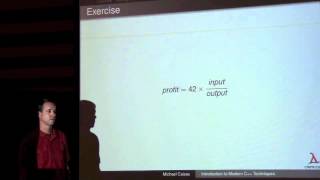
Introduction to Modern C++ Techniques - Part II
Explore advanced C++ concepts like policies, SFINAE, and tag dispatching. Learn building blocks and strategies for generic programming to enhance your modern C++ skills.
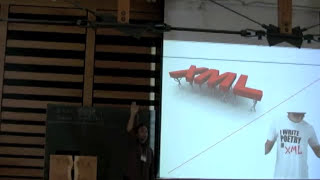
Toward Native XML Processing Using Multi-paradigm Design in C++
Explore advanced C++ techniques for native XML processing, leveraging multi-paradigm design to bridge the gap between object-oriented and XML programming paradigms.