New in Visual Studio Code - Clang-Tidy, Makefile, CMake, GitHub, and More
Explore Visual Studio Code's latest C++ features: Clang-Tidy, makefile, CMake, GitHub integration, remote development, and productivity enhancements for efficient cross-platform coding.
Using Modern C++ to Revive an Old Design
Revive the Unix System V STREAMS framework using modern C++ techniques. Learn to build modular, reusable components for efficient data processing systems while optimizing runtime performance.

Pragmatic Simplicity - Actionable Guidelines to Tame C++ Complexity - Lecture
Discover actionable guidelines to reduce C++ complexity, enhancing maintainability and developer well-being. Explore practical examples and derive precepts for simpler, more effective codebases.
Back to Basics: The C++ Core Guidelines - CppCon 2022
Explore essential C++ Core Guidelines for writing correct software by design. Learn best practices for interfaces, functions, classes, concurrency, and templates in modern C++ development.
Follow the Data: Memory-Centric Designs for Modern Datacenters
Explore data-driven approaches for memory architecture in exascale supercomputing and cloud memory disaggregation. Gain insights into system-level memory problems and their solutions.
HPVM: Performance, Programmability and Retargetability for Heterogeneous Parallel Systems
Explore HPVM's approach to programming heterogeneous parallel systems, focusing on performance, ease of use, and retargetability across diverse hardware targets.
Heterogeneous Multi-Core Systems for Efficient Edge Machine Learning
Explore heterogeneous multi-core systems for efficient embedded ML, addressing challenges in core optimization, workload mapping, and data sharing. Gain insights from KULeuven MICAS research.
Can I Cook a 5 o'clock Compiler Cake and Eat It at 2? - Optimizing Compilers for High-Performance Computing
Explore ML-enhanced compilers and domain-specific code generators in high-performance computing. Examine the programmability/performance dilemma and potential solutions for future compiler development.

Technology and Business of Smart Speakers
Explore the technology pipeline and business opportunities of smart speakers from manufacturer and developer perspectives, including revenue generation strategies.

The Revolution of Small Language Models - Phi-2 and the Future of AI
Explore the revolutionary Phi-2 small language model, its efficient performance, and impact on AI development. Uncover the evolution, applications, and future of compact language models.

AI Synthesis for Metaverse Capabilities and Next-Generation AI VFX
Explore cutting-edge AI technologies for creating photorealistic digital humans, virtual worlds, and immersive experiences. Discover advancements in 3D deep learning, neural rendering, and AI-driven VFX for the metaverse era.
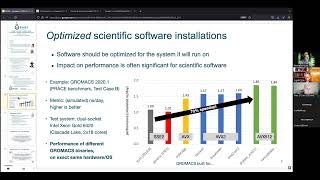
EESSI: A Streamed, Production-Quality, Multi-Platform HPC Software Stack
Explore a versatile HPC software stack for scientific computing across platforms. Learn about EESSI's benefits for education, research, and collaborative development in high-performance computing environments.

Introduction to Computational Mechanics - ME3255
Explore Python's applications in engineering, open educational resources, and course logistics. Learn about GitHub, discussion chats, and intellectual property.

Using Terraform with Google Cloud - Creating and Managing Virtual Machines
Create a Virtual Machine in Google Cloud with Terraform. Learn to provision applications, use data sources and variables for dynamic configuration, and retrieve resource details through outputs.

Creating a Virtual Machine in AWS with Terraform
Create a Virtual Machine in AWS using Terraform. Learn to provision applications, use data sources and variables for dynamic configurations, and retrieve resource details through outputs.
Creating a Virtual Machine in Azure with Terraform
Create a Virtual Machine in Azure using Terraform. Learn to provision applications, use data sources and variables for dynamic configurations, and retrieve resource details through outputs.
Discrimination is Wrong - Improving Productivity in Haskell Library Design
Explore advanced Haskell library design, optimizing discrimination techniques for O(n) operations. Dive into category theory, encodings, system-level concerns, and laziness properties.
Raspberry Pi Pico W - Introduction to PIO and State Machines - Lesson 87
Learn to program and interact with PIO blocks and state machines on Raspberry Pi Pico W. Covers instantiation, assembly code writing, and Python integration for advanced microcontroller projects.

Web Application Security - The Secret to Hack-Proof Apps - Part 1
Learn essential web application security strategies to protect against cyber threats. Covers architecture, HTTP basics, and best practices for building secure, hack-resistant applications.
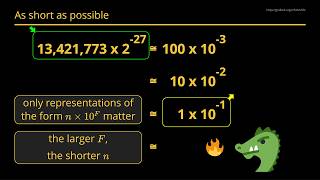
Fast Conversion from C++ Floating Point Numbers - New Dragon Algorithm
Explore advanced algorithms for converting C++ floating-point numbers to strings, including dragon-related techniques. Dive into the mathematics and intricacies behind efficient numeric representation and conversion methods.

Reflection Is Good for C++ Code Health
Explore C++ reflection's potential for C++26, including Python bindings, ABI hashing, and improved variant types. Learn how reflection can reduce repetitive code and enhance productivity.