
Level Up Your Backend with Cucumber Feature Tests
Upgrade backend testing with Cucumber feature tests. Write human-readable tests, improve communication, get free documentation, achieve 100% API coverage, and deploy confidently to production.
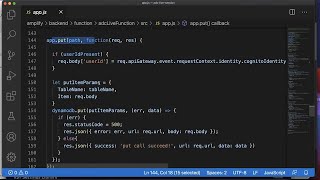
Combining Serverless Functions with Audio VST Plugins - Cloud Storage for VST Parameters
Explore cloud-based VST parameter storage using AWS Amplify, GraphQL, and Cognito. Learn to create a serverless project for accessing and sharing audio settings across devices.
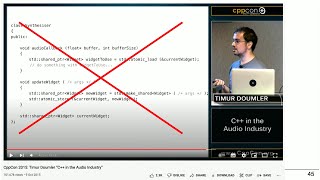
Thread Synchronization in Real-Time Audio Processing with RCU - Lecture
Explore thread synchronization in real-time audio using RCU, addressing data sharing challenges and ensuring wait-free operations on real-time threads.
Trying to Create an Audio Software House - From Single Dev to 20 Devs
Explore the journey of building an audio software company, from single developer to 20-person team. Learn about challenges, solutions, and processes in audio software development.

Eliminating C++ Undefined Behavior, Plug-in Contract Violations, and Intel Assumptions in Legacy Codebase
Eliminate C++ undefined behavior, plug-in contract violations, and Intel assumptions in legacy codebases. Learn strategies for supporting new platforms and improving code quality in audio plugins.
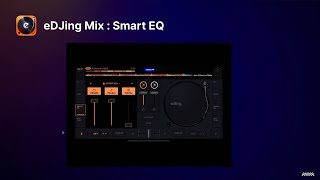
Real-Time Audio Source Separation on iOS Devices
Explore real-time audio source separation on iOS, covering deep learning algorithms, model optimization, and low-latency integration for innovative music interaction and learning applications.

WebAudio Modules 2.0 - Audio Plugins for the Web Platform
Explore WebAudio Modules 2.0, an open-source audio plugin standard for web platforms. Learn about its features, development, and applications in digital audio workstations and online music production.
Enabling Unique Sound Experiences Through User-Centered Design
Explore user-centered design for unique sound experiences. Learn scalable systems, interaction libraries, and development processes. Discover how to integrate sound as a design element and create innovative audio products.
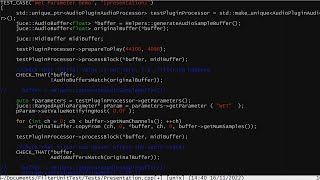
Unit Testing Audio Processors - Lecture
Learn to set up and implement unit testing for JUCE audio plugins, covering practical examples from basic checks to verifying processor output.
How to Allocate on the Audio Thread and Why You Might Want To - Allocations Considered Beneficial
Explore memory allocation on audio threads using C++'s std::pmr namespace. Learn techniques for low-latency audio processing and improve product features through efficient memory management.
CHOC: Why Can't I Stop Writing C++ Libraries or Using Backronyms? - Lecture
Explore CHOC, a free header-only C++ library for audio developers. Learn about its design, functionality, and the thought processes behind creating effective generic code.
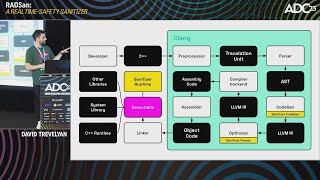
RADSan: A Realtime-Safety Sanitizer - Lecture
Explore RADSan, a realtime-safety sanitizer for LLVM. Learn about sanitizers, realtime-safety testing, RADSan's components, and how to implement it in your projects. Discuss community sharing strategies.
Real-time Confessions in C++ - The Most Common Sins in Real-Time Code
Explore common misconceptions and errors in real-time C++ audio development. Learn to avoid pitfalls and write efficient, reliable code for audio applications.
Making It Good: Principles of Testing Hardware and Software
Explore principles and techniques for effective hardware and software testing, from coverage to automation, ensuring high-quality products through vigilant quality assurance practices.

Writing Elegant DSP Code in Rust
Leverage Rust's type system for elegant, concise, and safe DSP code. Explore advanced features, zero-cost abstractions, and various implementation styles for audio processing graphs.
A More Intuitive Approach to Optimizing Audio DSP Code - Guiding the Compiler
Discover intuitive techniques for optimizing audio DSP code, focusing on compiler-friendly patterns and efficient benchmarking methods to enhance performance without sacrificing readability.
Music Rendering in Unreal Engine: The Harmonix Music Plugin for MetaSounds
Explore MetaSounds extensions for tight musical synchronization in Unreal Engine, enhancing audio-visual gameplay integration for single and multiplayer experiences.
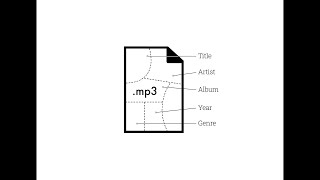
Legacy Code for the Learning Audio Engineer: Examples in C++
Explore legacy code refactoring in C++ audio software. Learn strategies for improving performance, maintainability, and understanding complex codebases through a case study of Ableton Live.
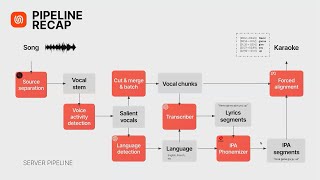
Developing an AI-Powered Karaoke Experience
Explore AI-powered karaoke development, including audio source separation, voice transcription, and real-time remixing. Learn challenges and solutions for mobile and web platforms.
How to Write Bug-Free, Real-Time Audio C++ Code
Discover strategies for writing bug-free real-time audio C++ code. Learn DSP techniques, code reuse, C++/Python interoperability, and real-world examples to enhance confidence and correctness in audio development.
Building an Accessible JUCE App
Learn to create accessible JUCE apps with screen reader support, component grouping, keyboard focus, and real-world examples. Gain insights for developing inclusive audio software.