Proactive Engineering: From Fixing Bugs to Preventing Incidents
Explore strategies to foster a proactive engineering culture that prioritizes incident prevention over reactive problem-solving, leading to more resilient software development practices.
Slice Your Business into Functions and Events - Serverless Approach
Explore serverless techniques for building scalable business logic using function flows, combining Microprofile, CloudEvents, and KNative Eventing for enhanced control and visibility.
Dreams vs. Reality of Applied Data Science in Observability Space
Explore challenges and lessons learned in applying data science to service observability, focusing on real-world project experiences and practical insights.
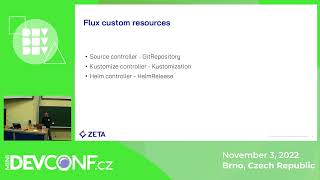
500 Commits Journey to Kubernetes - From Bare-Metal to Containerized Deployments
Explore Zeta Global's migration from bare-metal to Kubernetes, covering infrastructure evolution, containerization, and cloud-readiness strategies for DevOps and Engineering teams.
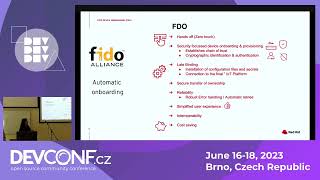
Fedora IoT Device Onboarding with FDO and Ignition
Explore secure device provisioning for Edge systems using FIDO Device Onboard and Ignition in Fedora IoT. Learn about latest capabilities, use cases, and upcoming features.
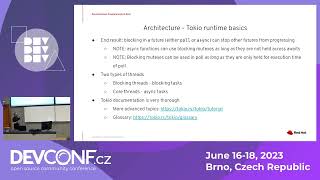
Asynchronous Programming in Rust
Dive deep into Rust's asynchronous programming, comparing it with Go and exploring syntax, implementation, and real-world challenges through a Red Hat team's migration experience.
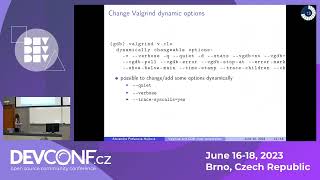
Debugging Memory Issues with Valgrind and GDB
Discover techniques for debugging memory issues using Valgrind and GDB in C/C++ programs. Learn to identify and resolve buffer overflows, memory leaks, and other low-level errors efficiently.
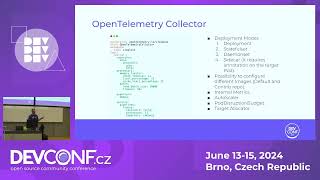
Auto Instrumentation for NodeJS Applications on Kubernetes
Enhance Node.js app monitoring on Kubernetes using OpenTelemetry for auto-instrumentation, improving log generation and metric collection for precise performance analysis.
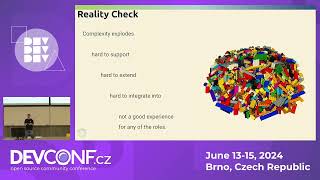
Why Kubernetes Is Inappropriate for Platforms and How to Make It Better
Explore innovative approaches to leveraging Kubernetes API for SaaS platforms. Learn about KCP, a CNCF project addressing multi-tenancy challenges in Kubernetes-based environments.
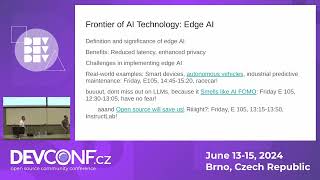
From General AI to the Edge: Navigating the Future of Technology
Explore AI's evolution from broad principles to edge applications, examining its impact across industries and future trends while addressing ethical implications and technological challenges.
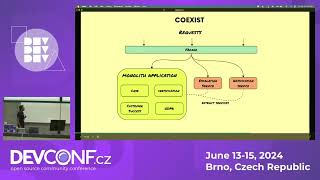
The Strangler Fig Pattern for Microservices Migration
Explore the Strangler Fig pattern for migrating monolithic applications to microservices. Learn practical steps, pros and cons, and tackle technical challenges in legacy modernization.
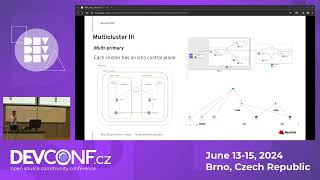
Kiali Beyond the Graph - Troubleshooting Istio
Explore Kiali's advanced features for observability and management of Kubernetes microservices, focusing on troubleshooting Istio service mesh complexities.
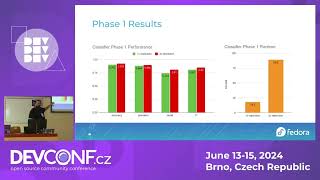
Classifying OpenQA Test Failures in Fedora with AI/ML
Explore AI/ML techniques for classifying visual OpenQA test failures in Fedora, enhancing traditional text-based analysis methods.
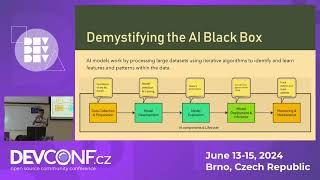
Beyond Black Boxes: Guide to Testing AI-Powered Applications
Explore challenges and strategies for testing AI applications, focusing on clarity, fairness, and robustness. Gain insights to build trust and mitigate risks in AI-driven systems.
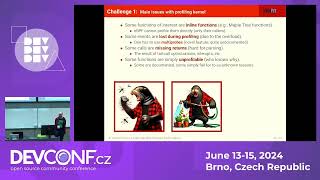
Understanding Program Performance: When Academia Meets the Practice
Explore challenges in applying academic performance analysis techniques to real-world software, focusing on experiences with the Linux kernel using Perun performance management system.
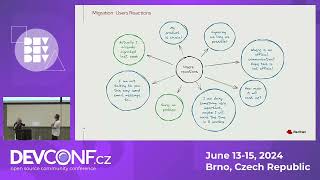
Effective Cost Attribution in Multi-User OpenShift Environment
Discover strategies for accurate cost attribution in multi-user OpenShift environments, focusing on cluster profiles, dedicated pools, and spend analysis for efficient resource management.
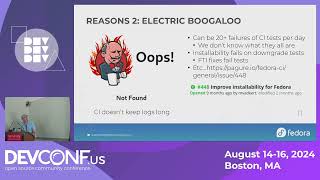
Towards Stronger Checks on Dependencies and Compose Inputs in Fedora
Explore advancements in Fedora's automated testing, focusing on critical path updates, integration tests, and potential improvements for package dependencies and compose inputs.
Open Education in the New England Research Cloud (NERC)
Explore the Open Education Project's architecture, leveraging open-source tech for accessible, high-quality educational materials. Learn about NERC infrastructure and OpenShift AI deployment for large-scale courses.
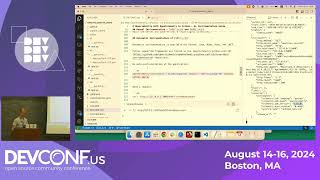
Observability and Instrumentation via OpenTelemetry - Lecture 1
Explore observability basics, instrumentation, and OpenTelemetry standardization. Learn to implement tracing in Python with open-source examples.
Cloud-Native Hardware in the Loop Testing with Jumpstarter
Explore cloud-native hardware-in-the-loop testing for edge devices using Jumpstarter, streamlining CI/CD pipelines and development workflows for software stacks on specific hardware.
bpftrace: What It Is, What's New, and Where It's Going
Explore bpftrace, a high-level Linux tracing language. Learn about its features, recent updates, and future developments for debugging and observability in Linux systems.