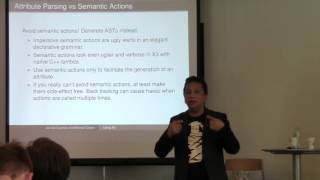
Using Spirit X3, Part II
Hands-on tutorial and workshop on using Spirit X3 parsing library, covering grammar building, data structures, and practical patterns for efficient parsing in modern C++14.
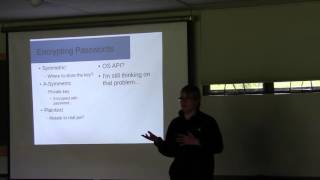
An Overview on Encryption in C++
Introduction to encryption concepts for C++ developers, covering symmetric and asymmetric methods, algorithms, and implementations in popular libraries like cryptopp, botan, and libsodium.
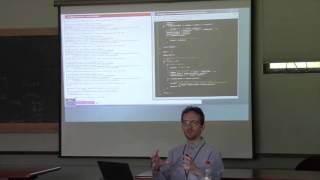
Debugging Using an Exact Recording of a Program's Execution
Explore advanced debugging techniques using Undo's Live Recorder for Linux C++ apps. Learn to create, analyze, and compare execution recordings for efficient problem-solving and collaborative debugging.

Better Code
Explore techniques for improving existing codebases, defining good code, and navigating system tradeoffs in this insightful keynote on enhancing software quality and maintainability.
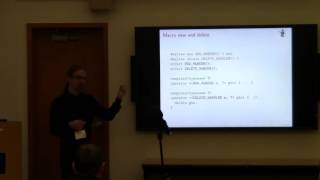
Typegrind - Type Preserving Heap Profiler for C++
Explore a type-preserving heap profiler for C++ that provides detailed memory allocation insights, including exact type information for allocated objects, even with templates and standard containers.

A C++14 Dependency Injection Library
Explore Boost.DI, a C++14 dependency injection library, showcasing its features, performance, and compile-time guarantees. Learn how it revolutionizes object creation without macros or reflection.
Flowz - Towards an EDSL for Digital Signal Processing
Declarative and composable digital signal processing library for efficient code generation and seamless C++ integration, inspired by Faust language and flownomials algebra.
CopperSpice - The Next Generation of Signals
Explore CopperSpice's innovative approach to GUI libraries, focusing on modern C++ techniques for run-time reflection, signal-slot mechanisms, and cross-thread signal delivery without code generators.

Proper Inheritance - Part 1 of 2
Explores essential software behavior documentation, focusing on defined vs. undefined behavior in contracts. Examines narrow and wide contracts, emphasizing their importance in class inheritance relationships.

Proper Inheritance - Part 2 of 2
Explores three types of inheritance in C++: interface, structural, and implementation. Discusses proper contract design for each, comparing their utility and debunking improper uses.
Practical Performance Practices
Discover techniques to boost C++ performance through cleaner, idiomatic code. Learn practical strategies for optimization, thread safety, and efficient memory management.
Metaprogramming for Dummies
Demystifying C++ metaprogramming using Boost.Hana library. Learn to write expressive, maintainable code and increase productivity with this powerful yet often misunderstood programming technique.

Monoids, Monads, and Applicative Functors - Repeated Software Patterns
Explore abstract mathematical structures in software development, focusing on monoids, monads, and applicative functors. Learn to recognize these patterns and apply them to improve code design and problem-solving skills.
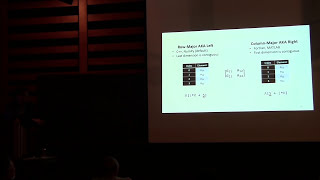
Multidimensional Array References for the C++ Standard Library
Explore array_ref, a proposed C++ standard library feature for efficient multidimensional arrays. Learn its design, capabilities, and applications in scientific computing and cross-language interoperability.

Come Stream with Me - Build Performant Simple Parallel Applications in C++ Using RaftLib
Explore RaftLib for simple, performant parallel C++ applications using stream processing. Learn its functionality, implementation, and hands-on application building for optimized multi-threaded streaming.
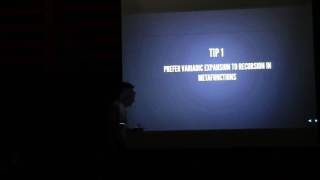
Metaprogramming for the Brave
Explore advanced C++ metaprogramming techniques for library writers, including creative uses of generalized constant expressions and compiler optimization strategies.
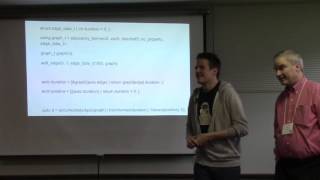
Pulling Visitors
Explore Boost.Coroutine to invert visitor-based control flows, combining it with Boost.Graph for improved algorithm stepping and resumption. Learn a more readable and maintainable approach to visitor-based programming.
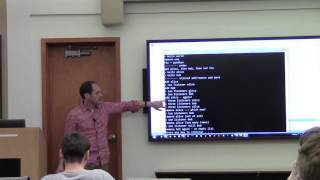
Thread-Safe Observer Pattern - You're Doing It Wrong
Explore common pitfalls and solutions for implementing a thread-safe Observer Pattern, highlighting fundamental threading issues and providing practical approaches to avoid deadlocks and post-death calls.

Friendship in Service of Testing
Explores challenges in unit testing object-oriented code, discussing dependency injection, access to private dependencies, and potential solutions to make testing less intrusive in C++ development.

Exceptional Performance
Explore the impact of exceptions on C++ performance, examining hardware architecture, memory hierarchy, and optimization techniques to understand when exceptions might enhance performance.
Multithreading is the Answer. What Was the Question? Part II
Explore challenges, solutions, and best practices for multithreaded C++ applications, covering architecture, design patterns, and C++11/17 features for improved readability and maintainability.