Let's Build a Distributed File System
Explore the architecture of typical and distributed file systems, including key components and operations. Learn through a simple Python implementation of a basic distributed file system.

Yes, No, Maybe? Error Handling with gRPC Examples
Explore error handling in gRPC with practical examples, focusing on client-server discrepancies and effective code snippets for managing various response scenarios.
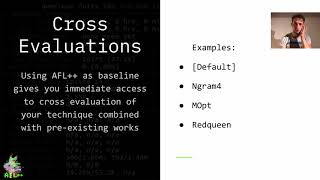
AFL++ - Combining Incremental Steps of Fuzzing Research
AFL++: A community-driven fuzzing tool combining state-of-the-art research, offering novel features like Custom Mutator API. Enhances fuzzing process, enables quick testing of new techniques, and evaluates effectiveness individually and in combination.
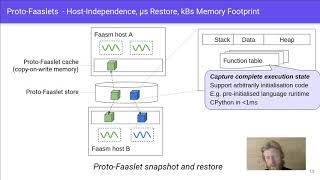
Faasm - Lightweight Isolation for Efficient Stateful Serverless Computing
Lightweight isolation technique for serverless computing, enabling efficient stateful processing and memory sharing between functions, resulting in improved performance and reduced resource usage.

MatrixKV - Reducing Write Stalls and Write Amplification in LSM-tree Based KV Stores
Innovative LSM-tree based key-value store design using NVM to reduce write stalls and amplification. Introduces matrix container, column compaction, and cross-row hint search for improved performance in multi-tier storage systems.
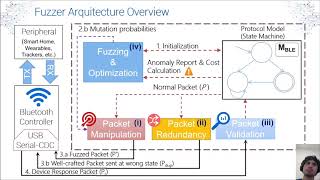
SweynTooth - Unleashing Mayhem over Bluetooth Low Energy
Explores vulnerabilities in Bluetooth Low Energy protocol implementations, presenting a systematic fuzzing framework that discovered 11 new vulnerabilities across various devices and IoT products.

Twizzler - A Data-Centric OS for Non-Volatile Memory
Explore Twizzler, an innovative OS redesign for non-volatile memory, offering efficient data persistence, simplified programming, and improved performance over traditional systems.
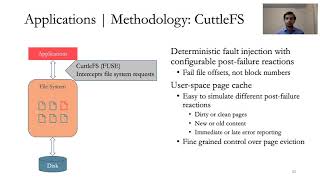
Can Applications Recover from fsync Failures?
Análisis de cómo sistemas de archivos y aplicaciones modernas reaccionan ante fallos de fsync, revelando vulnerabilidades críticas en la durabilidad de datos y sugiriendo mejoras de diseño.

Serverless in the Wild - Characterizing and Optimizing the Serverless Workload
Explore serverless computing workloads, challenges, and optimization strategies in cloud environments. Gain insights into Azure Functions' production data and learn about innovative resource management policies.

Challenges of Starting an SRE Team from Scratch in an Enterprise
Insights on building an SRE team in a large enterprise, addressing challenges, establishing standards, and focusing on business priorities like security and cloud cost control.

The Smallest Possible SRE Team
Strategies for maximizing SRE impact with limited resources. Learn to leverage data, tools, and communication for effective small-scale SRE implementation and organizational influence.
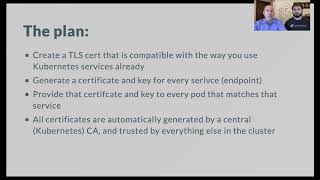
Achieving Mutual TLS - Secure Pod-to-Pod Communication Without the Hassle
Explore secure pod-to-pod communication using Mutual TLS, focusing on certificate management, implementation in Golang and Java applications, and integration with Kubernetes for streamlined security.
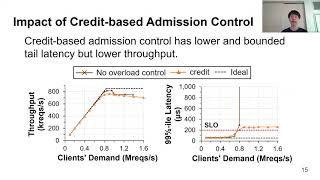
Overload Control for µs-scale RPCs with Breakwater
Overload control scheme for microsecond-scale RPCs, using server-driven admission control with credits based on queueing delay. Employs demand speculation and piggybacking to optimize performance.
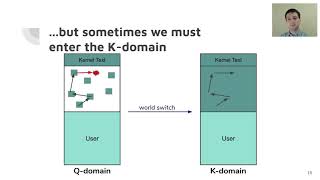
Efficiently Mitigating Transient Execution Attacks Using the Unmapped Speculation Contract
Explores efficient mitigation of transient execution attacks using the unmapped speculation contract, presenting Ward kernel design for improved performance without compromising security.
UNVEIL - A Large-Scale, Automated Approach to Detecting Ransomware
Automated approach to detect ransomware through dynamic analysis, focusing on file tampering and desktop changes. Improves detection of evasive ransomware unnoticed by traditional antimalware solutions.
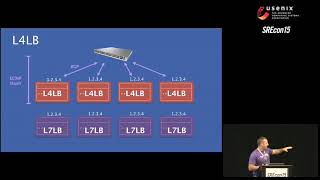
Building a Billion User Load Balancer
Discover Facebook's innovative load balancing techniques for handling billions of users, improving performance, managing capacity, and enhancing reliability at a global scale.
SRE in the Small and in the Large
Explore SRE principles applicable to organizations of all sizes, from startups to tech giants. Learn key practices for system reliability, scalability, and efficient operations.
Scaling Shopify's Multi-Tenant Architecture across Multiple Datacenters
Explore Shopify's journey from a single-database Rails app to a multi-datacenter setup, focusing on scalability, resiliency, and disaster recovery strategies for multi-tenant architectures.
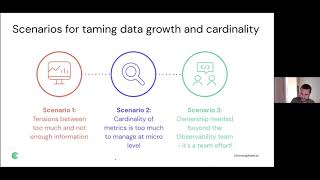
Taking Control of Metrics Growth and Cardinality - Tips for Maximizing Your Observability
Strategies for managing metrics growth and cardinality in cloud-native environments, focusing on best practices, KPIs, and team collaboration to enhance observability and streamline remediation processes.
Automating Performance Tuning with Machine Learning
Explore machine learning-driven automation for optimizing Kubernetes microservices and JVM settings, enhancing performance, efficiency, and cost-effectiveness in complex tech stacks.
MySQL and InnoDB Performance for the Rest of Us
Demystifies MySQL and InnoDB performance, covering storage engines, indexes, and query optimization. Provides practical insights for improving database efficiency and understanding SQL operations.