
Myths and Metaphors of Open Source
Exploring myths and metaphors in open source software, examining their impact on perception, value, and funding models for a healthier ecosystem.

Securing Cloud Applications and Their Credentials
Learn about securing containerized cloud apps, common security issues, and advanced tools for protecting cloud-based systems. Explore strategies to enhance container and scheduler-level security in modern architectures.
Learning to Love JavaScript
Explore JavaScript's global impact, its role in web development, and why its imperfections may have contributed to its widespread adoption and enduring popularity.

Performance Matters
Explore performance optimization challenges and innovative solutions with Stabilizer for sound evaluation and Coz, a causal profiler for pinpointing impactful optimizations in modern applications.
How Your Company Can Help Sustain Open Source
Explore strategies for corporate open source support, including funding initiatives, OSPOs, employee contributions, and measuring impact. Gain practical ideas to promote sustainability.
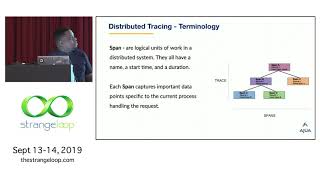
Everything You Wanted to Know About Distributed Tracing
Explore distributed tracing in microservices: concepts, implementation patterns, and troubleshooting techniques. Learn about OpenTelemetry and its benefits for modern, polyglot environments.

How We Tell Stories in Code
Explore how effective software development parallels storytelling, emphasizing intuition, adaptability, and human-centric design to create systems that thrive in unpredictable real-world scenarios.

Beyond Alt-Text - Trends in Online Accessibility
Trends in web accessibility: from alt-text to high contrast modes. Learn common issues, validation tools, and best practices for creating inclusive websites that comply with accessibility standards.
Towards an Open, Reasonable Web
Explore ReasonML's evolution, its benefits for web development, and its growing open-source community. Learn about cross-platform development breakthroughs and challenges in emerging technologies.

Flutter - How We're Building a UI Framework for Tomorrow at Google
Explore Flutter's innovative approach to mobile UI development, featuring rapid hot reload, efficient rendering, and cross-platform compatibility for creating high-quality iOS and Android apps.
Dependent Types in Haskell
Explore dependent types in Haskell, their influence on GHC, and practical applications through an extended example. Learn about current capabilities, challenges, and surprises in language design.

The Hows and Whys of a Distributed SQL Database
Explore the evolution of databases and dive into distributed SQL systems, focusing on CockroachDB's design choices for scalability, consistency, and high availability.
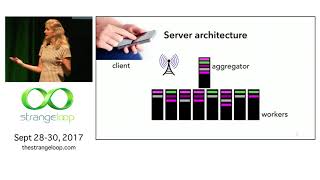
Measuring and Optimizing Tail Latency
Explore techniques for measuring and optimizing tail latency in data centers, focusing on innovative tools, methodologies, and approaches to enhance server efficiency and user experience.
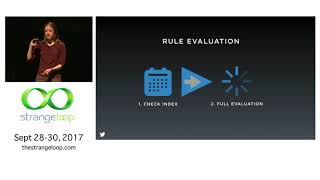
Inside Twitter's Realtime Delivery of Tweets for Enterprise Customers
Explore Twitter's PowerTrack architecture for real-time Tweet filtering, addressing challenges in scalability, redundancy, configuration changes, and data backfilling for enterprise customers.
So You Wanna Go Fast
Explore Go's performance optimization techniques for latency-sensitive systems, including channels, interfaces, and mechanical sympathy, with insights on trade-offs and lessons learned.
PyTorch - Fast Differentiable Dynamic Graphs in Python
Explore PyTorch's dynamic deep learning framework, its high-performance design, and tensor compiler for faster AI research and development using GPUs and CPUs.
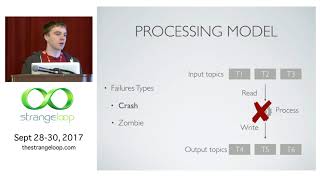
EoS in Kafka - Listen Up, I Will Only Say This Once
Explore Kafka's exactly-once semantics, including idempotence and transactions. Learn about distributed transaction mechanics, two-phase commit protocols, and future improvements for stream processing.

Building a Distributed Task Scheduler With Akka, Kafka, and Cassandra
Explore building a resilient distributed task scheduler using Akka, Kafka, and Cassandra, addressing challenges like dynamic load adjustment, task ordering, and datacenter outages.
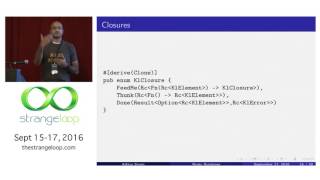
Building Languages in Rust
Explore building a Scheme-like language compiler in Rust, comparing its performance with C-based implementations and discussing the pros and cons of using Rust for language development.

Tulip - A Language for Humans
Explore Tulip, a new programming language with ML-like syntax and Erlang-inspired runtime, designed for REPL ergonomics and emphasizing minority language designers.
Building a Distributed Build System at Google Scale
Explore the evolution and challenges of distributed build systems, focusing on Google's scalable solutions for fast and resilient development workflows.