Creating Custom AI Chat Personas - LLM Persona Engineering
Explore LLM Persona Engineering using Wolfram's chat notebook interface. Learn to create personalized chatbots by engineering prompts, injecting data, and integrating computational tools.
Writing Quantum Algorithms for QuEra Devices with Wolfram Mathematica
Explore quantum algorithm development for QuEra devices using Wolfram Mathematica, leveraging the world's largest neutral-atom computer for research and education.
Which Language Should I Speak with My Computer? - Computational Conversations Episode 6
Explore the future of human-computer interaction and programming languages in the era of generative AI with Conrad Wolfram and Jon McLoone.
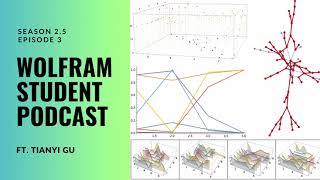
Analyzing the Temperature-Varied Syntactic Structures of GPT 3.5
Explore how temperature affects grammatical structures in AI-generated text, applying graph theory to language and comparing human vs. machine writing.
The Big Picture of Debt - Understanding and Managing Technical Debt
Explore technical debt through a database case study, distinguishing good from regrettable choices and learning when to tackle complex issues.
Explosive Overflow: Lessons from Rocket Science - StaffPlus New York 2024
Explore rocket science lessons on resilience and product security, analyzing historical software flaws to improve design, testing, and validation practices.

Developer Self-Service: Implementation and Organizational Needs - LeadDev Webinar
Explore developer self-service ecosystems: benefits, implementation challenges, and lessons learned from engineering leaders.
Several Components Are Rendering - Performance Optimization in Complex Applications
Explore performance bottlenecks in Slack's desktop app, examining architectural decisions and strategies to mitigate inefficiencies causing system strain.

When to Know You've Outgrown Your Monolith - StaffPlus New York 2024
Discover key indicators for transitioning from a monolithic architecture to microservices, enhancing system scalability and efficiency in software development.

How AI Can Actually Help Your Software Development Teams
Explore AI's practical applications across the software development lifecycle, addressing cultural and technical challenges for effective team integration.

How to Create a Standardization Plan for Tools, Libraries, and Frameworks
Explore the practical advantages and challenges of standardizing tools and frameworks across your organization, and learn effective implementation strategies.

How to Implement Platform Engineering at Scale
Overcome cultural barriers and team silos to successfully adopt platform engineering practices in large organizations.

How to Identify and Fix CI Pipeline Problems
Discover strategies to identify and resolve common CI pipeline issues, enhancing team productivity and streamlining development processes.
Reframing Incidents: Using Reactive Work to Enhance Customer Satisfaction
Reframe incidents as tools for customer satisfaction. Learn to lower thresholds, adapt processes, and prioritize customer focus in reactive work scenarios.
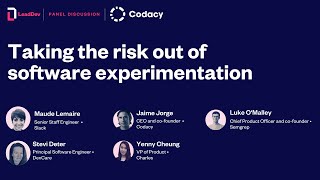
Taking the Risk Out of Software Experimentation: Balancing Innovation and Code Quality
Explore balancing experimentation and code quality in software development, leveraging SDLC practices to manage risk and reduce technical debt.
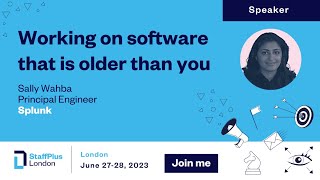
Working on Software That Is Older Than You
Explore strategies for navigating and evolving legacy codebases, drawing insights from experiences with both established and younger companies.
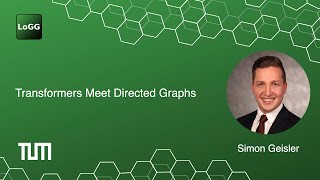
Transformers Meet Directed Graphs - Exploring Direction-Aware Positional Encodings
Explore direction-aware positional encodings for transformers on directed graphs, enhancing performance in code understanding and sorting network correctness testing.
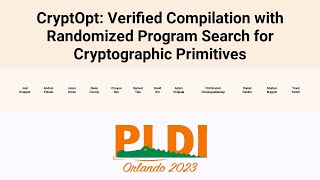
CryptOpt: Verified Compilation with Randomized Program Search for Cryptographic Primitives
Explore CryptOpt, a verified compilation pipeline for cryptographic primitives that generates high-performance assembly code with formal proofs, outperforming GCC and Clang for specific applications.
Register Tiling for Unstructured Sparsity in Neural Network Inference
Explore a novel technique for optimizing sparse matrix multiplication in neural networks, improving performance for unstructured sparsity patterns in ML models on CPUs and edge devices.

Reliable Actors with Retry Orchestration
Explore fault-tolerant cloud programming using actors, retry orchestration, and tail calls. Learn key application patterns and failure scenarios for building resilient cloud applications.
Sound Dynamic Deadlock Prediction in Linear Time
Explore a novel approach to dynamic deadlock prediction in concurrent systems, introducing sync-preserving deadlocks and efficient algorithms for sound, linear-time detection.