Implementing and Training a Neural Network with PyTorch
Build and train a feed-forward neural network using PyTorch to classify MNIST digits. Learn data management, network implementation, and training loop creation in this hands-on tutorial.
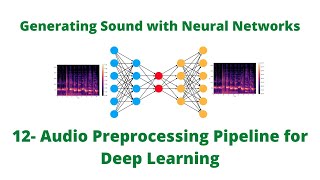
Preprocessing Audio Datasets for Machine Learning
Build an audio preprocessing pipeline for AI in Python, covering STFT, zero-padding, and min-max normalization. Learn to batch process audio files efficiently for machine learning applications.
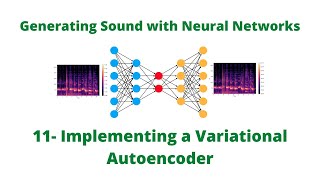
How to Implement a Variational Autoencoder in Python and Keras
Implement a Variational Autoencoder using Python, TensorFlow, and Keras. Learn to modify the encoder, update loss functions, train the model, and visualize the latent space for data generation.
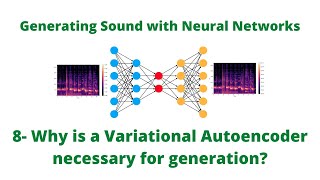
Generation with AutoEncoders - Results and Limitations
Explore image generation using autoencoders, analyze latent space representations, and understand limitations in generative tasks. Learn why variational autoencoders are necessary for improved generation.
What is Platform Engineering - Understanding Its Role in Modern Software Development
Explore platform engineering's role in modern software development, its relationship with DevOps, and career opportunities in this emerging field.
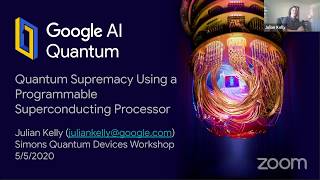
Quantum Supremacy Using a Programmable Superconducting Processor II
Explore quantum supremacy using superconducting processors, focusing on Google's hardware path, benchmarking methods, and calibration challenges in quantum computing.
Quantum Machine Learning- Prospects and Challenges
Explore prospects and challenges in quantum machine learning, covering classification techniques, dimensionality reduction, data loading, and benchmarking for both optimistic and cautious perspectives.
Generative Models
Explore generative models in deep learning, covering theoretical perspectives, hacker models, information flow, and provable algorithms for learning classifiers and phylogenetic reconstruction.
Classical Zero Knowledge Arguments for Quantum Computing
Explore zero-knowledge arguments in quantum computing, covering delegation protocols, quantum NP, and classical commitment to quantum states.
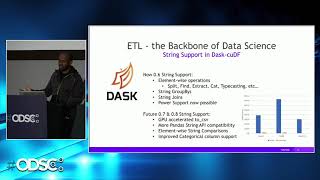
RAPIDS - The Platform Inside and Outside - Joshua Patterson - ODSC East 2019
Accelerating data science with GPUs using RAPIDS: open-source libraries for GPU-powered data manipulation, machine learning, and graph analytics, scaling across multiple GPUs and integrating with existing Python ecosystems.
Effective Transfer Learning for NLP - Madison May - ODSC East 2018
Explore effective transfer learning techniques for NLP, including parameter-efficient methods using sequence representations. Learn practical improvements for real-world tasks and discover the Enso library for benchmarking.
Boston Data Mining - A High-Performance Implementation of Bayesian Clustering
Explore Bayesian nonparametric methods and probabilistic machine learning, focusing on the Chinese Restaurant Process for clustering. Learn optimization strategies for applying these models to big data.
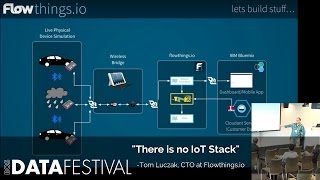
Tom Luczak at BDF 2015 - "There is No IoT Stack"
Explore IoT's complexity, challenges, and future potential with insights on frameworks, protocols, and emerging technologies in this comprehensive talk by Tom Luczak.
Implementing Exercise Wearables Analysis with Spark and Akka
Explore designing and implementing distributed systems with Scala, Akka, and Spark. Learn about cluster-sharded domains, REST APIs, and DevOps considerations for wearable and mobile applications.
Physical Computing: How Software Meets Hardware - From Christmas Trees to Connected Devices
Explore physical computing and connected devices, from microcontrollers to digital fabrication. Learn how diverse creators use open-source hardware and software to build interactive technologies and shape our connected world.
Managing Reference Data with Sirius - Not-So-Big Data After All
Explore managing reference data with Sirius, an open-source library for efficient data access and distributed systems management. Learn architecture, use cases, and real-world applications.
Building a Recommender: Best Practices with Apache Mahout and Solr - Emerging Technologies 2014
Building a recommender system using Apache Mahout and Solr: best practices, data selection, co-occurrence analysis, and deployment techniques for rapid, production-ready recommendations.
Distributed Systems in Production: Tactics and Strategy - Lecture 32
Explore tactics and strategies for implementing distributed systems in production environments, covering key challenges, best practices, and future trends in scalable system architecture.

Marathon: An Init.d for Your Whole Data Center
Marathon: A framework for fault-tolerant, elastic scale-out architecture. Simplifies deployment, scaling, and management of long-lived applications in data centers. Supports Docker containers and provides REST API for app lifecycle control.
Distributed Systems and the End of the API - Emerging Technologies for the Enterprise Conference
Explore distributed systems' impact on APIs, discussing real-world implications, functional programming parallels, and data-oriented approaches for modern system design.
Fail Fast - Tumblr's Evolving Architecture
Explore Tumblr's architectural evolution, scaling challenges, and innovative solutions. Gain insights into high-traffic system design, data management, and development practices.