Cython 3 - Python at the Speed of C
Explore Cython 3's capabilities in accelerating Python code to C-level performance, integrating C/C++ data types, and efficiently interfacing with existing C/C++ codebases.
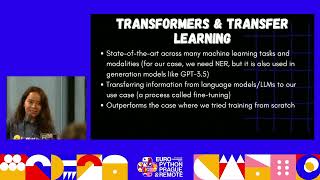
Responding to Earthquakes Using Machine Learning and Racing Through Time
Explore how machine learning and Python tools were used to extract and process social media data for earthquake response, creating afetharita.com to aid survivors in Turkey.
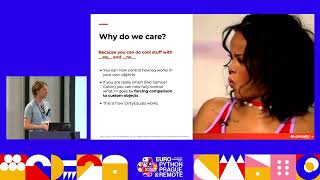
A Magic Implementation of NotImplemented
Explore how NotImplemented transforms Python's equality operator in DirtyEquals, revolutionizing test writing for APIs and changing perspectives on language quirks.
Private Data Anonymization with Python - Fundamentals
Explore techniques for anonymizing legal documents using Python, including entity recognition, masking, and pseudoanonymization. Learn to apply AI models and text mining for improved data privacy compliance.

PyScript and the Magic of Python in the Browser
Explore the potential of Python in web browsers with PyScript, enabling client-side applications and games without server-side logic. Learn key features and create amazing browser-based projects.

Music Information Retrieval with Python
Explore musical AI and Python-powered music information retrieval. Learn to analyze, generate, and interact with music using code, with no prior music theory knowledge required.
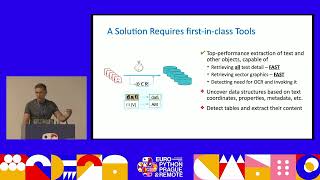
High Volume PDF Text Extraction Using Python Open-Source Tools
Learn efficient techniques for extracting text from large volumes of PDF documents using Python open-source tools, focusing on speed, OCR integration, and detailed information retrieval for business insights.
Running Python Packages in the Browser with Pyodide
Explore Pyodide's architecture, capabilities, and use cases for running Python in browsers. Learn about browser-specific optimizations and overcoming runtime restrictions for efficient package deployment.
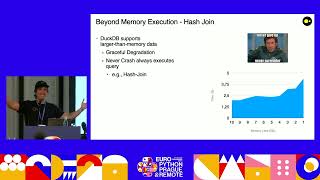
DuckDB - Bringing Analytical SQL Directly to Your Python Shell
Explore DuckDB's seamless integration with PyData ecosystem, enabling efficient analytical SQL queries without a server. Live demo showcases performance and usability alongside Pandas for data science tasks.
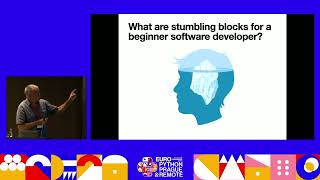
Spiral Python
Innovative approach to teaching Python, focusing on gradual concept introduction and practical application, with exercises and challenges to reinforce learning and motivation.
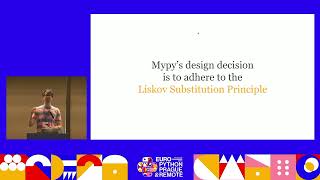
Learning the Ropes - Understanding Python Generics
Explore Python generics, Liskov Substitution Principle, and contravariance. Gain insights into generic types and understand complex Mypy errors.
The CPU in Your Browser - WebAssembly Demystified
Explore WebAssembly's role in enabling Python in browsers, understanding its function as a virtual CPU and its impact on web development and Python's expanding capabilities.
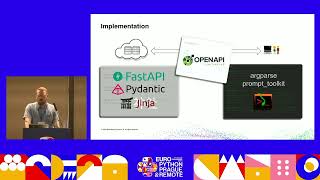
Designing a Human-Friendly CLI for API-Driven Infrastructure
Learn to design a dynamic CLI that generates commands from OpenAPI documentation, improving infrastructure management through a unified interface for both programmatic and human interaction.

Games of Life - Generative Art in Python
Explore algorithms for creating unique, cohesive graphics using Python. Learn about Clifford attractors, slime mold simulation, and geometric primitives to generate impressive 2D and 3D visualizations.
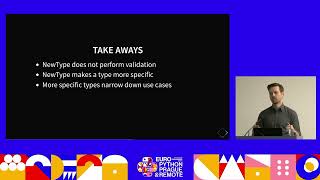
Bulletproof Python - Writing Fewer Tests with a Typed Code Base
Explore how a fully typed Python codebase can reduce the need for extensive testing, leveraging dependent types and exhaustiveness checking to enhance code reliability and efficiency.
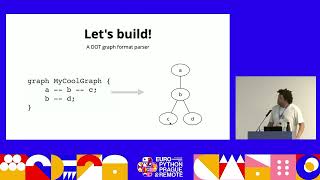
Building Native Rust Modules for Python
Learn to create high-performance Rust modules for Python, exploring the basics of Rust and its integration with Python to enhance your code's efficiency and speed.
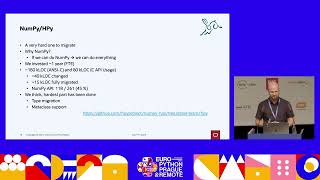
HPy - The Future of Python Native Extensions
Explore HPy, a new C extension API for Python that ensures compatibility across versions and implementations, with insights from porting NumPy to HPy.
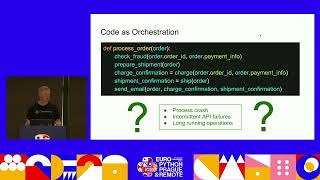
Temporal Python - A Durable, Distributed Asyncio Event Loop
Explore Temporal.io, an open-source platform enhancing asyncio with durability and distributed capabilities. Learn how it transforms fault-tolerant system design and implementation.
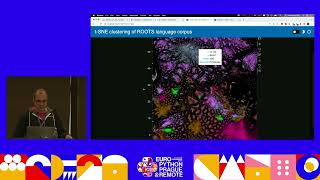
The Needle and the Haystack - Visualizing Single Datapoints Out of Billions
Explore techniques for visualizing and interactively inspecting billions of datapoints using HoloViz ecosystem, overcoming limitations of traditional web-based tools for large datasets.
Polars vs Pandas - What's the Difference?
Explore the differences, pros, and cons of Polars and Pandas data manipulation libraries. Gain insights into their unique features and understand when to use each for optimal data analysis.
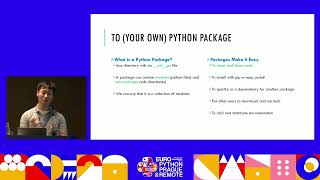
From Jupyter Notebooks to a Python Package - The Best of Both Worlds
Learn to transform Jupyter notebooks into a Python package, enhancing code sharing, refactoring, and version control while retaining notebook benefits. Gain practical skills for improved data science workflows.