
How Python Can Help Monitor Governments
Explore how Python tools combat information access challenges in Brazil, empowering citizens to monitor government activities and promote transparency in public administration.

Working in Units - How to Decouple the Database and Domain Layers in Python
Aprenda a implementar el patrón Unit of Work en Python para separar las capas de dominio y base de datos, mejorando la colaboración entre expertos y desarrolladores.
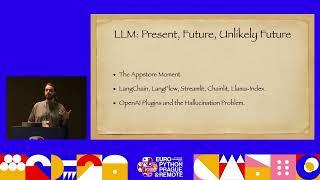
Language Model Zen
Explore the frontier of AI Language Models, understanding their nature and various approaches to using them. Discover tools like TransformerLens and learn about options from prompt engineering to fine-tuning.
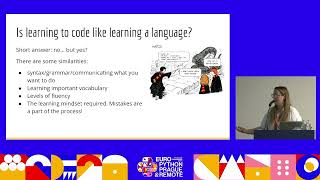
Teaching Children Python - What Works
Explore effective strategies for teaching Python to children, including research insights, engagement techniques, and practical activities that can also benefit adult learners.
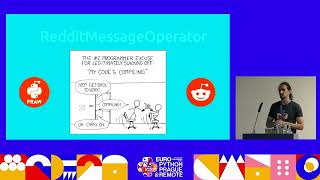
Orchestrating Python Workflows in Apache Airflow
Explore Apache Airflow for efficient Python workflow orchestration. Learn strengths, weaknesses, key features, and how to create custom operators based on 5 years of production experience.
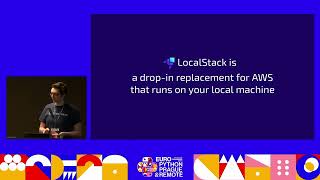
How LocalStack is Recreating AWS with Python
Explore LocalStack's open-source AWS emulator: building modular systems, automating AWS specs, and enhancing developer productivity through software patterns and automated testing.
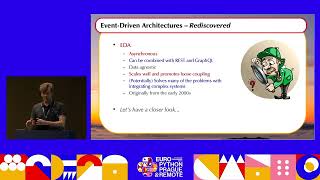
Diving into Event-Driven Architectures with Python
Explore Event-Driven Architectures (EDAs) implementation in Python, focusing on scalability and complexity management for modern applications. Gain insights into key components and connections.
GraphQL as an Umbrella for Microservices
Explore how GraphQL can simplify complex microservices architectures, serving as an effective API gateway for modern single-page applications and distributed systems.
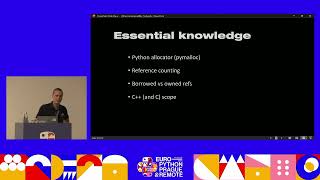
Python Interoperability - Building a Python-First, Petabyte-Scale Database
Explore scaling Python for petabyte-scale data management, leveraging C++ interoperability and optimizing Python's internals to achieve high performance and reliability in financial trading.
Performance Tips by the FastAPI Expert
Optimize FastAPI performance with expert tips from Marcelo Trylesinski. Learn benchmarking techniques and impactful changes to enhance your application's speed and efficiency.

The Standard Library Tour
Explore Python's standard library, uncovering lesser-known modules for common tasks and hidden features of familiar modules. Ideal for beginners seeking to enhance their Python skills and efficiency.
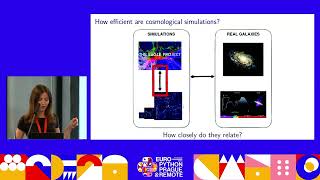
How Well Do We Understand Our Universe? Let's Python It Out!
Explore cosmic evolution using Python and machine learning to model the Universe's history, train AI on simulations, and apply findings to real galaxies, shedding light on their cosmic past.
The Python's Stability Promise
Explore Python's Limited API, C-API stability, and backward compatibility. Learn to simplify release processes and create Stable ABI compatible wheels for cross-version compatibility.

Solving Data Problems in Management Accounting
Streamline management accounting with Python: automate data screening, identify outliers, and improve report accuracy using statistical tools and machine learning for enhanced productivity.
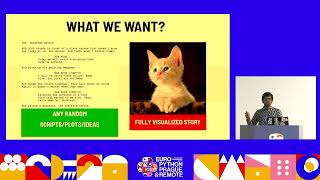
Story Generation Using Stable Diffusion in Python
Explore coherent visual story synthesis using AR-LDM, a latent diffusion model for story visualization and continuation tasks, leveraging history captions and generated images.

Python, Visual Studio Code, Copilot - Revolutionizing the Way You Do Data Science
Explore how Visual Studio Code, GitHub, Codespaces, and Copilot enhance data science workflows, boosting productivity through advanced tools like VS Code Notebooks, Data Wrangler, and AI-assisted coding.
Introducing Incompatible Changes in Python
Explore strategies for implementing incompatible changes in Python, focusing on documentation, compatibility, migration tools, and long-term design to minimize future disruptions.

Power Django with PyCharm
Enhance Django development with PyCharm's advanced features for improved navigation, refactoring, and test-driven development, boosting productivity and developer experience.

All About Djangoproject.com
Explore the development and contribution process of Django's official website, showcasing the collaborative effort behind this open-source project's online presence.
Vector Data Cubes as a Bridge Between Raster and Vector Worlds
Explore vector data cubes: multi-dimensional arrays with vector geometries. Learn about Xvec, a new Python library built on Xarray, Shapely 2.0, and GeoPandas for efficient geospatial data handling.
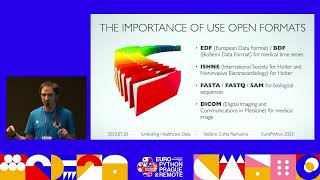
Unlocking Healthcare Data - The Power of Open Formats in Python Data Science
Explore Python analytics for healthcare data, leveraging open formats to manipulate complex patient datasets, enhance collaboration, and improve research impact in fields like ECG, EEG, and radiography.