Constexpr - C++ At Compile Time
Explore constexpr's capabilities in C++11/14, including compile-time parsing, floating-point computations, containers, and potential workarounds for limitations. Discover powerful compile-time programming techniques.
Back to the Future
Exploring advanced C++ abstractions for multi-core and parallel computing, focusing on a heterogeneous, extensible future implementation that outperforms existing models like OpenMP and MPI.
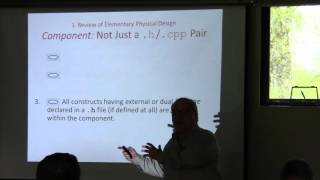
Large-Scale C++ - Advanced Levelization Techniques, Part I
Explore advanced levelization and insulation techniques for large-scale C++ systems. Learn to avoid inappropriate dependencies and optimize physical design for complex software projects.
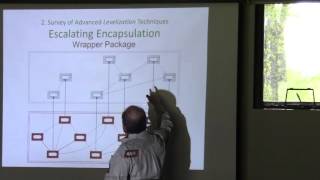
Large-Scale C++ - Advanced Levelization Techniques, Part II
Advanced techniques for managing dependencies in large-scale C++ projects, focusing on levelization and insulation methods to improve software architecture and maintainability. Practical examples demonstrate effective use of C++ language features.
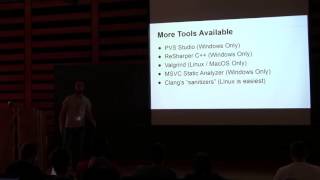
Thinking Portable - How and Why to Make Your C++ Cross Platform
Learn strategies for creating portable C++ code, exploring benefits like standards compliance, future-proofing, and wider tool availability while addressing challenges and providing practical guidelines.
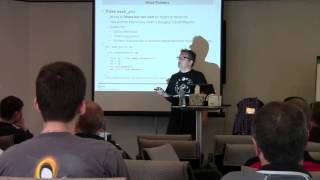
The Price of Shared Pointers or Why Passing Them by Reference Can Be Useful
Explore the hidden costs of shared pointers in C++, including control object overhead and synchronization, and learn why passing them by reference can improve performance in critical scenarios.
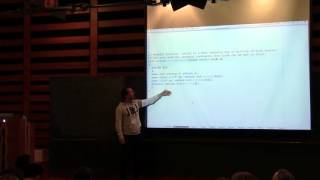
SwitchAny - A Practical Exercise in Template Metaprogramming
Explore practical template metaprogramming in C++ with switchAny, a tool for type-based dispatching in Boost.Any. Learn advanced TMP techniques applicable to real-world scenarios.
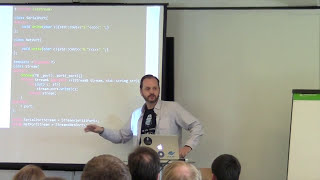
Why in Heaven Is There No Dependency Management for C++
Explore the lack of dependency management in C++ and its implications, analyzing existing solutions and potential challenges for the language's future.
Boost.Compute - A Library for GPU - Parallel Computing
Explore Boost.Compute, a high-level API for GPU/parallel computing. Learn to write efficient C++ applications for GPUs, FPGAs, and multi-core CPUs using this portable, STL-like library.
Ranges for the Standard Library
Explore the future of C++ with Eric Niebler's keynote on Ranges, concept checking, and potential STL 2.0 features. Gain insights into new idioms and the evolving standard library.
Modern Generic Programming Using the Tick and Fit Libraries
Explore modern C++ generic programming using Tick and Fit libraries for improved type requirements, clearer compile errors, and enhanced function overloading techniques.
Type-Safe Configuration Library
Explore a type-safe configuration library that uses compile-time checks, avoiding runtime errors. Learn about type-level tags, Boost.TypeIndex, and metaprogramming techniques for improved C++ configuration handling.
A Review of C++ 11/14 Only Boost Libraries - Fiber, AFIO, DI, and APIBind
Explore upcoming C++11/14-only Boost libraries: Fiber, AFIO, DI, and APIBind. Examine their design choices, C++11/14 feature usage, integration with other libraries, and potential contributions to C++ standardization.
Big Projects, and CMake, and Git, Oh My!
Comprehensive guide to configuring Git and CMake for large-scale C++ projects, covering advanced techniques for dependency management, build optimization, and collaborative development.
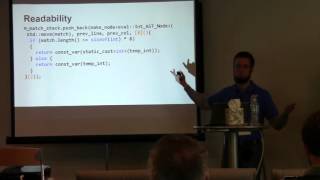
IIFE in C++ for Performance and Safety
Explore C++ IIFE technique for cleaner, safer, and more performant code in object initialization, enhancing scope management and reducing global pollution.
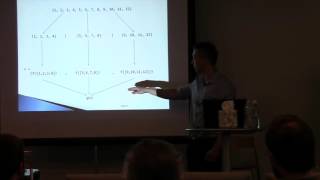
Parallelizing the Standard Template Library
Exploring parallel implementation of STL algorithms in HPX, discussing benefits and limitations of parallel computing in C++. Insights on execution time and scaling for modern programming paradigms.
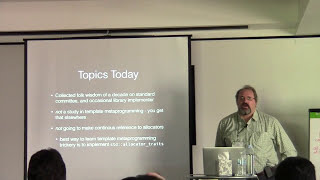
Details Matter
Explore lesser-known C++ language details crucial for library design, including exception handling, hidden string types, and their interconnections. Gain insights into standard library implementation and generic code challenges.
The Rule of Seven - Plus or Minus Two - Modern C++ Boilerplate
Explore modern C++ class design principles, including constructors, destructors, and special member functions. Learn best practices for performance, safety, and maintainability in C++11 and beyond.
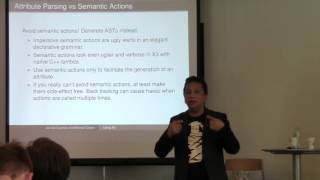
Using Spirit X3, Part II
Hands-on tutorial and workshop on using Spirit X3 parsing library, covering grammar building, data structures, and practical patterns for efficient parsing in modern C++14.
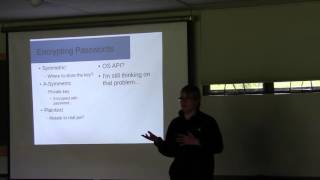
An Overview on Encryption in C++
Introduction to encryption concepts for C++ developers, covering symmetric and asymmetric methods, algorithms, and implementations in popular libraries like cryptopp, botan, and libsodium.
Debugging Using an Exact Recording of a Program's Execution
Explore advanced debugging techniques using Undo's Live Recorder for Linux C++ apps. Learn to create, analyze, and compare execution recordings for efficient problem-solving and collaborative debugging.