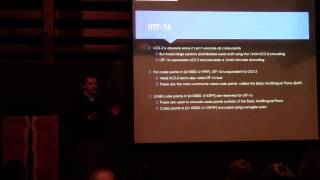
Unicode in C++
Explore Unicode implementation in C++, covering encoding, conversion, and best practices for handling international text in your programs.
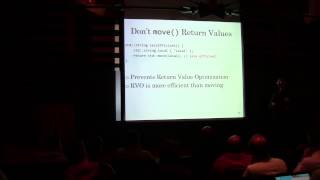
Understanding &&
Explore rvalue references in C++, their behavior, and practical applications for efficient code optimization and move semantics.
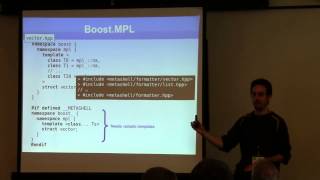
Interactive Metaprogramming Shell Based on Clang
Explore interactive metaprogramming with Clang, covering template meta functions, constant expressions, and Boost MPL. Learn practical applications and implementation details.

Modern C++ as Concurrent Assembly
Explore how modern C++ can be utilized as a high-level assembly language for concurrent programming, enhancing performance and efficiency in multi-threaded applications.

How to Design C++ Implementations of Complex Combinatorial Algorithms
Learn techniques for implementing complex combinatorial algorithms in C++, focusing on design patterns, data structures, and optimization strategies for efficient and maintainable code.
Ownership of Memory in C++
Explore memory management techniques in C++, focusing on ownership concepts and best practices for efficient and safe memory handling.
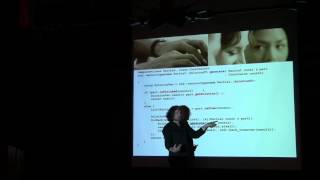
Functional Data Structures in C++
Explore functional programming concepts and data structures in C++, enhancing code efficiency and reusability through immutability and persistent data structures.
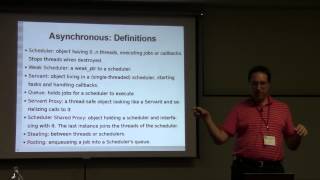
Asynchronous Programming Using the Boost.MetaStateMachine and the Upcoming Asynchronous Library
Explore asynchronous programming techniques using Boost.MetaStateMachine and the upcoming asynchronous library, enhancing C++ development skills for efficient and scalable applications.
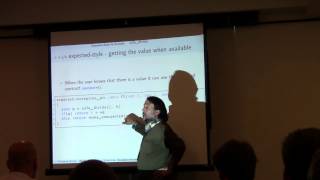
Expected - An Exception-Friendly Error Monad
Explore an exception-friendly Error Monad in C++, focusing on the 'Expected' concept for improved error handling and code robustness in modern C++ programming.
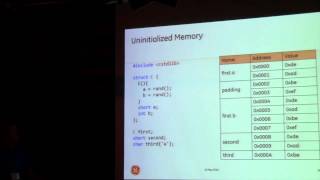
Lifetime and Usage of Global, Thread-local, and Static Data
Explore the intricacies of global, thread-local, and static data in C++, focusing on their lifetimes, usage patterns, and best practices for efficient and safe programming.
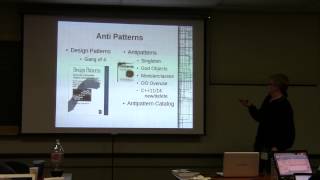
0xBADC0DE
Explore common coding pitfalls, anti-patterns, and strategies for dealing with problematic C++ code. Learn to prevent and address issues in software development.

Intro to Functional Programming in C++
Explore functional programming concepts in C++, including pure values, lists, algebraic data types, and inheritance, to enhance code quality and problem-solving skills.
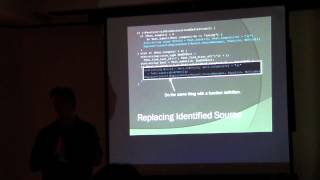
Create Your Own Refactoring Tool in Clang
Learn to develop a custom refactoring tool using Clang, enhancing your C++ code manipulation capabilities and improving software maintenance efficiency.
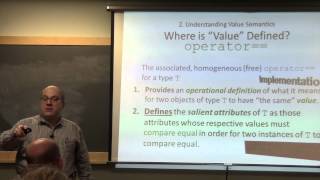
Value Semantics - It Ain't About the Syntax!
Explore the concept of value semantics in C++, focusing on its significance beyond syntax. Gain insights into efficient programming practices and design principles.
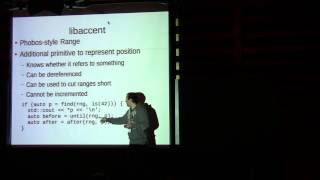
Iterators May Stay
Explore advanced C++ concepts with Sebastian Redl's in-depth presentation on iterators, range libraries, and their implications for efficiency and safety in modern C++ programming.
My Thoughts on Large Code Base Change Ripple Management in C++
Strategies for managing code changes in large C++ projects, focusing on minimizing ripple effects and maintaining stability during updates and refactoring.
The Future of Accelerator Programming in C++
Explore the evolving landscape of accelerator programming in C++, covering hardware models, vendor approaches, memory management, and advanced techniques for optimizing parallel computations.
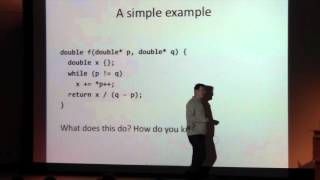
Generic Programming with Concepts
Generic programming principles using Concepts Lite in C++: enhancing template constraints for more robust and efficient library design.
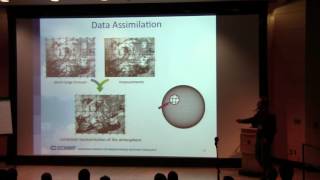
Numerical Weather Prediction - Facing the Future with C++
Explore numerical weather prediction's future with C++, addressing challenges in data processing, scalability, and power efficiency for complex atmospheric modeling and forecasting.

Your CPU Is Binary
Explore the potential evolution of CPUs from binary to ternary logic, discussing historical context, current limitations, and future implications for software development and programming languages.
Biicode - A C - C++ Dependency Manager with a Hosting Service
Hands-on workshop exploring biicode, a C/C++ dependency manager. Learn to develop, publish, and reuse packages while managing dependencies, versions, and conflicts in C++ projects.