Counting Down for CRA - Updates and Expectations
Explore the EU's Cyber Resilience Act: timeline, critical discussions, and new responsibilities for software developers. Learn about PSF's preparations and how to ready your Python projects for increased security liability.
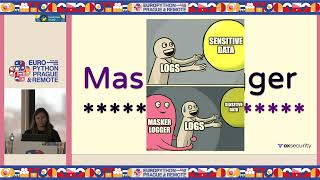
Secure Logging Practices: Protecting Sensitive Information in Python Applications
Explore secure logging practices to protect sensitive data in Python applications. Learn to identify, redact, and safeguard confidential information from accidental disclosure in log files.
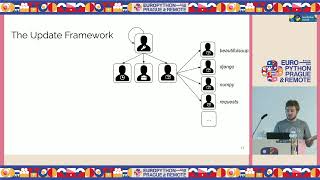
TUF Joins PyPI - Securing Package Delivery with The Update Framework
Explore TUF integration with PyPI using RSTUF, addressing security challenges in package delivery and updates. Learn about PEP 458 and Warehouse implementation.
Zero Trust APIs with Python
Explore Zero Trust Security for APIs using Python. Learn to identify and address vulnerabilities, implement robust data validation, and use tools for automated security testing.
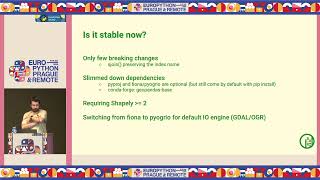
GeoPandas 1.0 and Beyond - New Features and Future Developments
Explore GeoPandas 1.0's new features, ecosystem developments, and future plans for geospatial data analysis in Python. Learn about recent changes and upcoming enhancements to prepare your code.
Mastering Data Fabrication: Enhance Testing and Protect User Privacy with Python
Generate realistic, fictitious data for enhanced application testing while adhering to privacy standards. Master tools like Faker to create diverse data types and ensure compliance.
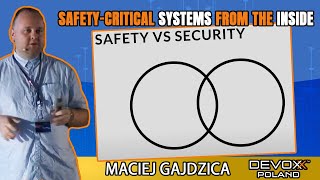
Safety-Critical Systems: Techniques for Ensuring Safety and Preventing Accidents
Explore techniques for ensuring safety in critical systems, including fail-safety, multi-CPU usage, task separation, communication safety, documentation practices, and programming language considerations.

Keep Your Dependencies in Check
Explore tools and strategies for efficiently managing and updating dependencies to enhance application security and maintain business value delivery.
Trusted Decentralized Package Network - Enhancing Software Supply Chain Security
Explore Pyrsia, an open-source project enhancing software supply chain security through distributed networks, blockchain, and seamless integration with popular packages.

Open the Gate a Little: Strategies to Protect and Share Data
Explore strategies for protecting sensitive data while allowing necessary access, balancing security with legitimate data sharing needs.
DevSecOps by Default: Lessons from Log4Shell - What We Have, Can, and Must Learn
Explore DevSecOps strategies post-Log4Shell, focusing on strengthening software supply chains, vulnerability detection, and implementing "Secure by Default" policies using open-source tools.
Go Passwordless with WebAuthn in Ruby
Explore WebAuthn for passwordless authentication in Ruby, enhancing security and user experience with biometrics and public-key cryptography.
Testing Your Yocto Project - From Ptest and Testimage to LAVA
Explore Yocto Project testing options, from simple setups using testimage and ptest to complex frameworks like LAVA. Learn integration techniques and alternatives for various project scales.
Building a Hypervisor Firewall with nftables and Rust
Learn to build a hypervisor firewall using nftables and Rust. Explore complex rulesets, zone-based firewalling, and programmatic rule creation for securing virtualized Linux network environments.
MFEM: High-Performance Finite Element Methods Tutorial - 2024
Explore MFEM, a parallel C++ library for finite element methods. Learn to develop scalable algorithms for various platforms, from laptops to supercomputers.

How to Prove the Safety of Your Software
Explore software safety through SBOMs: Learn to create, analyze, and distribute software bills of materials for enhanced security and transparency in your applications.

Virtual-Physical Environment Manipulation System Based on ROS - Python and Three.js Integration
Explore ROS-based virtual-physical environment manipulation using Python, Three.js, and WebRTC. Learn architecture, tools, and implementation for interactive 3D visualizations and robotic control.
Supply Chain Attacks: Focusing on NPM Vulnerabilities - DevSecOps 2023
Explore supply chain attacks focusing on NPM, learn defensive strategies, and discover research findings on vulnerabilities in package ecosystems. Gain insights into detection tools and solutions.

Cohesive Games and Lessons Learned from the Field Theory of Games
Explore the Field Theory of Games, its application using Wolfram Language, and key insights on dynamic decision processes and cohesive games.
Ending Open Source Security Fatigue - Lessons from Major Vulnerabilities
Explore strategies to streamline open-source security responses, reducing disruption while maintaining resilience. Learn from past incidents to implement effective countermeasures against vulnerabilities in popular packages.
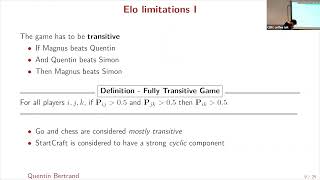
On the Limitations of Elo: Real-World Games Are Transitive, Not Additive
Explore limitations of Elo ratings in real-world games. Discover a new disc ranking system with skill and consistency scores. Examine empirical validation on bot and human game data.