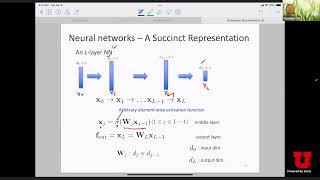
Probabilistic Machine Learning - Lecture 24
Dive into advanced data science concepts through comprehensive lecture coverage of key theoretical and practical aspects in this graduate-level academic session.
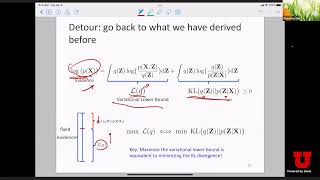
Probabilistic Machine Learning - Lecture 18
Dive into advanced data science concepts through comprehensive lecture coverage of key theoretical frameworks and practical applications in modern computational analysis.
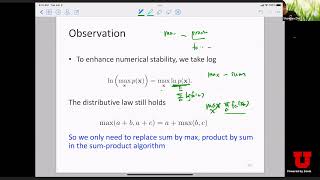
Probabilistic Machine Learning - Lecture 16
Dive into advanced data science concepts through a comprehensive graduate-level lecture covering key theoretical and practical aspects of modern data analysis and machine learning techniques.
Introduction to Probably Approximately Correct (PAC) Learning
Dive into computational complexity and PAC-learning concepts through an in-depth seminar discussion at the prestigious Kolmogorov seminar series on complexity theory.
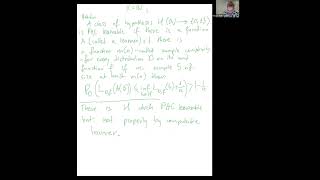
Computable PAC Learning - Part 2
Dive into advanced concepts of computable PAC learning through an in-depth exploration of theoretical frameworks and computational complexity in machine learning theory.
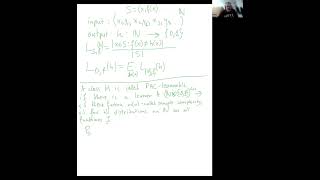
Computable PAC Learning - Part 1
Dive into computational complexity and PAC learning theory through an in-depth exploration of foundational concepts, statistical learning frameworks, and algorithmic approaches.
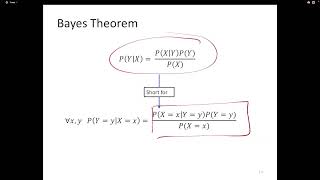
Bayesian Learning and Maximum Likelihood Methods - Lecture 23
Explore probabilistic learning criteria through maximum a posteriori and maximum likelihood approaches, with practical examples of Bayesian learning applications.
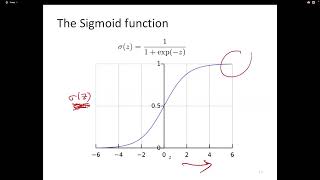
Logistic Regression - Machine Learning Lecture 24
Master logistic regression classification through maximum likelihood and maximum a posteriori criteria, building practical skills for effective machine learning model development.
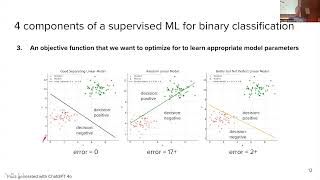
Machine Learning Foundations - Logistic Regression
Master logistic regression fundamentals through hands-on practice, exploring core concepts, implementation techniques, and practical applications in machine learning and data analysis.
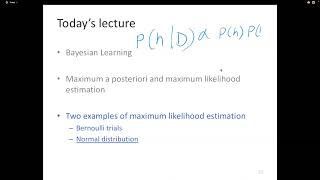
Maximum Likelihood Estimation for Regression in Machine Learning - Lecture 24
Dive into maximum likelihood estimation for regression through practical examples and explore its connection to loss minimization in Bayesian learning frameworks.
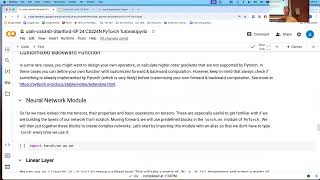
Language Modeling - Fundamentals and Applications
Master the fundamentals of language modeling, exploring statistical and neural approaches, probability distributions, and practical applications in natural language processing.
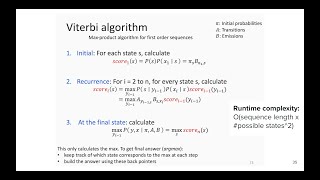
Hidden Markov Models - Parameter Estimation and Efficient Inference
Master parameter estimation and efficient inference techniques for Hidden Markov Models, exploring key algorithms and mathematical foundations for probabilistic sequence modeling and pattern recognition.
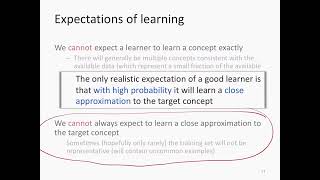
PAC Learning in Machine Learning Theory - Lecture 13
Explore the fundamental concepts of PAC (Probably Approximately Correct) learning theory and its applications in theoretical machine learning frameworks.
Innovations in Theoretical Computer Science 2020 - Session 9
Cutting-edge research in theoretical computer science, covering topics like distribution testing, random object sampling, probability distribution learning, agreement expansion, neural networks, and influence maximization.

Diffusion, Probability, and the Age of Creative AI
Explore diffusion models in AI art generation, their information-theoretic foundation, and improvements in density estimation, interpretability, and sampling speed.
Towards Understanding Generalization Properties of Score-Based Losses
Explore score-based losses as alternatives to maximum likelihood in generative models, examining their statistical efficiency and connections to diffusion algorithms for improved model design.

Probabilistic Inference - Session Preview at POPL 2023
Explore probabilistic inference concepts with expert Alexandra Silva in this POPL 2023 session preview, enhancing accessibility of advanced programming language topics.
Bayesian Inference Using Probabilistic Programming
Explore Bayesian inference techniques and probabilistic programming concepts with expert insights from Hong Ge at LAFI'24.
Latent Dirichlet Allocation with Gibbs Sampling Explained
Comprehensive explanation of Latent Dirichlet Allocation (LDA) with Gibbs Sampling, covering topic modeling, posterior inference, and implementation details. Ideal for those interested in understanding this classic machine learning technique.
Ergodicity in Smooth Dynamics 1
Explore ergodicity in smooth dynamics, covering introductory concepts, examples, proofs, and higher dimensions with experts Jana Rodriguez-Hertz and Amie Wilkinson.
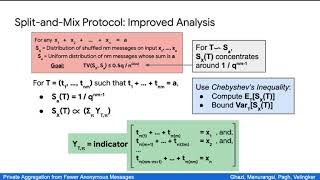
Private Aggregation from Fewer Anonymous Messages
Explore innovative techniques for private data aggregation, focusing on reducing anonymous messages while maintaining accuracy and privacy in distributed systems.