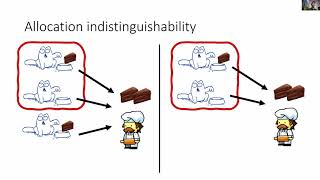
Private Resource Allocators and Their Applications
Introduces private resource allocators to prevent allocation-based side-channel attacks in systems like anonymous messaging, with various constructions offering different privacy guarantees and trade-offs in efficiency.

Breaking and Partially Fixing Provably Secure Onion Routing
Explores vulnerabilities in provably secure onion routing protocols, analyzes flaws in existing proof strategies, and proposes improved properties to enhance anonymity and security in these systems.
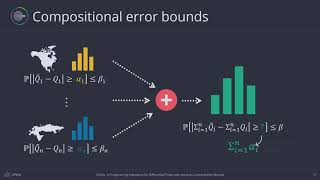
A Programming Framework for Differential Privacy with Accuracy Concentration Bounds
Explore a programming framework for differential privacy, balancing data protection and analysis accuracy through novel static tracking and taint analysis techniques.
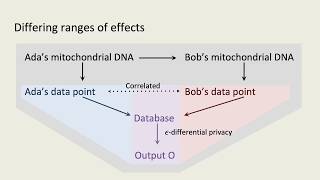
SoK- Differential Privacy as a Causal Property
Explores differential privacy as a causal property, offering a simple characterization without data independence assumptions and resolving prior disagreements about its consequences and applications.
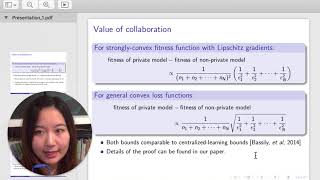
The Value of Collaboration in Convex Machine Learning with Differential Privacy
Explores collaborative machine learning on distributed private data using differentially-private gradients, quantifying trade-offs between privacy and utility, and validating performance predictions with real-world financial datasets.
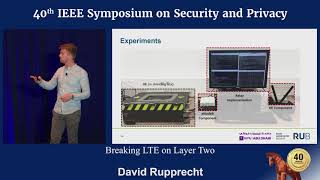
Breaking LTE on Layer Two
Exploring LTE layer two vulnerabilities: identity mapping, website fingerprinting via resource allocation, and payload modification through the A LTE R attack, demonstrating critical security risks in mobile communications.
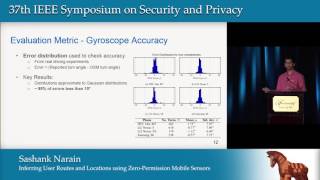
Inferring User Routes and Locations Using Zero-Permission Mobile Sensors
Explore zero-permission mobile sensor vulnerabilities for inferring user routes and locations, highlighting privacy risks and proposing detection methods through maximum likelihood route identification.
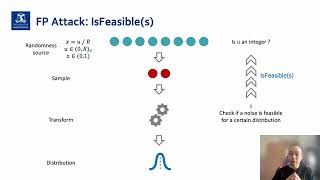
Are We There Yet? Timing and Floating-Point Attacks on Differential Privacy Systems
Explore timing and floating-point vulnerabilities in differential privacy systems, uncovering potential privacy leaks and discussing mitigation strategies for enhanced data protection.
DP-Sniper - Black-Box Discovery of Differential Privacy Violations Using Classifiers
Explore a novel approach to detect differential privacy violations using classifiers, enhancing data protection and privacy in machine learning systems.

Theory Seminar - Differential Privacy in Theory and Practice, Abie Flaxman
Explore differential privacy in the US Census, its impact on data accuracy, and potential improvements. Insights from analyzing test runs and 1940 data application.
One Alternative to Centralised Electronic Identities - With Bart Jacobs
Explore decentralized electronic identities as an alternative to tech giants' profiling, focusing on selective attribute disclosure and privacy-preserving digital interactions.
I’ll Be Watching You- Policing the Line Between Personalization and Privacy
Exploring the balance between personalized technology benefits and user privacy concerns, focusing on consent, data usage, and ethical considerations in algorithmic personalization.

Transparency in Algorithmic Decision-Making - Karen Yeung, Birmingham Law School
Exploring transparency in algorithmic decision-making, focusing on legal, ethical, and social implications of AI and automated systems in light of GDPR implementation and its impact on data protection.

Data Protection Issues on the Horizon - Michael Veale, UCL
Explore data protection challenges in public sector machine learning, focusing on fairness, accountability, and privacy-enhancing technologies. Gain insights into GDPR implications and potential solutions.

The Rise of Model-Based Data and Its Implications for Social Science and Policy
Exploring the shift towards model-based data in social sciences, its impact on urban planning, and implications for policy-making and research methodologies in the era of AI and big data.
A Public Dialogue on Location Data Ethics
Explore ethical considerations of location data use through expert panel discussions on public awareness, data security, governance, and consent in this insightful webinar.
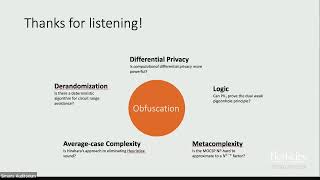
Tales of Obfuscation in Bounded Arithmetic, Metacomplexity, and Differential Privacy
Explores obfuscation's role in theoretical computer science, covering Circuit Range Avoidance, metacomplexity of Kolmogorov complexity, and computational differential privacy, with focus on recent results and open questions.
Reducing the Cost of Free Speech - The Law and You
Explore legal strategies to protect free speech and reduce associated costs with insights from EFF's Nate Cardozo. Learn about rights, risks, and practical approaches for digital activists and security researchers.

Navigating a Career in Information Security - Interview with Steve Wright
Insights from a CISO on career growth in cybersecurity, emphasizing people skills, industry professionalization, and strategies to attract new talent through education and outreach initiatives.
Rethinking Security in an Era of Online Hate and Harassment
Explore the evolving landscape of online threats, focusing on hate and harassment. Learn about different attack types, their prevalence, and gaps in current protections to better address these challenges.
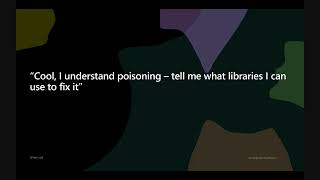
Why Has Your Toaster Been through More Security Testing than AI Systems
Exploring the lack of standardized security testing for AI systems in critical sectors, contrasting with rigorous certifications for everyday appliances and traditional software.