
Building a Real-Time Delivery System Using IoT and Robotics - Manufacturing Case Study
Discover how Lockheed Martin revolutionized manufacturing by implementing IoT and robotics for automated tool delivery, predictive ordering, and facility inspection using Boston Dynamics Spot robot.
AI-Driven Productivity Enhancements in Enterprise Engineering - Conf42 Rustlang 2024
Explore AI's impact on enterprise engineering, from automation to predictive analytics, and learn strategies to overcome deployment challenges while preparing for future advancements.
The Role of AI in Transforming Dialysis Healthcare
Explore AI's transformative impact on dialysis healthcare, from predictive analytics to personalized treatments and operational efficiency. Gain insights into remote monitoring, machine maintenance, and future directions.
Build Your First Model with PyTorch and Python - PyTorch Tutorial for Beginners
Learn to implement a Simple Linear Regression model using PyTorch, covering data exploration, model creation, tensor conversion, training, and prediction analysis in this beginner-friendly tutorial.
Supervised Machine Learning Tutorial - Logistic Regression - Naive Bayes Classifier
Explore logistic regression and Naive Bayes classifiers for supervised machine learning. Learn their advantages, applications, and implementation in classification tasks for data-driven decision making.

Deploy a Model for LEGO Sets With Docker
Predict LEGO set piece counts using machine learning, then deploy the model with Docker for easy sharing and reproducibility.
AI - What's Working, What's Not
Explore the current state of AI, its applications, and future potential. Gain insights into what's working, what's not, and how businesses can leverage AI technologies effectively.

Machine Learning Methods for Climate Science - Lecture 2
Explore machine learning applications in climate science, focusing on advanced techniques and their impact on understanding and predicting climate phenomena.

Building Real-Time Sentiment Pipeline for Live Tweets
Learn to build a real-time predictive analytics pipeline for Twitter sentiment analysis using Azure ML, R, and Python. Covers model creation, cloud deployment, and live dashboarding with PowerBI.
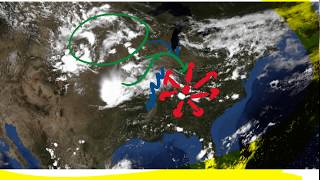
Axial Attention & MetNet - A Neural Weather Model for Precipitation Forecasting
Explore a neural network model for precise precipitation forecasting using axial attention, offering high-resolution predictions up to 8 hours ahead with improved accuracy over traditional methods.
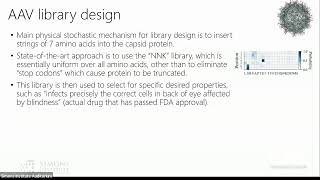
Machine Learning-Based Design of Proteins
Explore machine learning-based protein design with Jennifer Listgarten, covering directed evolution, predictive models, and optimization techniques for gene therapy applications.
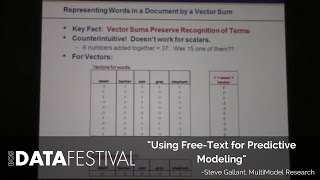
Using Free Text for Predictive Modeling
Explore efficient text representation for predictive analytics, covering techniques to transform varied-length text into fixed-length vectors for machine learning applications like sentiment analysis and news classification.
AI in the Exam Room - Ethical Concerns of DNA Collection and Usage
Explore the ethical implications of AI and biometric data in healthcare and beyond. Discover who has access to your genetic information and why it matters for privacy and security.
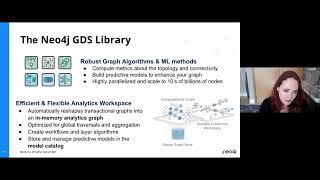
Relationships Matter - Using Connected Data for Better Machine Learning
Explore graph-native ML for enhanced predictions using relationship data. Learn graph feature engineering, ML techniques, and hands-on applications to leverage network structures in your data science models.

Model Explanation and Prediction Exploration Using Spark ML
Explore techniques for explaining non-linear models, showing feature contributions, and performing what-if analysis using Spark ML. Implement these methods to enhance model interpretability and enable interactive prediction exploration.
Machines and Morality - Ethical Implications of AI in Society
Explore ethical implications of AI, examining biases in algorithms, potential harmful outcomes, and the importance of instilling proper values in machine learning systems.
Machine Learning Meets Data Assimilation - Physics-Based Data-Driven Digital Twins
Explore the intersection of machine learning and data assimilation for creating physics-based, data-driven digital twins in weather and climate modeling.
How We Are Building Trustworthy AI for Weather and Climate in AI2ES
Explore innovative approaches to developing reliable AI systems for weather and climate prediction, enhancing forecasting accuracy and environmental understanding.
Dynamically Tuning Pods - Leveraging Time Series ML Models with KubeFlow
Explore advanced pod resource optimization using Prometheus and KubeFlow. Learn to implement time series ML models for dynamic tuning in Kubernetes clusters, enhancing performance and efficiency.
Squeeze Your K8s - Adopting Time-Series Forecasting Models in FinOps Practices
Explore time-series forecasting models for optimizing Kubernetes resource allocation, improving cluster utilization, and achieving significant cost savings in cloud-native environments.
How AI is Changing Weather Forecasting Using Ocean Data
Innovative AI-driven weather forecasting using ocean data enables accurate long-term predictions, aiding crucial decision-making in energy, agriculture, and water resources to prevent disasters and save lives.