
Cris Moore on Algorithmic Justice and The Physics of Inference
Exploring algorithmic justice and inference physics, this talk delves into the limits of AI decision-making, emphasizing transparency, model suitability, and the importance of understanding technology's boundaries in complex problem-solving.
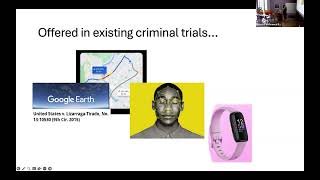
Beyond Prediction: Algorithmic Proof of Guilt or Innocence in Criminal Trials
Explore the use of algorithms in criminal trials for evidence, examining accuracy, fairness, and transparency concerns. Discuss challenges and potential solutions for courts and researchers.
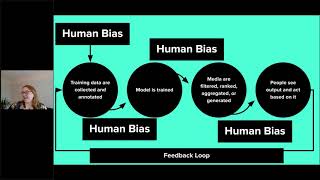
Bias in the Vision and Language of Artificial Intelligence
Explore bias in AI vision and language with Margaret Mitchell, focusing on ethical concerns, societal impacts, and strategies for developing more inclusive and fair artificial intelligence systems.
Insights from Predictive Policing - Tobias Brandt, Rotterdam School of Management
Explore data-driven decision-support in policing, examining the complex relationship between prediction quality and decision outcomes. Learn about end-to-end frameworks for model selection in smart city operations.

Probabilistic Numerical Computation - A New Concept?
Explore probabilistic numerics, a new field combining mathematics, statistics, and computer science to quantify uncertainty in numerical methods for complex data analysis and modeling.

Machines and Morality - Ethical Implications of AI in Society
Explore ethical implications of AI, examining biases in algorithms, potential harmful outcomes, and the importance of instilling proper values in machine learning systems.
Runaway Feedback Loops in Predictive Policing
Explore runaway feedback loops in predictive policing, examining assumptions, theory, and potential solutions to address reinforcement issues in law enforcement algorithms.
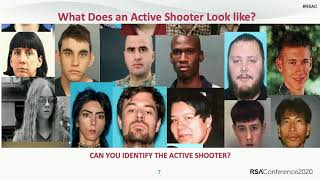
Pre-Crime Detection of Active Shooters Using Predictive Policing Systems
Explore how predictive policing and AI can detect potential active shooters by analyzing warning behaviors across various data sources, enabling early intervention and prevention.
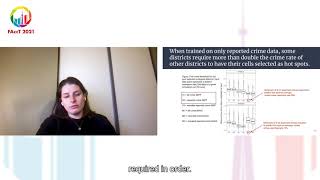
The Effect of Differential Victim Crime Reporting on Predictive Policing Systems
Explore how differential victim crime reporting impacts predictive policing systems, analyzing models, synthetic data, and hotspot prediction to improve fairness in law enforcement.
Digital Echoes - Understanding Mass Violence with Data and Statistics
Exploring biases in data collection for mass violence, this talk challenges assumptions about representativeness and demonstrates how statistical analysis can address underreporting in human rights contexts.
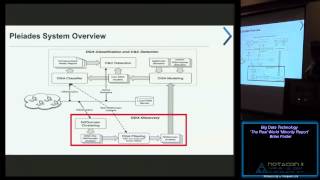
Big Data Technology - The Real World Minority Report
Explore big data's role in cybersecurity, including network analysis, domain reputation, and machine learning techniques for threat detection and prevention.
Amazon Machine Learning to Predict Responses
Explore machine learning and computer vision with Amazon tools to predict responses and develop AI algorithms. Learn about S.A.M. (Suspicious Activity Monitor) and its applications in predictive policing.