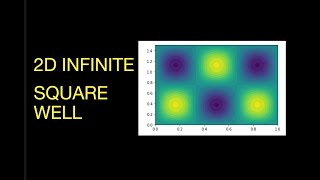
Quantum Mechanics: Particle in a 2D Box with 3D Plot
Explore quantum mechanics through a 2D particle in a box, from theory to Python visualization. Master concepts like time dependence, normalization, and degeneracy with step-by-step explanations.
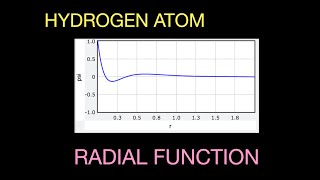
Solving the Radial Function of the Hydrogen Atom with Python and Shooting Method
Explore numerical solutions for the hydrogen atom's radial Schrödinger equation using Python and the shooting method. Gain insights into quantum mechanics and computational physics.
Modeling Free Charges in a Metal Sphere Using Python
Model free charges in a metal sphere using Python. Learn electric forces, momentum principles, Euler method, and Python coding for particle interactions and drag forces.
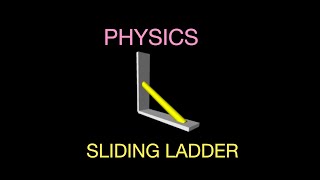
Ladder Physics: What Angle Does a Frictionless Ladder Leave the Wall?
Explore frictionless ladder physics, determining the angle at which it loses wall contact using Euler method and ball-spring simulations in Python.
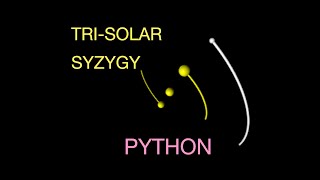
Modeling the Tri-Solar Syzygy with Python
Explore Python modeling of the Tri-Solar Syzygy from "The 3 Body Problem," simulating stable orbits and planetary positions in a three-star system.
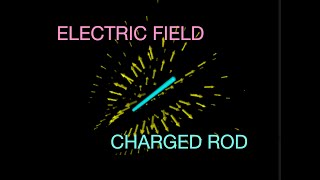
Deriving the Electric Field due to a Charged Rod - With Calculus and Python
Derive the electric field of a charged rod using calculus and Python, enhancing understanding through numerical calculations.
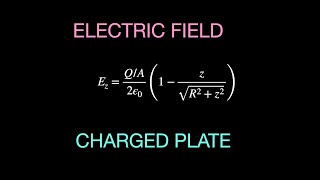
Electric Field due to a Charged Disk and Parallel Plate Capacitors
Derive the electric field of a uniformly charged plate using charged ring principles. Explore parallel plate capacitors and Monte Carlo calculations.
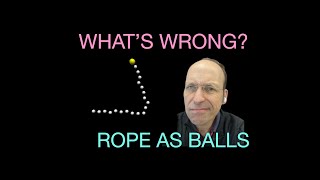
Modeling a Grappling Hook with a Bunch of Balls - Python Simulation Attempt
Explore the physics of grappling hooks through differential equations and Python modeling, inspired by a commercial. Dive into challenges and potential solutions for simulating rope dynamics.
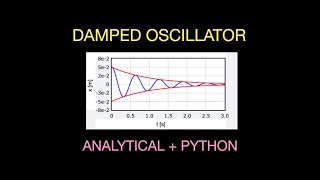
Solution for the Damped Harmonic Oscillator with Python Implementation
Explore the damped harmonic oscillator, including analytical and numerical solutions using Python, with practical examples and homework.
Calculate the Three-Body Problem Just Like the San-Ti
Explore the physics of the 3-body problem, its significance in "The Three-Body Problem" media, and learn computational methods to solve it.
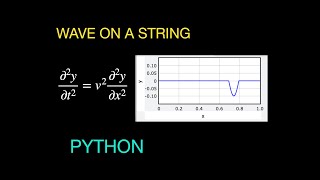
Modeling a Wave Pulse on a String with the Finite Difference Method and Python
Model wave pulses on strings using finite difference method and Python with Web VPython. Gain hands-on experience in computational physics and wave mechanics.
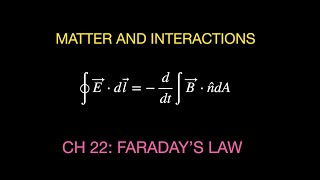
Faraday's Law and Electromagnetic Induction - Chapter 22 Summary
Explore Faraday's Law, Lenz's Law, and Maxwell's Equations. Understand inductors, transformers, and magnetic field energy density. Gain insights into electromagnetic principles and applications.
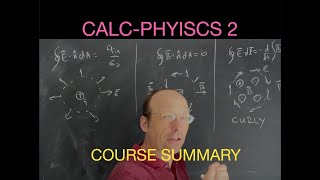
Physics 2 Course Summary - All the Big Ideas in 30 Minutes
Explore key concepts of calculus-based physics, covering second semester topics from Matter and Interactions textbook in a concise overview.
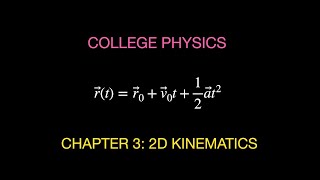
Physics Summary - Chapter 3: 2D Kinematics
Explore 2D kinematics: vectors, graphical representations, components, vector operations, and applications to motion, including projectiles and relative velocity.
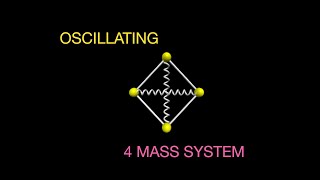
Three Ways to Solve a 4-Mass Oscillator: Energy, Python, and Lagrangian - Lecture
Explore three approaches to solving a complex 4-mass oscillator problem: energy analysis, Python simulation, and Lagrangian mechanics using SymPy.
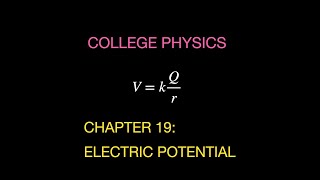
Physics Summary - Chapter 19: Electric Potential and Electric Field
Explore electric potential and fields, from basic concepts to advanced applications like capacitors. Gain a comprehensive understanding of electrostatics and its practical implications.
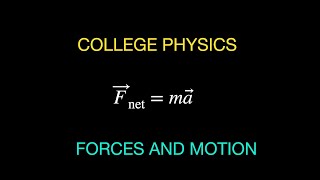
Physics Summary: Forces, Motion, and Newton's Laws - Chapter 4
Explore fundamental concepts of forces, motion, and Newton's laws. Learn to analyze interactions, measure forces, and understand key principles shaping classical mechanics.
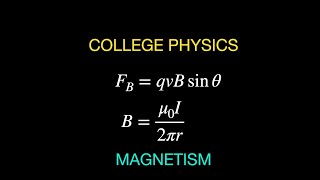
Physics Summary Chapter 22: Magnetism
Explore magnetism fundamentals: fields, forces, bar magnets, Earth's field, circular motion, Hall effect, EMF, wire interactions, coils, solenoids, and DC motors.
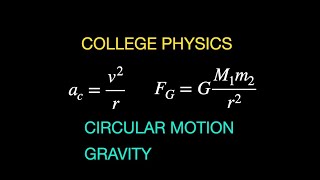
Physics Summary - Uniform Circular Motion and Gravity
Explore circular motion, gravity, and related concepts like angular velocity, centripetal force, and Kepler's Laws. Gain insights into fundamental physics principles governing orbital mechanics and rotational dynamics.
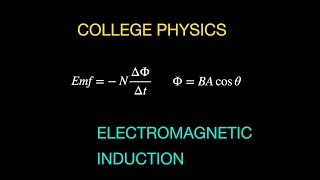
Physics Summary: Electromagnetic Induction - Chapter 23
Explore electromagnetic induction, Faraday's Law, and related concepts. Learn about electric generators, power production, and applications like transformers and RL circuits.
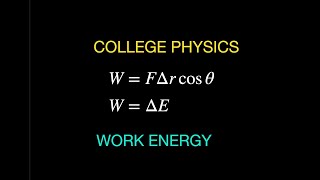
Physics Summary: Work and Energy - Chapter 7
Explore fundamental concepts of work and energy in physics, including kinetic and potential energy, conservation laws, and practical applications.