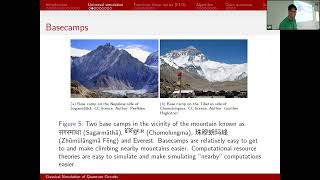
Classically Simulating Quantum Computations
Explore classical simulations of quantum computations, their theoretical implications, and methods to quantify non-classicality through "magic" resources. Delve into recent advancements in fermionic linear optics.
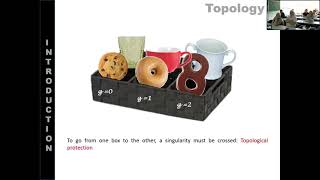
Engineering Topological Phases in Lattices with Ultracold Atoms
Explore engineering topological phases in lattices using ultracold atoms with orbital angular momentum. Discover complex tunneling amplitudes and their applications in quantum systems.
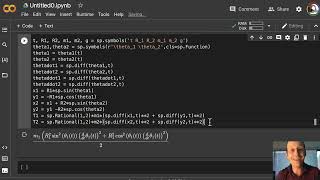
Modeling the Double Pendulum with Python and SymPy
Explore Python and sympy to model the double pendulum, from deriving equations to creating a 3D visualization.
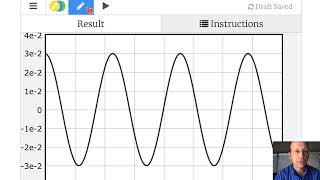
Simple Harmonic Motion with Python - Including 3D Motion
Explore numerical calculations for mass-spring systems using Python, including 3D motion simulations and interactive code examples.
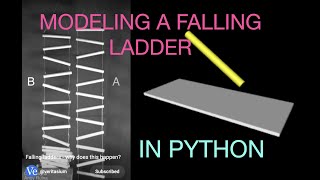
Modeling a Bouncing Stick with Python - Veritasium Falling Ladder Problem
Model a falling and bouncing stick using Python, inspired by Veritasium's falling ladder problem. Explore physics simulations and coding techniques.
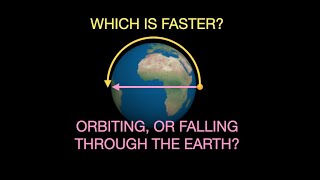
Is It Faster to Fall Through the Earth or Orbit Halfway Around?
Explore the physics behind falling through Earth vs. orbiting halfway around, comparing travel times and analyzing factors affecting motion in both scenarios.
The Energy Principle in Physics - Chapter 6
Explore fundamental physics concepts like energy, work, and momentum through practical examples and in-depth explanations of particle behavior and forces.
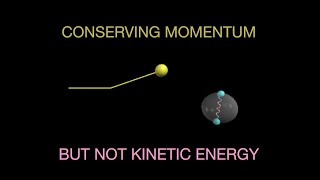
How Can a Collision Conserve Momentum but Not Kinetic Energy?
Explore momentum conservation and kinetic energy loss in collisions through Python modeling, unraveling the interplay between mass and velocity.
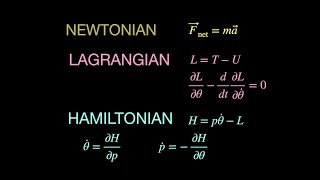
Newtonian, Lagrangian, and Hamiltonian Methods for Simple Pendulum Motion
Explore three methods for deriving pendulum equations of motion: Newtonian, Lagrangian, and Hamiltonian. Compare approaches and visualize results using Python.
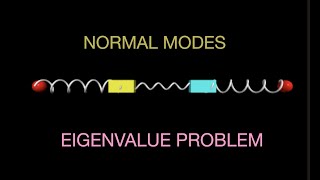
Normal Modes for Coupled Oscillators Using the Eigenvalue Problem
Discover how to find normal modes for coupled oscillators using the eigenvalue problem, with a practical Python testing program included.

Hamiltonian Mechanics: Mass on a Cone with Gravity
Explore Hamiltonian mechanics through a mass-on-cone problem, using Python to model and analyze the motion in a gravitational field.
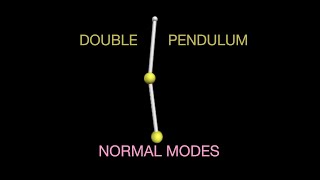
Normal Modes of Oscillation for the Double Pendulum
Explore normal modes of oscillation for a double pendulum with equal masses and lengths, including Python code for plotting and visualization.
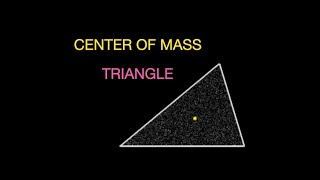
Finding the Center of Mass of a Triangle
Explore methods to determine a triangle's center of mass, including a Monte Carlo calculation using Python for added precision.
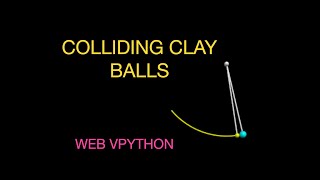
Colliding Clay Pendulum Balls with Springs and Python
Model colliding clay pendulum balls using Python and springs to solve a physics problem numerically.
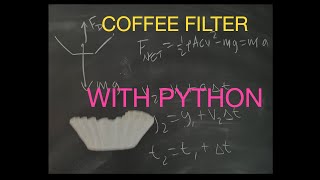
Very Simple Introduction to Numerical Calculations in Physics with Python
Learn to create numerical solutions in physics using Python, from basic coding to graphing and modifying code for practical applications.
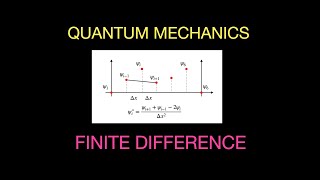
1D Infinite Square Well Solution Using Python and Finite Difference Method
Explore quantum mechanics using Python to solve the 1D infinite square well problem with finite difference method and visualize results through animations and graphs.
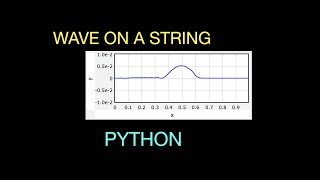
Modeling a Wave on a String - Finite Difference in Python
Model a wave on a string using finite difference calculations and Web VPython. Learn Python coding techniques for physics simulations and data visualization.
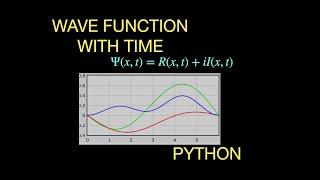
Solving the Time-Dependent Schrödinger Equation with Finite Difference Method in Python
Explore numerical solutions to the time-dependent Schrödinger equation using Python's finite difference method for 1D quantum systems.
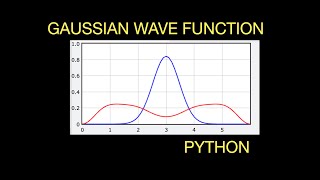
Time Evolution of a Wave Function in a Square Well with Superposition of States Using Python
Explore quantum mechanics through Python, simulating wave function evolution in an infinite square well using Gaussian initial conditions.
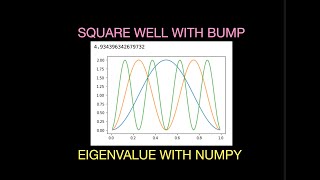
Solving the Square Well with a Bump Using Python and NumPy - Eigenvalue Problem
Solve the infinite square well with a bump potential using Python and NumPy. Learn finite difference method, matrix construction, and eigenvalue problem solving for quantum mechanics.
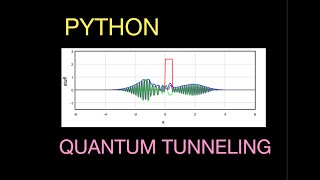
Quantum Tunneling: Modeling with NumPy and Python
Model quantum tunneling using Numpy and finite difference method. Learn theory, create potential, wave functions, and Hamiltonian matrices. Visualize results with Python animations.