Nuclear Propulsion – From the Somewhat Reasonable to the Utterly Insane - Easterhegg 2019
Explore nuclear propulsion systems, from practical applications to outlandish concepts. Discover the potential and risks of harnessing nuclear reactions for rockets and other propulsion methods.

Let's Reverse Engineer the Universe
Exploración del universo oscuro: materia y energía oscuras, su existencia, características y misterios. Desafíos actuales en cosmología y perspectivas futuras sobre estos enigmáticos componentes del cosmos.

How Do I Compute the Body Electric?
Explore computational physics and supercomputing to revolutionize personalized medicine through advanced simulations of the human body.
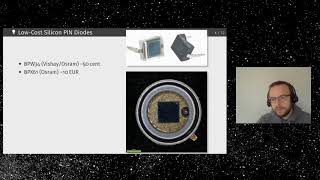
Measuring Radioactivity Using Low-Cost Silicon Sensors
Learn to build a DIY particle physics detector using low-cost silicon sensors. Explore natural radioactivity, measure particle energy, and analyze data with Python in this hands-on introduction to modern particle physics.
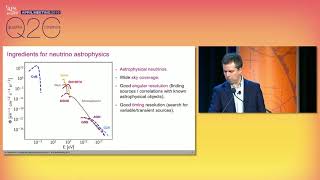
Recent Advances in Neutrino Physics
Explore recent advances in high-energy neutrino astronomy, including astrophysical flux discovery and potential blazar source identification. Learn about detection methods and future prospects in this cutting-edge field.

Physics and Society - Physics and Social Media
Exploring the impact of social media on physics communication, this talk discusses benefits and challenges for scientists engaging online, emphasizing public outreach and breaking stereotypes.
Engaging the Physics Community in Nuclear Threat Reduction
Exploring nuclear threat reduction strategies and the role of physicists in advocating for disarmament, emphasizing the urgency of addressing current global nuclear risks.
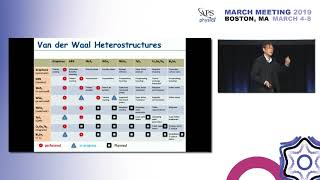
Stacking Atomic Layers One by One - Quest for New Materials and Physics
Explore atomic-scale heterostructures and emerging physics in 2D quantum materials. Learn about stacking techniques, high-mobility graphene, and novel phenomena like magic angles and quasicrystals.
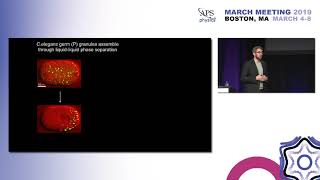
Intracellular Liquid Condensates - New Approaches to Understand and Control Biomolecular Phase Transitions in Living Cells
Exploring intracellular phase transitions and their role in organizing cellular contents, with focus on liquid-liquid phase separation and new approaches for spatiotemporal control.
Machine Learning and the Real Space Renormalization Group
Explore the intersection of machine learning and renormalization group theory, focusing on real-space applications and information theory perspectives in physics.
Advances in Machine Learned Potentials for Molecular Dynamics Simulation
Explore machine learning advancements in molecular dynamics simulations, covering symmetries, training methods, and applications in hydrocarbon reactions and IR spectra analysis.
Opportunities for Infusing Physics into AI - ML Algorithms
Explore the fusion of physics and AI algorithms, covering neural programming, hierarchies, equations, and applications in autonomous systems and technology.
Learning Quantum with Generative Models
Explore generative models for quantum state learning, covering neural networks, RBMs, and applications to GHZ states and local Hamiltonians.
Understanding Neutrino Interactions Using Deep Learning
Explore deep learning applications in neutrino physics, from classifying interactions to analyzing events, with insights on future developments in particle detection.
From Reinforcement Learning to Spin Glasses - The Many Surprises in Quantum State Preparation
Explore quantum state preparation, reinforcement learning, and spin glasses, uncovering surprising connections and insights in this cutting-edge physics research presentation.
Testing the Massive Black Hole Paradigm and GR with Infrared Interferometry
Explore cutting-edge infrared interferometry techniques to study massive black holes and test General Relativity, featuring the GRAVITY near-IR beam combiner and its groundbreaking observations.
LIGO - Virgo & the Promise of Multi-Messenger Observations
Exploring multi-messenger astronomy: combining gravitational waves, photons, and neutrinos to unveil cosmic mysteries, probe celestial bodies, and challenge our understanding of the Universe's evolution.
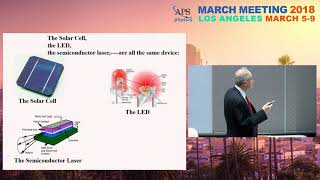
The Double-Heterostructure Concept in Lasers, LED's, and Solar Cells
Explore double-heterostructure concept in lasers, LEDs, and solar cells. Learn about semiconductor physics, electronic confinement, and device optimization from a renowned expert.
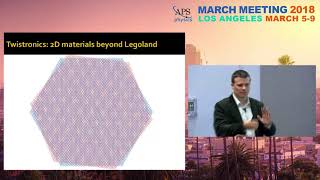
Magic-Angle Graphene Superlattices - A New Platform for Strongly Correlated Physics
Discover surprising properties of misaligned graphene sheets, from Mott insulator to superconductor. Explore this new platform for strongly correlated physics and its similarities to cuprate superconductivity.
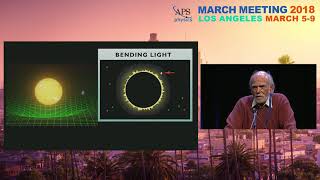
Einstein, Gravitational Waves and a New Science
Explore gravitational waves, their detection by LIGO, and the groundbreaking observations of black hole collisions and binary neutron stars, opening a new window to the universe.
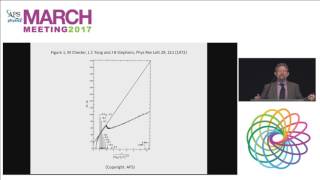
Topological Defects and Phase Transitions
Explore topological defects in 2D systems, their role in phase transitions, and experimental verifications in superfluids, superconductors, and crystals.