How Simulating Balls and Springs Captures the Power of Quantum Computing
Explore how simulating classical ball-spring systems relates to quantum computing power, offering insights into BQP-complete problems and new quantum algorithm design approaches.
Quantum Algorithms for Approximating Partition Functions
Explore advanced quantum algorithms for approximating partition functions, focusing on computational techniques and applications in statistical physics and machine learning.
Anomaly Detection with Autoencoder
Learn to detect anomalies using autoencoders in high energy physics data analysis. Explore advanced machine learning techniques for uncovering rare events and potential new physics.

Connections Between Physics and Deep Learning
Explore the fascinating intersections of physics and deep learning, from neural networks to scale-invariant behavior, with insights from MIT's Max Tegmark.
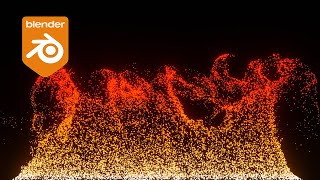
Blender Tutorial - Fire Particle Animation
Learn to create realistic fire particle animations in Blender 2.90 using Mantaflow and the Particle System. Master fluid flow force fields to make particles follow smoke for stunning visual effects.
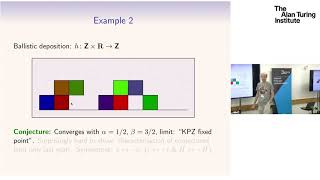
Universality Classes for 1+1 Dimensional Systems
Explore universality classes in 1+1 dimensional systems, focusing on weak universality conjecture, graphical construction, and links to Brownian web. Gain insights into complex systems modeling.
Optimisation
Explore optimization techniques for neural networks, including gradient descent, SGD, momentum, adaptive methods, and normalization layers, with real-world applications in MRI technology.
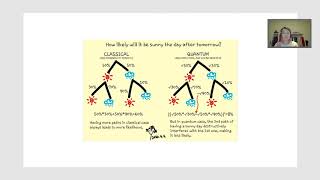
Intro to Quantum Computing - Interference, Measurement
Explore quantum computing concepts like interference, measurement, complex numbers, and wave equations in this advanced lecture by Dr. Kitty Yeung.

Complexity I
Explore multiplicity theorem, programsized complexity, and algorithmic questions in this deep dive into computational complexity theory and its applications.
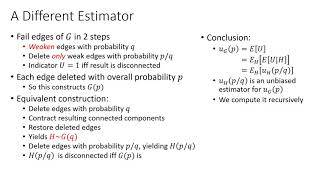
A Phase Transition and Quadratic Time Estimator for Network Reliability
Explore network reliability estimation, including a novel quadratic-time approach, phase transitions, and unbiased estimators for efficient analysis of complex networks.
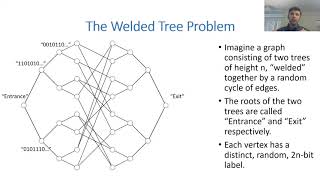
Computations with Greater Quantum Depth Are Strictly More Powerful - Relative to an Oracle
Explore the power of quantum depth in computation, examining conjectures, hybrid systems, and key results through an oracle-based approach and simulation algorithms.
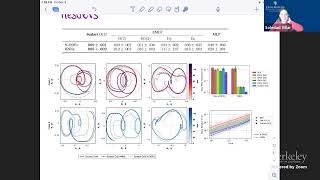
Equivariant Machine Learning Structured Like Classical Physics
Explore equivariant machine learning and its connection to classical physics, focusing on graph neural networks, spectral methods, and symmetry in optimization problems.
Towards Practical Quantum Advantage - Quantum Colloquium
Explore quantum computing's potential for practical advantage, focusing on small data problems with superquadratic speedups. Discusses progress in quantum algorithms for chemistry and simulation challenges.
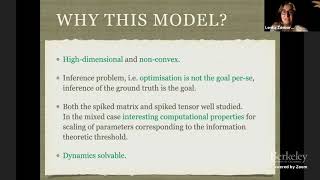
Insights on Gradient-Based Algorithms in High-Dimensional Learning
Explore gradient-based algorithms in high-dimensional learning, covering statistical physics solutions for performance analysis in nonconvex settings like spiked mixed matrix-tensor model, perceptron, and phase retrieval.

A Theory of Trotter Error
Explores advanced theory of Trotter error in quantum simulation, providing tighter error bounds and improved algorithms for various quantum systems and observables.
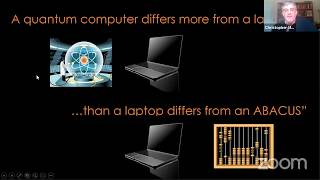
Quantum Computing and Simulation with Atoms
Explore quantum computing with atoms, covering entanglement, gate performance, and simulations. Learn about recent advancements and applications in this cutting-edge field.
Recent Advances in Quantum Simulation with Applications to Chemistry and Field Theory
Explore recent quantum simulation advances in chemistry and field theory, covering time-dependent Hamiltonians, QDRIFT, Dyson series, and interaction picture simulation techniques.

Quantum Supremacy - Checking a Quantum Computer with a Classical Supercomputer
Explore quantum supremacy, error rates, and hardware challenges in quantum computing. Learn about recent advancements and the race to achieve computational superiority over classical systems.
Recent Advances in Quantum Simulation
Explore recent advancements in quantum simulation, focusing on dynamical simulation, unitary access, and applications in quantum chemistry and physics.
Classical Simulation of Quantum Many-body Systems with Tensor Networks
Explore tensor networks for simulating quantum many-body systems, focusing on matrix product states and branching mirror techniques in quantum computation challenges.
Quantum Simulators and Processors Based on Rydberg Atom Arrays
Explore quantum simulators and processors using Rydberg atom arrays, covering experimental setups, entanglement, spin models, and non-equilibrium quantum dynamics in programmable systems.