Classical Mechanics: Jump Start with Simple Harmonic Motion - Mass on a Spring
Explore simple harmonic motion through mass-spring systems, including realistic scenarios and numerical calculations using Python.
Video Analysis Physics: World Record Pole Vault
Analyze Mondo Duplantis' world record pole vault using physics principles and video analysis techniques to understand the mechanics behind this extraordinary athletic feat.
Physics: Front Wheel vs. Rear Wheel Drive Car Acceleration
Explore the physics behind front-wheel vs. rear-wheel drive car acceleration through calculations and Python code analysis.
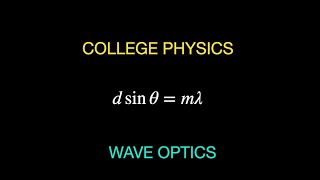
Wave Optics: Physics Summary Chapter 27 - Lecture
Explore wave optics concepts including light speed, refraction, diffraction, interference, and polarization. Gain insights into optical phenomena and their applications in physics.
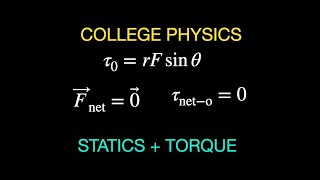
Physics Summary: Statics and Torque - Chapter 9
Explore statics and torque concepts, including rigid body equilibrium, center of mass, and simple machines, with practical demonstrations and examples.
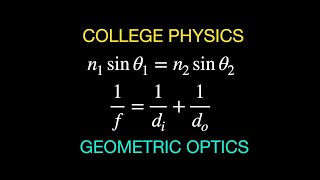
Physics Summary Chapter 25: Geometric Optics
Explore fundamental principles of geometric optics, including reflection, refraction, lenses, and mirrors. Learn how light behaves and forms images in various optical systems.

Electromagnetic Waves and the EM Spectrum - Chapter 24
Explore electromagnetic waves, from accelerating charges to the EM spectrum. Learn about light production, blue LEDs, and infrared cameras in this comprehensive physics overview.
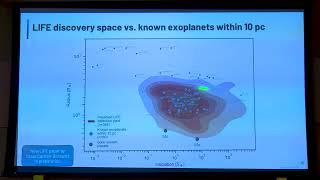
The LIFE Initiative - Science Prospects and Challenges
Explore the LIFE Initiative's scientific prospects and challenges in exoplanet research through mid-infrared interferometry and yield calculations.

Challenges and Advantages of Interferometry from Space
Explore space interferometry's challenges and benefits with NASA expert Chas Beichman, covering astrometry, JWST, and future prospects.
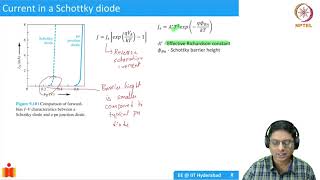
Current Flow Across a Schottky Barrier - Lecture 6.2
Explore current flow mechanisms across Schottky barriers, understanding key concepts and applications in semiconductor devices.
MOSCAP Capacitance-Voltage (CV) Characteristics - Lecture 8.2
Explore MOSCAP capacitance-voltage characteristics, analyzing their behavior and implications for semiconductor device performance and design.
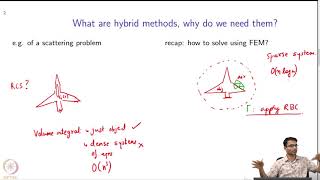
Applications of Computational Electromagnetics: Hybrid Methods - Motivation
Explore hybrid methods in computational electromagnetics, focusing on their motivations and applications in solving complex electromagnetic problems.
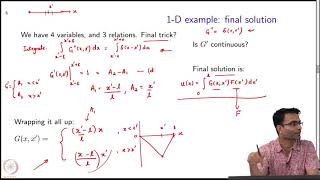
Introduction to Green's Function: 1-D Example - Alternate Representation
Explore alternate representations of Green's Function in 1-D, focusing on practical applications and problem-solving techniques in mathematical physics.
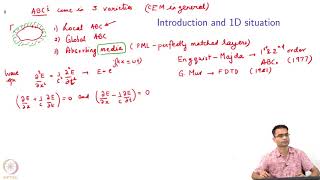
FDTD: Materials and Boundary Conditions - Absorbing Boundary Conditions 1D
Explore absorbing boundary conditions in 1D for FDTD simulations of materials, enhancing understanding of electromagnetic wave propagation and computational techniques.
Ensemble Average, Time Average, and Ergodic Hypothesis
Explore ensemble and time averages in statistical mechanics, and understand the Ergodic hypothesis and its implications.
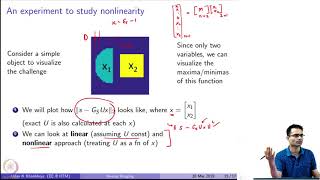
Applications of Computational Electromagnetics: Inverse Problems and Non-Linearity
Explore inverse problems and non-linearity in computational electromagnetics, focusing on practical applications and advanced techniques for solving complex electromagnetic challenges.
Momentum and Kinetic Energy Correction Factor - Lecture 38 Part B
Explore momentum and kinetic energy correction factors in fluid dynamics, enhancing understanding of flow behavior and energy calculations.

Laminar and Turbulent Flows - Part 3 - Lecture 32
Explore laminar and turbulent flows, delving into advanced concepts and applications in fluid dynamics.
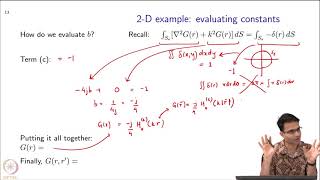
Introduction to Green's Function: 2-D Example - Evaluating Constants - Part 2
Explore advanced concepts in Green's Function for 2D problems, focusing on evaluating constants in the second part of this mathematical analysis.
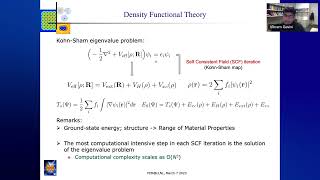
Fast, Accurate and Large-scale Ab-initio Calculations for Materials Modeling
Explore advanced computational methods for large-scale density functional theory calculations using adaptive finite-element discretization, enhancing materials modeling capabilities.
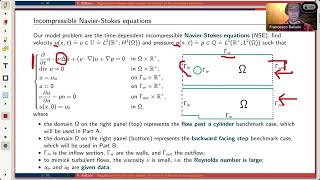
Regularized Reduced Order Models for Control of Navier-Stokes Equations
Explore regularized reduced order models for controlling Navier-Stokes equations in convection-dominated flows, focusing on evolve-filter-relax and approximate deconvolution techniques for numerical stabilization.