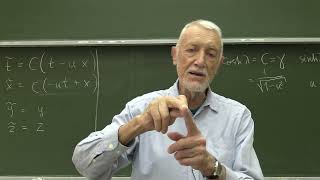
Lorentz Transformation of the Electromagnetic Field - Continued - Lecture 11
Explore advanced concepts in electromagnetic field transformations through Lorentz equations, building on previous knowledge in theoretical physics and relativity.
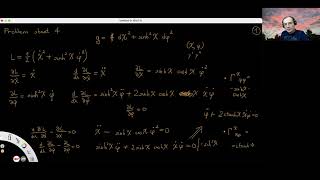
Gravitational Waves: Theory and Interactions - Lecture 13
Explore gravitational waves, their linear approximation, polarizations, and interactions with matter in this graduate-level physics lecture on theoretical aspects of gravitational wave physics.
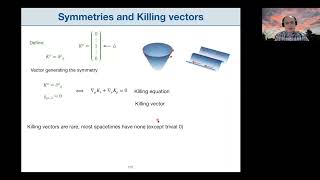
Gravitational Physics: From Frequency Shifts to Gravitational Waves - Lecture 12
Explore advanced concepts in gravitational physics, including linearized gravity, energy conservation, frequency shift, and gravitational waves. Gain insights into equations of motion and light deflection.
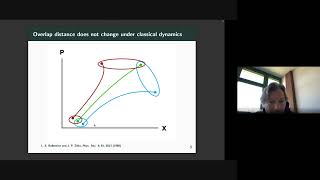
Detection of Quantum Chaos with Quantum Hamming Distance
Explore quantum chaos detection using Quantum Hamming Distance, uncovering state sensitivity in quantum theory and challenging traditional beliefs about quantum evolution.
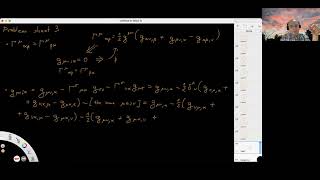
Christoffel Symbols, Linearized Gravity, and Newtonian Approximation - Lecture 11
Explore linearized gravity and Newtonian approximation in general relativity, with problem-solving sessions and corrections to previous material.
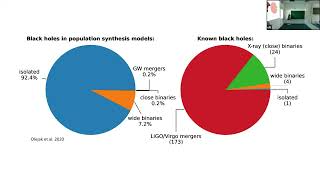
Toward the Mass Function of Black Holes with Modern Observations of Microlensing Events
Explore gravitational microlensing techniques for detecting isolated stellar remnants, focusing on recent advancements leading to the discovery of the first isolated stellar-mass black hole in the Milky Way.

Riemann Tensor, Geodesic Deviation Equation, and Einstein Equations - Lecture 10
Explore advanced general relativity concepts: Riemann tensor, geodesic deviation equation, Einstein equations, cosmological constant, and linearized gravity in this graduate-level lecture.
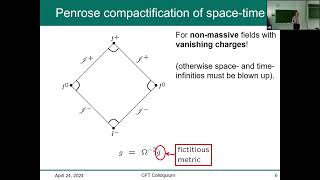
How to Measure Energy Carried by Gravitational Waves: A Pedestrian Version - Trautman-Bondi Energy
Explore gravitational wave energy measurement using radiation data and the Trautman-Bondi energy as Hamiltonian density, avoiding complex mathematics and "metric tensor at infinity" constructs.
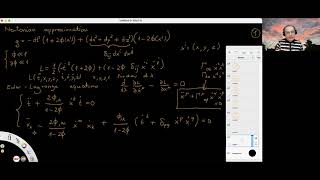
Riemann Tensor in General Relativity - Lecture 9
Explore the Riemann tensor through Christoffel symbols, geodesics, 2-sphere geometry, and Rindler spacetime in this advanced graduate-level physics lecture.
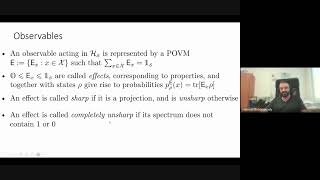
Quantum Measurements Constrained by the Third Law of Thermodynamics
Explore quantum measurements' compatibility with the third law of thermodynamics. Examine implications for ideal and repeatable measurements, and their impact on quantum reality concepts.
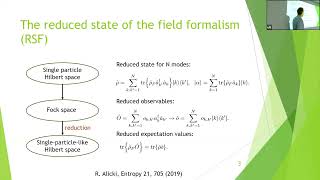
Mesoscopic Description of Entanglement of Bosonic Fields and Its Open Evolution
Explore mesoscopic descriptions of entanglement in bosonic fields, focusing on simplified models that capture non-classical phenomena for photonic quantum computing and communication.
Rigidity, Zero Modes, States of Self Stress, and Surface Phonons in Periodic and Diluted Networks
Explore rigidity, zero modes, and surface phonons in periodic networks near instability. Gain insights into elastic properties and mode structures of lattices with central-force springs and bending forces.
Nonequilibrium: From Heat Conduction to Turbulence and Life - Rothschild Lecture
Explore nonequilibrium phenomena from heat conduction to turbulence, with insights on mathematical approaches and potential applications to life systems.
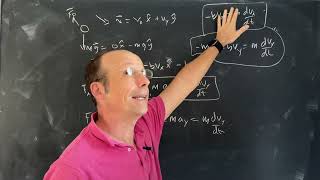
Classical Mechanics: Comparing Fall Times of Dropped and Launched Balls
Explore the impact of air resistance on falling objects through a comparative analysis of dropped and horizontally launched balls using various drag models.
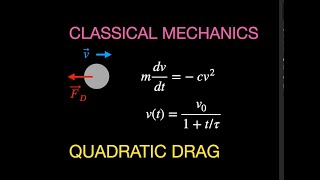
Classical Mechanics: Linear Motion with Quadratic Drag
Explore linear motion with quadratic drag in classical mechanics, deriving velocity and position functions over time using Python simulations.
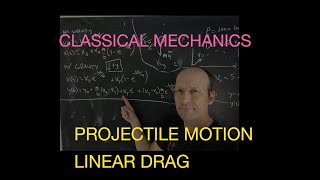
Classical Mechanics: 2D Projectile Motion with Linear Drag
Explore 2D projectile motion with linear drag, analyzing range and velocity for specific scenarios like a tiny ice ball launch. Includes Python code demonstration.
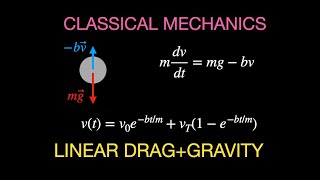
Classical Mechanics: Falling Object with Linear Drag
Explore falling objects with linear drag, analyzing velocity and position over time. Includes Python modeling for practical application.
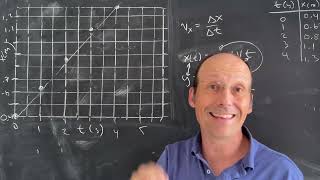
Physics Lab: Using Data to Plot Linear Functions
Learn to create linear graphs for physics labs using Vernier's Graphical Analysis software, enhancing data visualization and analysis skills.
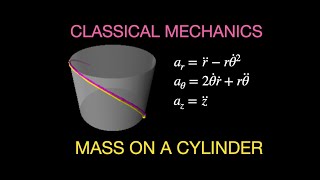
Classical Mechanics: Cylindrical Coordinates - Mass on a Cylinder
Explore cylindrical coordinates in classical mechanics, analyzing particle motion on a vertical cylinder surface using Newton's second law.
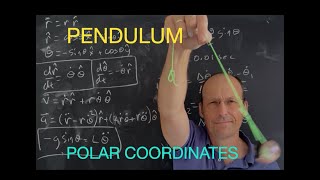
Classical Mechanics: Pendulum in Polar Coordinates - Python Modeling
Explore pendulum motion using polar coordinates and Newton's second law, with Python implementation for practical modeling.
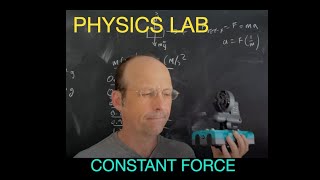
Physics Lab: Newton's Second Law with a Fan Cart
Explore Newton's second law using a fan cart, measuring acceleration as a function of mass in this hands-on physics experiment.