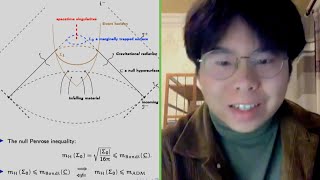
Null Hypersurfaces and the Penrose Inequality for a Perturbed Schwarzschild Black Hole
Explores the Penrose inequality in general relativity, focusing on null hypersurfaces and perturbed Schwarzschild black holes. Discusses recent breakthroughs and ongoing challenges in this field of gravitational physics.
Positivity of Mass for Asymptotically Hyperbolic Initial Data Sets - IPAM at UCLA
Explore asymptotically hyperbolic initial data in Einstein equations, focusing on positivity of mass and its implications for understanding gravitational systems and Bondi mass.
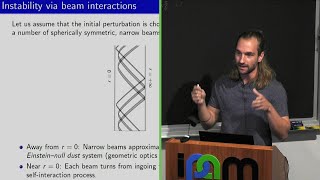
Instability of Anti-de Sitter Spacetime for the Einstein-Scalar Field System
Explores the AdS instability conjecture in Einstein-scalar field systems, presenting a rigorous proof and discussing potential extensions to vacuum cases in general relativity.
Numerical Relativity - Exploring New Capabilities with Binary Black Holes
Exploring advancements in numerical relativity for binary black holes, including improved gravitational wave extraction, computational algorithms, and extended parameter space coverage.
Multi-Messenger Aspects of Characteristic Evolution
Explore characteristic evolution in astrophysics, focusing on gravitational and electromagnetic fields, radiation extraction, and late-time effects in multi-messenger astronomy.
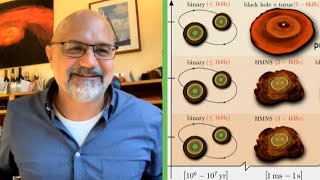
Binary Neutron Stars: From Gravitational to Particle Physics - IPAM at UCLA
Explore binary neutron stars as a rich laboratory blending gravity, astrophysics, and particle physics. Learn about recent modeling progress and insights into nuclear matter equations of state and phase transitions.
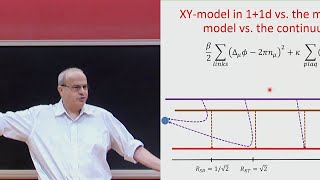
Quantum Field Theory of Exotic Systems - IPAM at UCLA
Explores quantum field theory for exotic systems, focusing on fracton phases and subsystem symmetries. Discusses challenges to traditional beliefs and examines novel approaches in 2+1 and 3+1 dimensions.
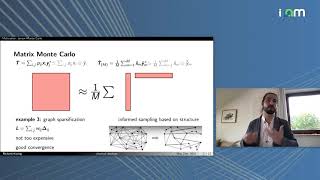
Predicting Many Properties of a Quantum System From Very Few Measurements
Efficient method for constructing approximate classical descriptions of quantum states using minimal measurements, enabling prediction of multiple properties with system size-independent measurement requirements.
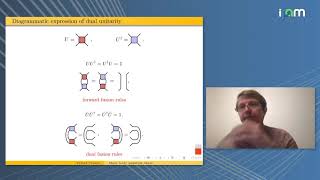
Exactly Solved Models of Chaotic Many-Body Dynamics
Explore chaotic many-body dynamics through exactly solved models, focusing on Floquet quantum spin chains and their connections to random matrix theory and entanglement dynamics.
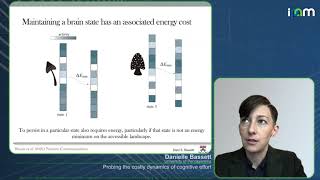
Probing the Costly Dynamics of Cognitive Effort
Explore cognitive effort through network theory, linking brain activity states, energy requirements, and entropy production. Gain insights into the biophysical nature of mental exertion and its implications for human behavior.
Daniel Faraco- Convex Integration and Mixing Flows
Explore convex integration and mixing flows in hydrodynamics, focusing on the Muskat problem and alternative approaches to understanding fluid behavior in unstable regimes.
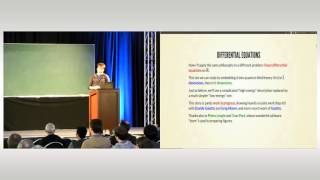
Panorama of Mathematics - Andrew Neitzke
Explore new geometric applications of quantum field theory in this insightful talk by Andrew Neitzke, highlighting recent trends and challenges in mathematical sciences.
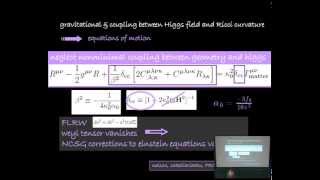
Aspects of the Bosonic Spectral Action
Explores noncommutative spectral geometry, its cosmological implications, scalar fields, and alternative definitions using zeta function regularization to address renormalizability and ultraviolet completeness.
Gapped Quantum Systems
Explore gapped quantum systems with Matthew Hastings, delving into advanced mathematical concepts and their applications in quantum physics and information theory.
From Electrons to the Simulation of Materials - IPAM at UCLA
Explore computational workflows for predicting complex materials properties, from phase diagrams to nanostructures, using density functional theory and machine learning potentials.
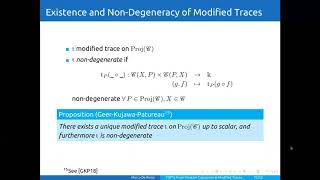
TQFTs from Non-Semisimple Modular Categories and Modified Traces - Marco de Renzi
Explore non-semisimple TQFTs and modified traces in topology, focusing on construction methods, invariants, and mapping class group representations derived from modular categories.
Spectral Gaps of Random Covers of Hyperbolic Surfaces
Explore spectral gaps in random hyperbolic surfaces, including Laplacian resonances and a probabilistic version of Selberg's 3/16 theorem, using transfer operators and zeta functions.
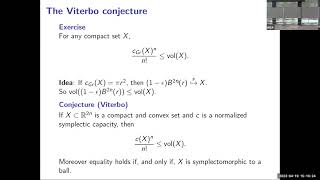
Toda Lattice, Billiards & the Viterbo Conjecture
Exploração da relação entre o reticulado de Toda, bilhares e a conjectura de Viterbo, com foco em sistemas integráveis e transformações simpléticas de produtos lagrangianos.
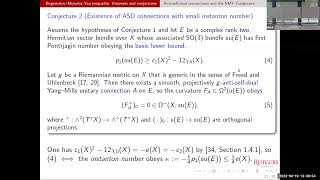
Gauge Theory and Low Dimensional Topology - Conference Lecture
Explore gauge theory and low-dimensional topology with expert insights from Paul Feehan in this engaging 48-minute conference talk at the University of Miami.
Gauge Theory and Low Dimensional Topology
Explore gauge theory and low-dimensional topology with insights from MIT expert Tom Mrowka in this conference talk at the University of Miami.
An Exact Triangle in Monopole Floer Spectra
Explore an exact triangle for monopole Floer spectra, its application to almost-rational plumbings, and potential future calculations in this advanced topology conference talk.