Compact Representations of Excited States from QMC, as Data for Low-Energy Models
Explore compact wave function representations for excited states in quantum mechanics, focusing on variational Monte Carlo methods and their applications in effective model development.
Quantum Time Correlation Functions in an Open-Chain Path Integral Distribution
Explore quantum time correlation functions using open-chain path integrals, offering a new perspective on semiclassical approximations in computational chemistry with potential applications in rate theory and spectroscopy.
Fundamentals of Energy, Work and Power - Lecture 1
Explore thermodynamics laws, efficiency, and work in systems. Gain insights into renewable energy concepts through interactive discussions and practical examples.
Fast, Accurate and Large-Scale Ab-Initio Calculations for Materials Modeling
Explore advanced computational methods for large-scale density functional theory calculations, their applications in materials modeling, and the performance of the DFT-FE open-source code.
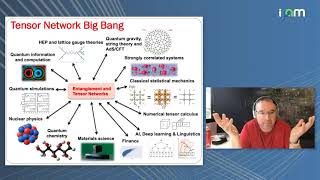
News on Tensor Network Simulations for Quantum Matter and Beyond
Explore recent developments in tensor network simulations for quantum systems and their applications beyond physics, including portfolio optimization in finance.
Emergent Gapless Quantum Spin Liquid from Deconfined Quantum Critical Point
Explores emergent gapless quantum spin liquid near deconfined quantum critical point using tensor network state methods, providing evidence for its existence in antiferromagnetic Heisenberg models.
Schrödinger Bridges - Classical and Quantum
Explore Schrödinger bridges in classical and quantum contexts, their applications to Markov chains and quantum channels, and their solutions for probability distributions and state evolutions.
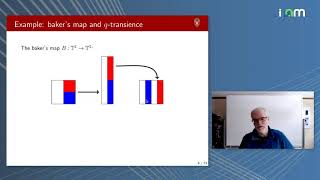
On Mix-Norms and the Rate of Decay of Correlations
Explores mix-norms and correlation decay rates in complex flows, discussing q-recurrence, q-transience, and their implications for measuring mixing intensity in various systems.
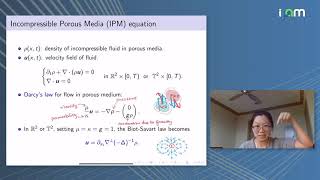
Small Scale Formations in the Incompressible Porous Media Equation
Explore small scale formations in incompressible porous media equations, including infinite-time growth of Sobolev norms and potential finite-time blow-up scenarios.
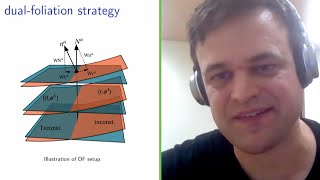
Dual-Frame Generalized Harmonic Gauge on Hyperboloidal Slices - IPAM at UCLA
Explore advanced techniques in general relativity, focusing on including future null-infinity in computational domains for cosmic censorship studies and gravitational wave astronomy applications.
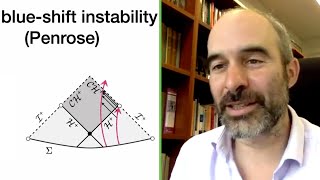
Strong Cosmic Censorship Versus Λ - IPAM at UCLA
Explore the strong cosmic censorship conjecture in general relativity, its challenges with non-zero cosmological constant, and implications for black hole physics and determinism.
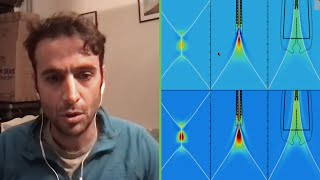
Binary Black Hole Mergers in Cubic Horndeski Theory - IPAM at UCLA
Explore binary black hole mergers in cubic Horndeski gravity, examining non-linear effects and comparing results to general relativity. Gain insights into alternative gravity theories and their implications for astrophysical phenomena.
Testing General Relativity with Black Hole Mergers - IPAM at UCLA
Explore testing general relativity with black hole mergers, focusing on numerical approaches to beyond-GR constructions and the challenges of extracting constraints from gravitational wave observations.
A Tale of Two Tails - IPAM at UCLA
Explore wave equations in asymptotically flat spacetimes, focusing on late-time tails and their implications for the strong cosmic censorship conjecture in odd spatial dimensions.
Challenges and Options for Beyond General Relativity Explorations - IPAM at UCLA
Explore challenges in extending General Relativity, including mathematical pathologies and potential solutions, with insights on computational approaches in multi-messenger astrophysics.
Realistic Binary Neutron Stars Collisions Simulations - Challenges and Opportunities
Explore challenges and opportunities in simulating binary neutron star collisions, focusing on realistic models, electromagnetic counterparts, and remnant properties using open-source codes and parametrized equations of state.
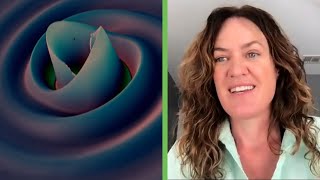
Numerical Relativity and the Next Generation of Gravitational Wave Detections
Explore numerical relativity's role in gravitational wave astronomy, its impact on understanding gravity, and future challenges as detectors improve. Insights into computational and data hurdles in this evolving field.
Computational Challenges with Modeling Core Collapse Supernovae - IPAM at UCLA
Explore computational challenges in modeling core collapse supernovae and gravitational wave emission, covering recent progress, physics requirements, and future directions in multi-dimensional simulations.
Introduction to Modelling Gravitational Waves from Compact Binaries
Explore gravitational wave modeling techniques for compact binary systems, covering inspiral, merger, and ringdown phases. Learn about semi-analytic models crucial for detection and analysis.
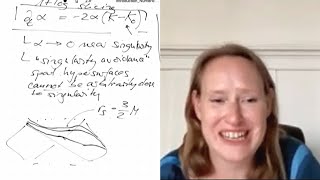
Helvi Witek - Introduction to Numerical Relativity, Part 2 - IPAM at UCLA
Explore advanced concepts in numerical relativity, including 3+1 spacetime decomposition, Einstein's equations, and stable simulation techniques for gravitational wave research.
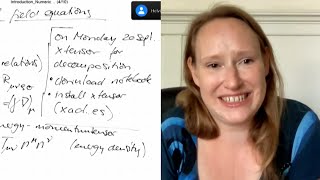
Helvi Witek - Introduction to Numerical Relativity, Part 1 of 2 - IPAM at UCLA
Explore the foundations of numerical relativity, including spacetime decomposition, Einstein's equations, and coordinate choices for stable simulations in gravitational wave astronomy.