
Neutral Evolution - Genetic Drift and Molecular Clocks
Explore genetic drift and neutral evolution, understanding how random changes in genes can impact species over time without affecting reproductive success.

Species and Speciation - Principles of Evolution, Ecology and Behavior
Explore the process of speciation, including definitions, mechanisms, and stages. Learn about reproductive isolation, ecological specialization, and genetic factors in species divergence.
Comparative Methods: Trees, Maps, and Traits in Evolution, Ecology, and Behavior
Explore genetic analysis methods connecting phylogeny to geography, tracing human migration and evolution. Learn about ancestral traits and their impact on fundamental biological concepts.
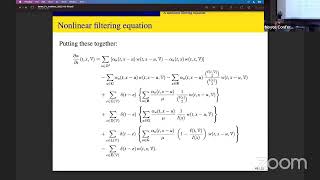
Phylodynamics and Markov Genealogy Processes
Explore phylodynamics and Markov genealogy processes to infer disease transmission from genomic data. Learn about a unified approach using exact likelihood expressions and dynamic genealogy evolution.
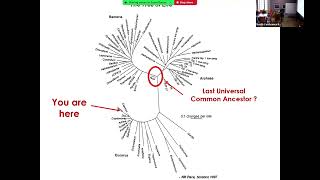
Topological Scaling Laws and the Mathematics of Evolution
Explore topological scaling laws in evolutionary biology, examining phylogenetic tree structures and their implications for understanding large-scale evolutionary patterns and processes.

Invertebrate Paleontology and Paleobotany
Explore marine invertebrates, fossil plants, and paleontology techniques. Learn species identification, evolutionary history, and ancient environments through fossils and geological evidence.
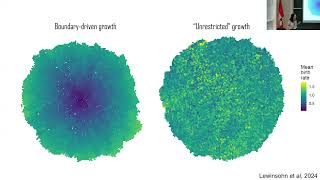
Decoding Evolutionary Information from Cancer Trees
Explore a 41-minute lecture on decoding evolutionary information from cancer trees, presented by Alison Feder from the University of Washington, Seattle. Delve into the intersection of oncology and evolutionary biology as part of the Thematic Program on…
Learning to Read and Write Protein Evolution
Explore protein language models and their role in understanding evolutionary rules, predicting mutation effects, and guiding artificial evolution for antibody development and novel protein structures.
Learn About SwissOrthology - Orthology Prediction Tool
Explore orthology prediction with SwissOrthology, covering molecular evolution, comparative genomics, and bioinformatics tools. Learn to use OMA, OrthoDB, and SPARQL for advanced genomic analyses.
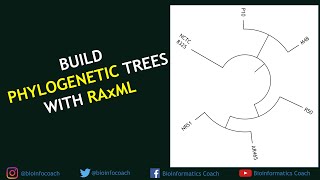
Phylogenetic Trees
Explore gene-based phylogenetic tree construction using RAxML and visualization with iTOL. Learn MUSCLE and PhyML for comprehensive evolutionary analysis techniques.
Genome Comparative Analysis
Explore bacterial genome analysis techniques, from phylogenetic tree creation to antimicrobial resistance gene identification, with hands-on tutorials suitable for beginners in bioinformatics.
Whole Genome Sequence Analysis
Comprehensive tutorial on bacterial genome analysis, covering assembly, comparative genomics, antimicrobial resistance gene identification, phylogenetic tree construction, and variant calling using bioinformatics tools.
Genomics
Comprehensive genomics exploration covering assembly, annotation, visualization, and analysis techniques for bacterial genomes, including phylogenetic tree construction and antimicrobial resistance gene identification.
Evolution
Comprehensive exploration of evolutionary biology, covering natural selection, phylogenetics, historical context, biodiversity, adaptation, and various evolutionary mechanisms and theories.
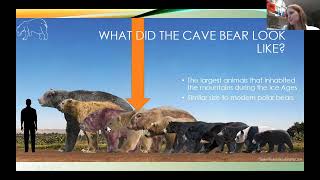
Cave Bears - The Unexpected Vegetarians of the Ice Age
Explore the surprising diet and lifestyle of Ice Age cave bears, challenging assumptions about their predatory nature and uncovering fascinating insights into their behavior and evolution.

Before Ankylosaurs, There Were Aetosaurs
Explore aetosaurs, Triassic armored reptiles predating ankylosaurs. Learn about their anatomy, evolution, and recent discoveries that shed light on these fascinating prehistoric creatures.
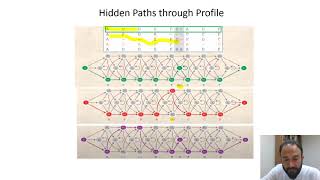
Bioinformatics Lectures
Comprehensive bioinformatics lectures covering algorithms, cancer genomics, phylogenetics, and sequence alignment. Includes practical tutorials and software demonstrations for data analysis in genomics and evolutionary biology.
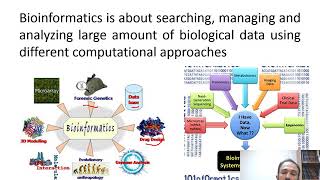
Introduction to Bioinformatics
Explore bioinformatics fundamentals, from genome projects to databases, sequence analysis, algorithms, and phylogenetics. Learn key concepts and practical applications in biological data analysis.
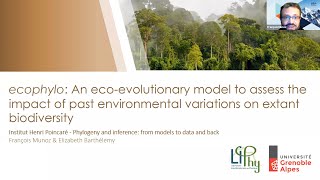
An Eco-Evolutionary Model to Assess the Impact of Past Environmental Variations on Extant Biodiversity
Explore an eco-evolutionary model assessing past environmental impacts on current biodiversity through the ecophylo framework.
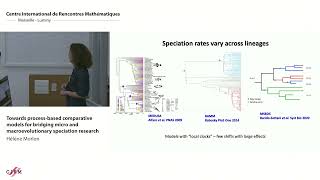
Towards Process-Based Comparative Models for Bridging Micro and Macroevolutionary Dynamics
Explorez les modèles comparatifs basés sur les processus pour relier la micro et la macroévolution. Découvrez les avancées en dynamique des populations mathématiques, écologie et évolution.
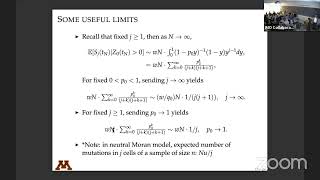
Computational Methods for Inferring Tumor Evolution and Heterogeneity
Explore computational techniques for analyzing tumor evolution and heterogeneity, enhancing understanding of cancer progression and treatment strategies.