
Embodied Cognition
Explore the concept of embodied cognition and its implications for understanding human thought processes and behavior.
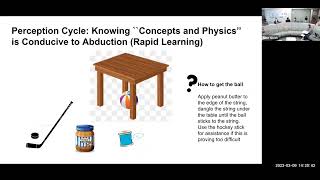
Cognitive Science Book Review
Explore key concepts and theories in cognitive science through an in-depth book review by Kaushik Roy, gaining insights into the interdisciplinary field of mind and cognition.

The Dialectical Relationship Between Emotion and Rationality
Explore the intricate interplay between emotion and rationality, uncovering how emotions often supersede reason and serve as a deeper reflection of our true desires and innermost thoughts.

Functionalism
Explore Putnam's Multiple Realizability argument and functionalist theory of mind, examining mental states as functional states with specific inputs and outputs in philosophy.

What Does It Mean to Die - Technology and Death
Explore how technology reshapes our understanding of mortality, from social media's digital afterlife to brain transplants, challenging traditional notions of life, death, and the pursuit of immortality.
On the Mathematical Basis of Models of Consciousness
Explore the mathematical foundations of consciousness models, examining structures to describe experience and developing a systematic framework based on philosophical concepts.
The Strange Loops Inside Our Brains
Explore the intriguing connection between Gödel's Incompleteness Theorem and consciousness, critically examining Hofstadter's analogies and their implications for understanding the mind-body problem.
Larissa Albantakis – Why a Little Bit of Causal Structure Is Necessary... Even for Functionalists
Explores why causal structure is essential for theories of consciousness, using thought experiments to argue that functionalist accounts lacking causal analysis are inadequate for identifying conscious individuals.
No Substitute for Functionalism
Explores types of variations in consciousness models, proving broad functionalist theories immune to substitution arguments. Discusses implications for consciousness science and functionalism.
A Vector Model of How Consciousness as Integrated Information Makes a Causal Difference
Explore a vector model of consciousness based on Integrated Information Theory, examining how phenomenal experiences can exert causal influence on physical substrates.
Towards a Category-Theoretic Framework for Phenomenal Holism
Exploring phenomenal holism through category theory, examining color experiences across the visual field and addressing theoretical concerns about inverted qualia and experience-substrate relationships.
Automata-Theoretic Approach to Modelling Consciousness Within Mental Monism
Automata-theoretic approach to modeling consciousness in mental monism, exploring constraints and implications for substrate-free models of the mind's structure and dynamics.
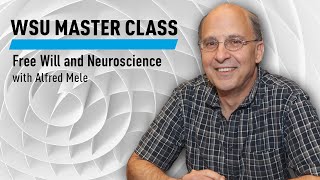
Free Will and Neuroscience - Philosophical Analysis of Experimental Data
Philosopher Alfred Mele critically examines neuroscientific data, arguing that free will remains a viable concept despite challenges from experimental findings.
Understanding the Nature of Minds - From Humans to Machines
Explore the concept of minds beyond humans, from animals to machines, challenging traditional perspectives and examining potential alien intelligences with science writer Philip Ball.

If Brains are Computers, Who Designs the Software?
Explore cognitive science with philosopher Daniel Dennett as he examines how education redesigns our brains, viewed as cerebral computers, and the implications for consciousness and mind evolution.
A Life of the Mind - Intellectual Journey with Daniel Dennett
Renowned philosopher Daniel Dennett reflects on his intellectual journey, exploring key ideas in cognitive science and philosophy while emphasizing the value of mistakes in the pursuit of knowledge.
Why Are Some Affordances More Inviting than Others? - Exploring Action Invitations
Exploring why certain affordances are more inviting and how coaches can influence this. Examines the relationship between affordances, agency, and behavior in sports and movement.
Image Making Fatigue in the Era of Machine Learning
Exploración de la transferencia de películas experimentales al espacio físico y sus desafíos con el avance del aprendizaje automático, difuminando límites entre original e imitación en la reestructuración digital de la sociedad.
What is Life and Consciousness? A Physics Perspective
Explore the fascinating intersection of physics, life, and consciousness with experts Jim Al-Khalili and Sara Walker as they discuss fundamental theories connecting physical laws to animate matter and awareness.

Can Physics Explain Consciousness - Professor Steven Gimbel Discusses Quantum Consciousness
Explore the intersection of physics and consciousness, examining theories like reductionism, dualism, and quantum mechanics to understand the mind-body connection and its implications for reality.
How the Brain Shapes Reality - With Andy Clark
Explore how the brain acts as a prediction engine, shaping our perception of reality and its implications for well-being, mental health, and society. Delve into the concept of perception as 'controlled hallucination'.