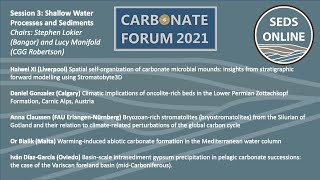
Shallow Water Processes and Sediments in Carbonate Systems - Session 3
Explore carbonate sedimentology through diverse topics: microbial mounds, oncolites, bryostromatolites, abiotic carbonate formation, and gypsum precipitation in pelagic successions.
Glacial Deposits and Earth's Glaciation Sediment Record - What is Normal?
Explore Earth's diverse glacial deposits across geological eras, challenging assumptions about 'typical' glacial sediments and encouraging critical analysis of glaciation records.
Limestones: An Essential User Guide to Sediments That Dissolve, Precipitate and Grow
Explore limestone formation, importance, and applications in climate studies and sustainable solutions. Learn about carbonate sedimentology's role in understanding Earth's history and future environmental challenges.

Magnitude and Drivers of Short-Term Sea Level Fluctuations in the Cretaceous - A Review
Explore Cretaceous sea level changes, their magnitudes, and driving forces. Discover the impact of aquifer eustasy and the role of glacio-eustasy in shaping Earth's ancient oceans.
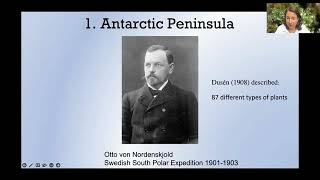
Ancient Floras of Antarctica as Indicators of Past Climate
Explore Antarctic vegetation history and its role in revealing past climate changes, from greenhouse to icehouse conditions, through fossil records and sediment analysis.
What Does the Sedimentary Record Tell Us About the Future of Rivers?
Explore how river sedimentary facies serve as proxies for past precipitation patterns, offering insights into future climate-driven changes in river systems.
The Potential of Fluvial Carbonates as Archives of Climate and Environmental Conditions
Exploring fluvial carbonates as sensitive indicators of past climate and environmental conditions, comparing present and past records from various basins to uncover high-resolution multiproxy data.
Paleotempestology - Using Sedimentary Deposits to Reconstruct Storm Impacts over Millennial Timescale
Explore paleotempestology: learn how sedimentary deposits reveal long-term storm impacts and climate patterns, offering insights beyond short-term instrumental records.

The Warm Fuzzies - Mammals and Climate Change in the Eocene of North America
Explore mammalian evolution and climate change during North America's Eocene epoch, examining fossil evidence and environmental impacts on species development and adaptation.
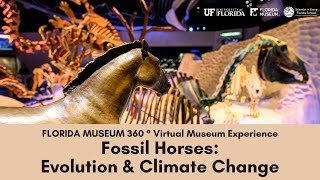
Fossil Horses - Evolution and Climate Change Through Florida's Geological History
Explore Florida's fossil horse history through geological epochs, learning how scientists study paleoclimates using fossils in this virtual museum tour with expert paleontologists.
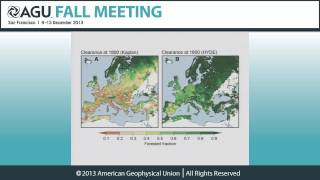
Early Agriculture: Land Clearance and Climate Effects - The Tyndall History of Global Warming Lecture
Explores early agriculture's impact on greenhouse gases and climate, challenging traditional views of anthropogenic effects. Updates evidence from ice cores, archaeology, and land-use histories to support the early anthropogenic hypothesis.
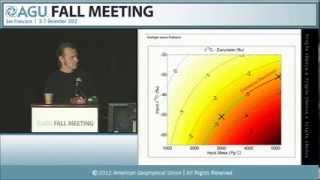
Emiliani Lecture - Triple Choice: Past, Present, and Future Climate
Explore paleoclimate insights, isotope fractionation, and climate sensitivity in this AGU lecture. Gain valuable perspectives on Earth's past to understand its future.
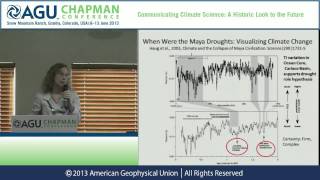
Communicating Climate Science: Ancient Maya Case Study
Exploring the complex relationship between ancient Maya civilization and climate change, challenging simplistic views and emphasizing interdisciplinary research to understand human-environment interactions.
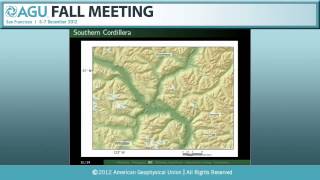
Climate Change and Cryospheric Systems - Part I
Explore climate change impacts on cryospheric systems through expert presentations on mountain glaciers, ice caps, and permafrost. Gain insights into past climate reconstructions and future projections for Earth's frozen regions.
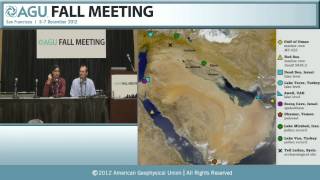
Climate Change and Its Impact on Ancient Civilizations
Explore how climate change influenced ancient civilizations in the Middle East and Indian subcontinent, examining archaeological evidence and climate records to understand societal shifts.
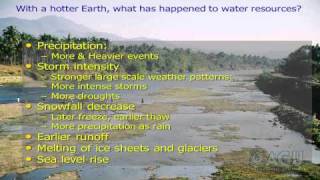
Climate Change: What's Going On and How Will It Affect Us
Explore the science behind climate change, its impacts on Earth systems, and potential future scenarios. Learn about evidence, models, and strategies for addressing this global challenge.
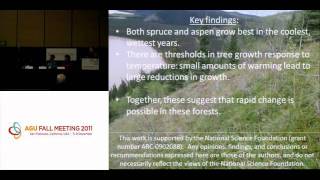
Small Climate Changes, Big Ecological Impacts - Fall Meeting 2011
Exploring how small climate changes can trigger rapid ecosystem shifts, including potential impacts on boreal forests and arctic tundra, and historical examples of regime shifts affecting megafauna.
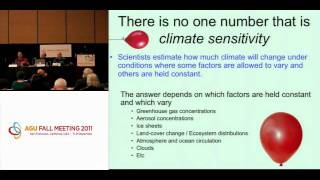
Paleoclimate Record Points to Potential Rapid Climate Changes - 2011 AGU Fall Meeting
Paleoclimate data suggests Earth may face rapid climate changes, with sea levels potentially rising several meters, even if global warming is limited to two degrees Celsius above pre-industrial levels.
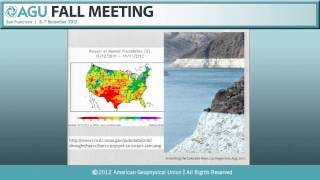
Mechanisms of Past and Future Droughts in the Southwest United States
Explore past and future drought mechanisms in the Southwest US, covering precipitation patterns, climate proxies, water availability projections, and global climate factors influencing regional hydrology.
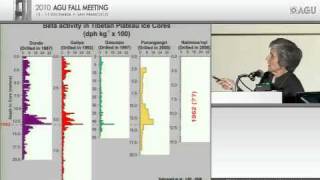
Past and Contemporary Climate Change: Evidence From Earth's Ice Cover
Explore Earth's climate history through ice core analysis, examining past changes and current trends to understand global warming's impact on our planet's future.
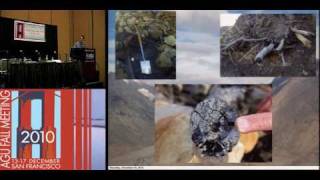
Mummified Arctic Forest Reveals Ancient Climate Change Clues
Discover ancient Arctic forests preserved in ice, revealing a warmer past and offering insights into ecosystem responses to dramatic climate shifts.