Abrupt Climate Change - Views from Past, Present, and Future
Explore past, present, and future abrupt climate changes through ice core research and environmental systems, examining their economic, physical, and social impacts on human society.
What's the Deal About the Anthropocene?
Explore the concept of the Anthropocene and its implications for Earth's geological history and future in this AGU Fall Meeting presentation, offering insights into human impact on the planet.
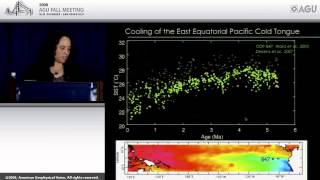
Lessons from the Pliocene Warm Period and the Onset of Northern Hemisphere Glaciation
Explore the Pliocene Warm Period and Northern Hemisphere glaciation onset with insights from Ana Christina Ravelo's lecture, covering global ice volume, tropical Pacific changes, and climate modeling.
Excursions and Paleointensity - Integration of Magnetic and Oxygen Isotope Stratigraphies
Explore magnetic excursions and paleointensity through integrated magnetic and oxygen isotope stratigraphies, enhancing understanding of Earth's magnetic field history.
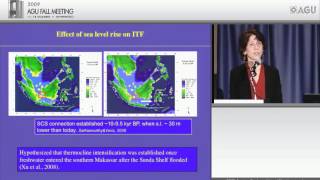
Holocene Changes in the Indonesian Throughflow Region
Explore Holocene-era changes in the Indonesian Throughflow region, examining climate patterns, ocean circulation, and their impacts on global systems over the past 11,700 years.
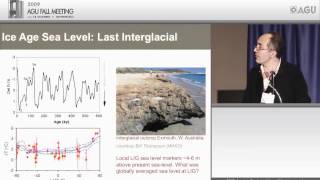
A Eulogy for Eustasy - Fall Meeting 2009 Birch Lecture
Explore the complexities of sea level change, challenging traditional models and examining new evidence from geological records, tide gauges, and satellite data.
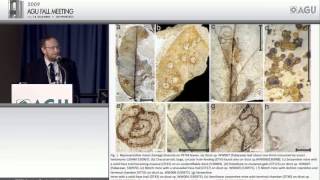
The Biggest Control Knob: Carbon Dioxide in Earth's Climate History
Explore Earth's climate history and CO2's pivotal role as the primary climate regulator, from ancient ice ages to modern global changes, with insights from geological evidence and ice cores.
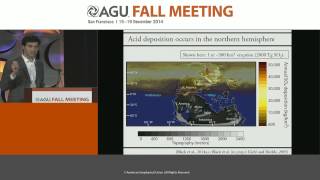
Reconstructing Permian-Triassic Climate during Siberian Traps Magmatism - Lecture U53A-08
Explore climate reconstruction during Siberian Traps magmatism, examining Large Igneous Provinces, volatile budgets, thermal modeling, and CO2 impacts on Permian-Triassic environments.
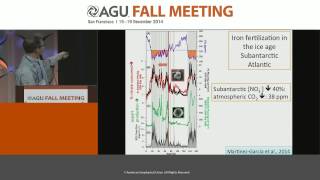
Southern Ocean Biogeochemical Control of Glacial-Interglacial Carbon Dioxide Change
Explore the Southern Ocean's role in glacial/interglacial CO2 fluctuations through Antarctic and subantarctic data analysis, modeling, and deglaciation insights.
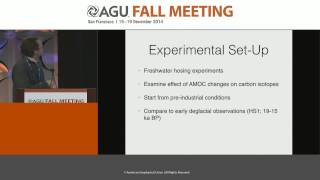
Carbon Isotopes Support Atlantic Meridional Overturning Circulation Decline - Early Deglacial CO2 Rise Trigger
Explore how carbon isotopes provide evidence for Atlantic Meridional Overturning Circulation decline and its role in triggering early deglacial CO2 rise.
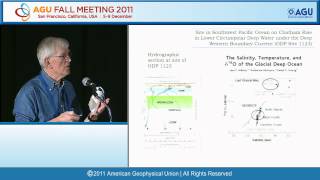
What a Single Celled Organism Can Tell Us About Climate History - A Status Report on Paleocean Proxies
Explore climate history through single-celled organisms in this lecture by Henry Elderfield. Discover paleocean proxies and their role in understanding Earth's past climate changes.
Climate Change Insights from Ice Cores - Cesare Emiliani Lecture
Explore climate change insights with Richard B. Alley's Cesare Emiliani Lecture at the AGU Fall Meeting 2002, offering valuable perspectives despite potential video quality issues due to age.
Why We Study Earth's Past and How We Apply This Knowledge
Explore Earth's 4.5 billion-year history and its relevance to predicting future climate, life, and disasters. Learn how past geological events inform resource discovery and the search for extraterrestrial life.
The Influence of a Rapidly Uplifting Orogen on the Preservation of Climate Signals
Explore how Taiwan's orogenesis affects climate signal preservation in sedimentary archives and its implications for interpreting past climate changes in the South China Sea.
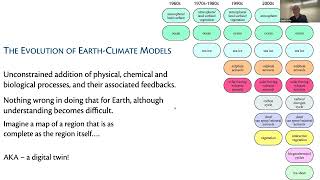
Planetary Climates and Paleoclimates - Old Problems and New Approaches
Explore planetary climates and paleoclimates, examining longstanding issues and innovative solutions with Professor Geoffrey Vallis from the University of Exeter.
Earth's Climate History from Glaciers and Ice Cores
Explore Earth's climate history through glaciers and ice cores, uncovering insights into past environmental changes and their implications for our planet's future.
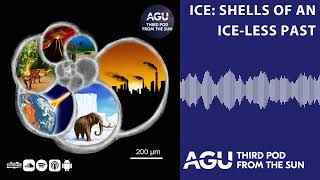
Ice: Shells of an Ice-Less Past - Tracking Climate Change Through Foraminifera Fossils
Explore Earth's ice-free past through fossil evidence, uncovering climate changes and their implications for our future with Smithsonian climate detective Brian Huber.
Climate Change and El Niño: Predicting Future Effects - Workshop
Experts discuss global warming's impact on El Niño and tropical oceans, using modern and ancient climate evidence to predict future effects on vulnerable communities and ecosystems.
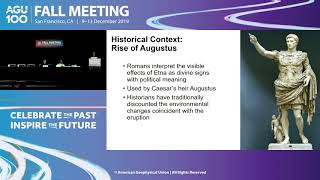
Etna Eruption's Global Impact and Influence on Roman History - 44 BCE
Explore new evidence linking Mt. Etna's eruption to global effects in 44 BCE and uncover the mysterious fate of Santorini's residents after a catastrophic eruption 3,500 years ago.
Loess and Wind-Blown Sediments - Episode Q with Mark Sweeney
Explore the fascinating world of loess with geologist Mark Sweeney in this in-depth discussion, covering its formation, distribution, and significance in understanding Ice Age floods and climate history.
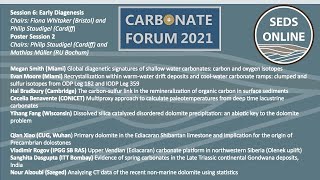
Early Diagenesis and Carbonate Sedimentology - Session 6 and Poster 2
Explore early diagenesis in carbonates through expert talks on isotopes, recrystallization, and dolomite formation. Includes poster presentations on Precambrian dolostones and Triassic spring carbonates.