
SN1 Reaction Mechanism
Comprehensive introduction to SN1 reaction mechanism, covering identification, carbocation rearrangements, stereochemistry, solvolysis reactions, substrate reactivity, and leaving group stability.
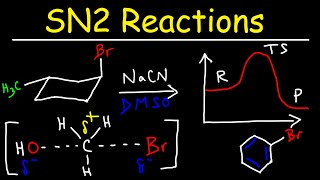
SN2 Reaction Mechanisms
Comprehensive introduction to SN2 reaction mechanisms, covering stereochemistry, substrate reactivity, nucleophilic strength, and practical applications in organic chemistry synthesis.

Acids and Bases - Basic Introduction - Organic Chemistry
Comprehensive introduction to acids and bases in organic chemistry, covering reactions, conjugates, Brønsted-Lowry and Lewis definitions, and equilibrium concepts.
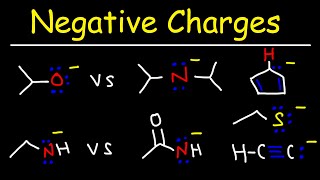
Stability of Negative Charges - Acids and Bases
Explore factors influencing negative charge stability in organic chemistry, including atomic size, electronegativity, resonance, and hybridization. Essential for understanding acids and bases.

Carbon-13 NMR Spectroscopy
Comprehensive introduction to carbon-13 NMR spectroscopy, covering decoupled and coupled spectra, DEPT, chemical shifts, and functional group analysis for organic compound identification.
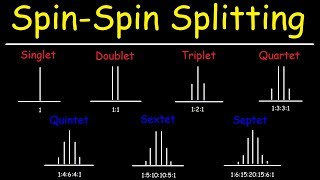
Spin Spin Splitting - N+1 Rule - Multiplicity - Proton NMR Spectroscopy
Comprehensive introduction to spin-spin splitting in proton NMR spectroscopy, covering N+1 rule, multiplicity, signal intensity ratios, and complex splitting patterns using practical examples.

Carbohydrates - Haworth and Fischer Projections With Chair Conformations
Learn to convert Fischer projections of glucose to Haworth projections and chair conformations. Covers monosaccharides, disaccharides, polysaccharides, and key concepts in carbohydrate chemistry.
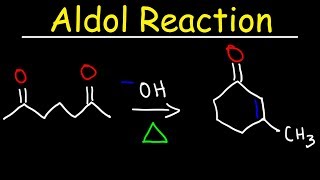
Aldol Addition Reactions, Intramolecular Aldol Condensation Reactions, Retro Aldol and Cross Aldol Reactions
Comprehensive overview of aldol reactions, including addition, condensation, intramolecular, retro, and cross aldol reactions. Covers mechanisms and provides practice problems for better understanding.
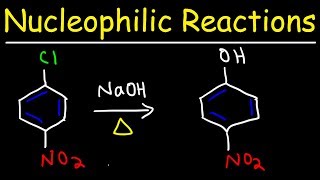
Nucleophilic Aromatic Substitution - Benzyne Intermediate and Meisenheimer Complex
Explore nucleophilic aromatic substitution reactions, including Meisenheimer complex and benzyne intermediate mechanisms, with practice problems and detailed explanations.
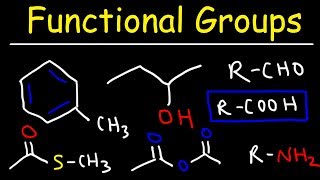
Functional Groups
Comprehensive introduction to organic chemistry functional groups, covering structures from alkanes to carbenes, essential for understanding molecular properties and reactions.

Nucleophilic Aromatic Substitution
Explore nucleophilic aromatic substitution in benzene derivatives, learning how nucleophiles attack aromatic rings and the mechanisms behind this unique organic chemistry reaction.
Organic Chemistry - Alcohol, Ether & Epoxide Practice Problems
Enhance your understanding of alcohols, ethers, and epoxides through guided practice problems, improving your organic chemistry skills and problem-solving abilities.
Organic Chemistry - Alcohol and Ether Mechanisms and Reactions
Explore alcohol and ether mechanisms and reactions in organic chemistry, covering key concepts and processes for a deeper understanding of these important compounds.
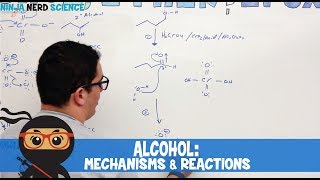
Organic Chemistry - Alcohol Mechanisms & Reactions
Practice problems on alcohols, ethers & epoxides, focusing on mechanisms and reactions. Enhance your understanding of organic chemistry concepts through hands-on problem-solving.
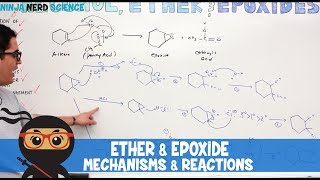
Organic Chemistry - Ether and Epoxide Mechanisms and Reactions
Explore ether and epoxide mechanisms and reactions in organic chemistry, covering key concepts and processes for a deeper understanding of these important compounds.

Drawing Organic Chemistry Condensed Structural Formulas and Skeletal Structures
Learn to draw and convert between organic chemistry structural formulas, including Lewis, condensed, and skeletal structures. Master techniques for both acyclic and cyclic compounds with practice problems.

Identifying and Drawing Resonance Structures
Learn to identify and draw resonance structures in organic chemistry with step-by-step guidance, practice problems, and exam-style questions. Covers various charge scenarios and multiple pi bonds.
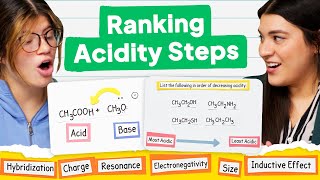
Ranking Acidity, Using pKa, and Drawing Arrows in Acid-Base Reactions
Learn to rank acids using pKa, draw curved arrows in acid-base reactions, and predict equilibrium favorability. Master key factors influencing acidity and apply concepts through practice problems.
Identifying Functional Groups - Study With Us
Comprehensive guide to identifying and understanding functional groups in organic chemistry, with practice problems and expert explanations to enhance learning and retention.
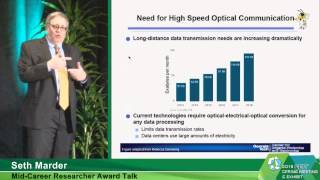
The Design of Organic Molecules and Materials for Nonlinear Optical Applications
Explores design strategies for organic molecules with enhanced nonlinear optical properties, focusing on two-photon absorption and third-order susceptibility for advanced applications.

Rift Valley Fever in East Africa: Three Frontiers, One Purpose
Explore Rift Valley Fever in East Africa with Dr. Baldwyn Torto, discussing research on insects impacting food security, human health, and biodiversity, with a focus on improving African livelihoods.