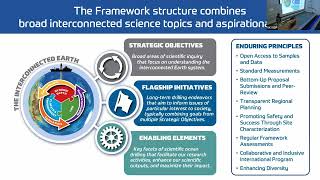
The 2050 Science Framework: Exploring Earth by Scientific Ocean Drilling
Explore Earth's future through scientific ocean drilling with the 2050 Science Framework overview by Dr Roz Coggon.
Oceananigans - An Ocean-Flavoured Fluid Dynamics Library
Explore Oceananigans, a Julia-based fluid dynamics library for oceanic modeling, featuring flexibility, GPU performance, and easy integration of custom components like sea-ice and biogeochemistry.
Using Intuition and AI to Save Coral Reefs
Discover how AI and physical intuition can identify resilient coral reefs in the Coral Triangle, aiding conservation efforts through connectivity analysis and novel sound monitoring techniques.
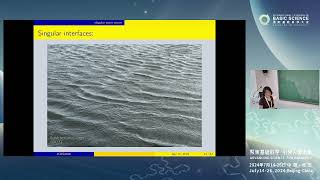
On the Motion of Water Waves with Angled Crests
Explore recent findings on 2D water wave dynamics with angled crests, delving into their unique motion and characteristics.
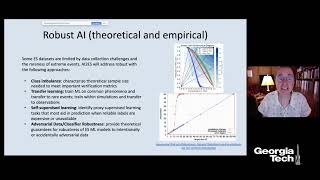
Building Trustworthy AI for Environmental Science
Explore trustworthy AI methods for environmental science, focusing on weather, climate, and coastal oceanography predictions, with insights on hail and tornado forecasting.
From Hydrothermal Vents to Cold Seeps - How Bacteria Sustain Ocean Life
Explore microbial symbioses in marine ecosystems, from hydrothermal vents to cold seeps. Discover how bacteria sustain ocean life and learn about cutting-edge research techniques in marine microbiology.
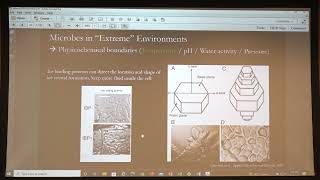
Microbes of Extreme Environments
Explore microbial life in extreme environments and their implications for space exploration and life detection techniques on ocean worlds.
Waves and Wind-Driven Flows in the Ocean - Lecture 2
Explore Kelvin-Stuart vortices in fluid mechanics, plasma physics, and planetary rings. Analyze stability, applications, and magnetic island equilibria in 2D ideal MHD equations.
Adaptive Potentials of Marine Calcifiers in an Ever-Changing Ocean
Explore adaptive potentials of marine calcifiers amid ocean changes, focusing on their resilience and evolutionary strategies in response to environmental shifts.
What Shark Teeth Can Tell Us About Ancient Oceans
Explore ancient oceans through shark teeth fossils, uncovering climate history and marine ecosystem evolution with Princeton researcher Alliya A. Akhtar.
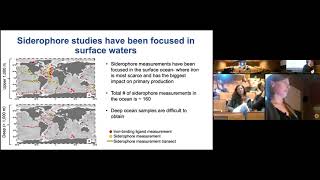
Microbial Iron Acquisition and Adaptations at Hydrothermal Vents
Explore microbial adaptations for iron acquisition in hydrothermal vents, focusing on siderophores and their role in maintaining bioavailable iron in deep-sea ecosystems.
Turing Deployment at Sea - Identifying Plankton in Real Time
Discover how a rapidly developed algorithm for plankton species detection was deployed on a ship, revolutionizing marine research and environmental monitoring.
Sea-Level Modeling: From Resolving Tribal Land Disputes to Inferring Earth Viscosity Structure
Explore sea-level modeling applications, from tribal land dispute resolution to Earth's viscosity structure inference, with Dr. Evelyn Powell's insightful presentation.
Robotically Exploring the Alien World of Earth's Deep Ocean
Explore robotic deep-sea expeditions and their implications for NASA's search for alien life. Discover how autonomous vehicles embody scientific minds in extreme environments.
Scouring the Seafloor for Hydrothermal Vents and Biosignatures on Mars and Europa
Explore hydrothermal vents, biosignatures, and life detection in extreme environments with Dr. Bonnie Teece. Gain insights into astrobiology research and its applications to Mars and Europa.
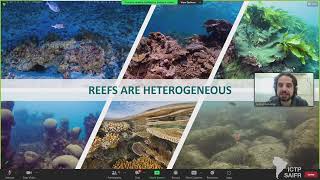
Can We Predict the Future of Brazilian Reefs? - QEco Program Seminar
Explore Brazilian reef ecosystems, their future predictions, and conservation strategies through expert insights and quantitative ecological approaches.
Waves and Wind-Driven Flows in the Ocean - Lecture 3
Explore ocean dynamics through waves and wind-driven flows, focusing on Kelvin-Stuart vortices, their stability, and applications in fluid mechanics and plasma physics.
Ocean Diffusivity: Stochastic Approaches in Numerical Modeling
Explore stochastic approaches in ocean modeling, including Monte-Carlo methods, perturbed conditions, and stochastic dissipation operators for improved numerical simulations.
Waves and Wind-Driven Flows in the Ocean - Lecture 1
Explore ocean dynamics through waves and wind-driven flows in this comprehensive lecture, focusing on Kelvin-Stuart vortices and their applications in fluid mechanics and plasma physics.
Balance, Jets and Coherent Structures in Geophysical Fluid Dynamics - Lecture 1
Explore geophysical fluid dynamics, focusing on balance, jets, and coherent structures in planetary-scale flows.
Balance, Jets and Coherent Structures in Geophysical Fluid Dynamics - Lecture 2
Explore balance, jets, and coherent structures in geophysical fluid dynamics through an in-depth lecture by David Dritschel.