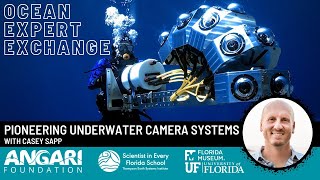
Ocean Expert Exchange - Pioneering Underwater Camera Systems
Discover cutting-edge underwater camera technology and its applications in cinema and science. Learn about innovative systems for capturing marine life and environments in unprecedented detail and immersion.
Shark Migration - Ocean Expert Exchange
Explore shark migration patterns and sensory biology with expert Dr. Stephen Kajiura. Learn about blacktip shark aggregations and cutting-edge research techniques in marine science.
New Insights into Boulder Transport by Major Storms
Explore groundbreaking research on boulder movement during severe storms, revealing insights into coastal erosion and storm intensity through advanced scientific methods.
Arctic Report Card 2013 - Latest Scientific Observations
Explore the latest scientific observations of the Arctic's changing climate, including snow cover, sea ice, temperature, Greenland ice sheet, vegetation, and wildlife. Experts present key findings from long-term monitoring programs.
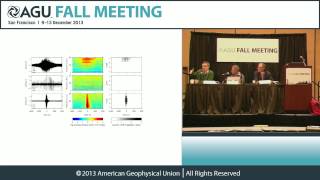
See Through Seas: Imaging the Planet's Hidden Interior
Scientists discuss groundbreaking 10-month mission using new technology to observe Earth's interior beneath oceans, providing unprecedented seismic data and insights into planetary processes.

State of the Climate System - Climate Science Lecture
Explore climate change impacts on Earth's ice, focusing on Arctic sea ice and coastal regions of Greenland and West Antarctica. Learn about cryospheric projections and potential sea-level rise consequences.
Melting Sea Ice in the Arctic - Five Myths and Current Research
Explore Arctic sea ice myths, current data, climate models, and societal impacts. Learn about unprecedented ice loss and the potential for a seasonal ice-free Arctic from expert speakers.
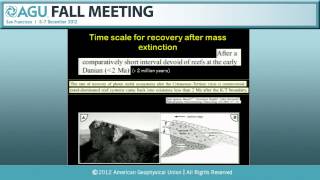
Ocean Acidification: Impacts and Challenges - Special Lecture
Explores the impacts of rising CO2 levels on ocean chemistry and marine life, discussing potential consequences for calcification, adaptation, and ecosystem survival in the face of rapid acidification.
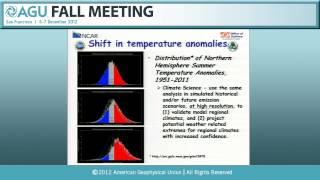
The Transformation of Climate Models to Earth System Models - Schneider Lecture 2012
Evolution of climate models to Earth system models, incorporating interactive cycles and components. Discusses future research challenges and Steve Schneider's vision for interdisciplinary collaboration in global change science.
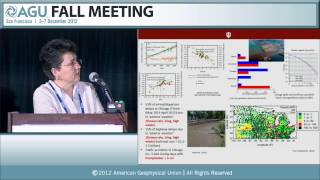
The National Climate Assessment - Key Findings and Regional Impacts
Comprehensive overview of the U.S. National Climate Assessment, covering engagement strategies, scientific findings, regional trends, and sector-specific impacts across the country.
Sustainable Oceans - Fall Meeting 2012
Explore sustainable ocean management strategies addressing climate impacts, human health, pollution, and resource use. Gain insights on coastal ecosystem resilience and policy approaches for a changing Arctic environment.
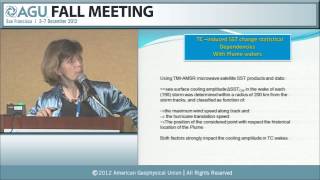
Science Results From Aquarius and SMOS Ocean Salinity Missions - 2012
Explore cutting-edge ocean salinity research from Aquarius and SMOS missions. Gain insights on tropical cyclones, ENSO, and innovative measurement techniques for understanding ocean dynamics.
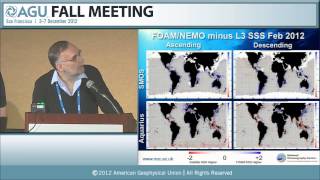
Science Results From the Aquarius and SMOS Ocean Salinity Missions - Fall 2012
Explore cutting-edge findings from Aquarius and SMOS ocean salinity missions. Gain insights into measurement techniques, algorithm improvements, and impacts on ocean systems understanding.
Ocean Acidification - Impacts, Challenges, and Policy Responses
Experts discuss ocean acidification's impacts on ecosystems, economy, and society, exploring mitigation strategies and policy implications for addressing this critical environmental challenge.
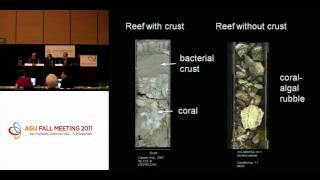
Ocean Acidification Impact on Coral Reefs - Press Conference
Experts discuss ocean acidification's impact on coral reefs, examining natural occurrences, lab simulations, and historical data to understand mechanisms and ecosystem vulnerability.
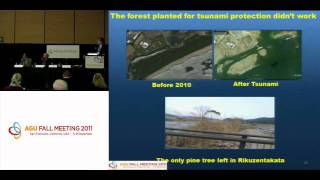
The 11 March 2011 Japan Tsunami - New Insights and Impacts - Press Conference
Insights from the 2011 Japan tsunami: wave behavior, coastal impacts, and global effects. Scientists discuss new findings on tsunami dynamics, damage patterns, and ecological consequences.
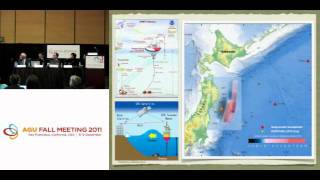
The 11 March 2011 Japan Tsunami - Scientific Assessments and Implications - Press Conference 1
Scientists discuss tsunami forecasting, eyewitness video analysis, and risk awareness implications following the 2011 Japan tsunami. Experts explore lessons for future preparedness and Pacific Northwest seismic risks.
Nonlinear and Scaling Processes in the Atmosphere and Ocean at All Scales
Explore cutting-edge research on nonlinear and scaling processes in atmospheric and oceanic systems, covering climate reconstructions, sensitivity, long-range memory, megadroughts, turbulence, and micro-scale phenomena.
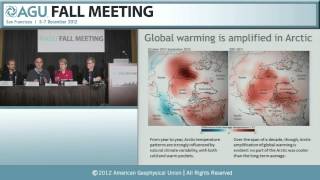
What's Going On in the Arctic - Fall 2012 Arctic Report Card Update
Experts discuss alarming Arctic changes: record sea ice loss, declining snow extent, rising permafrost temperatures, and extensive Greenland ice sheet melting, despite unremarkable air temperatures.
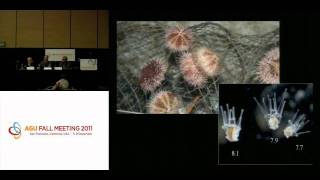
Ocean Acidification: Physiological Tipping Points for Marine Species - Press Conference
Experts discuss new research on ocean acidification's impact on marine species beyond corals, revealing stunted growth and development in fish, crustaceans, and sea urchins due to lower pH levels.

2012 American Geophysical Union Honors Tribute
Honoring excellence in geophysical sciences: AGU's 2012 award ceremony recognizes outstanding contributions in research, education, journalism, and climate communication across various disciplines.