Modelling, Upscaling and Simulation of Dissolution and Precipitation in a Porous Medium with an Evolving Pore-Scale Geometry
Explore modeling and simulation of dissolution and precipitation in porous media, focusing on evolving pore-scale geometry and its impact on Darcy scale properties. Learn upscaling techniques and numerical approaches.
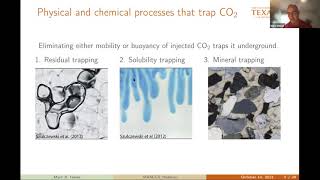
Solutal Convection in Porous Media
Explore solutal convection in porous media, challenging conventional theories with experimental findings and numerical simulations to understand flux patterns and mixing processes.
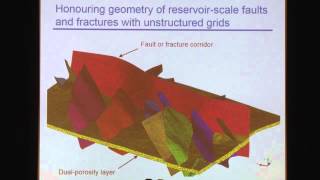
Numerical Simulation of Fractured Reservoirs
Explore advanced techniques for simulating fractured reservoirs, including dual-porosity models, unstructured grids, and probabilistic approaches to enhance flow prediction and reservoir management.
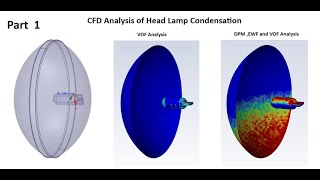
CFD Analysis of Head Lamp Condensation - VOF Approach
Explore condensation in headlamps using VOF evaporation-condensation approach in CFD analysis. Learn advanced techniques for automotive lighting design.
Subglacial Water Flow Simulations on GPUs - JuliaCon 2024
Explore GPU-accelerated subglacial water flow simulations using Julia, enabling large-scale modeling of glacier dynamics and sea level rise predictions.
A Quantum Computing Algorithm to Speed Up Metropolis Sampling
Explore a quantum algorithm for accelerating Metropolis sampling in multidimensional systems, leveraging wave function collapses for non-local configuration space moves.
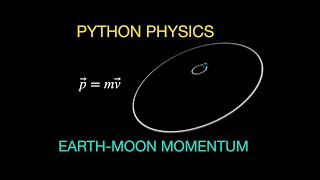
Python Physics: Conservation of Momentum for the Earth-Moon System
Explore conservation of momentum in the Earth-moon system using Python, enhancing understanding of fundamental physics concepts.
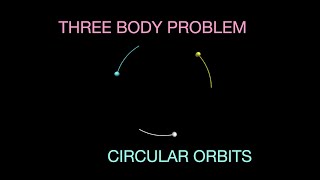
How to Achieve Circular Orbits in the Three-Body Problem
Explore stable circular orbits for three equal-mass planets using Python simulations and gravitational calculations.
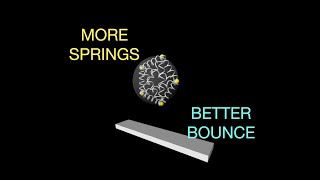
A Better Spring-Ball Model for Bouncing - Now with More Springs
Explore an improved spring-ball model for bouncing, featuring multiple interconnected balls and springs for enhanced simulation accuracy.
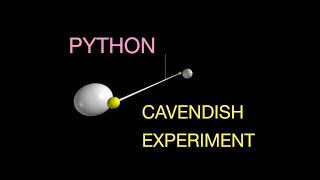
Modeling the Cavendish Experiment with Python
Model the Cavendish experiment using Python to explore gravitational forces between masses. Learn to simulate and analyze this classic physics experiment through coding.
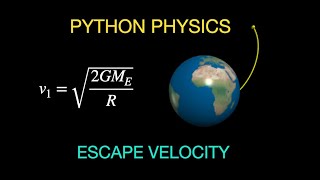
Python Physics: Escape Velocity from Earth
Calculate Earth's escape velocity using Python, exploring gravitational concepts and orbital mechanics.
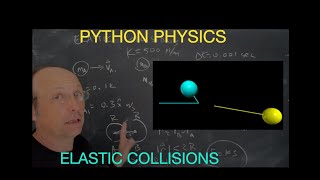
Python Physics: Modeling Elastic Collisions With Springs
Model elastic collisions using Python, simulating spring forces between overlapping objects for accurate physics simulations.
Numerical Evaluation of the Casimir-Polder Interaction at Finite Temperature
Explore numerical evaluation of Casimir-Polder interaction at finite temperature, focusing on DGTD method for complex setups including nonlocal materials and finite temperatures.
SpeedyWeather.jl - Reinventing Atmospheric Models
Innovative Julia-based atmospheric modeling tool offering interactive, user-friendly simulations for climate research, overcoming traditional Fortran constraints with flexible, extensible components.

CO2 Geological Storage Modeling with Machine Learning
Explore machine learning-based CO2 geological storage modeling, offering real-time insights and significant speedups compared to traditional simulations for efficient decarbonization strategies.
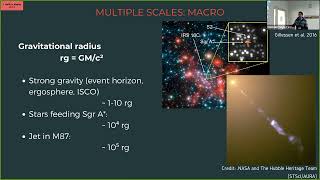
Simulating the Multi-Scale Environment of Supermassive Black Holes
Explore simulation techniques for modeling supermassive black holes, focusing on incorporating large-scale environmental data into event horizon simulations to enhance EHT observations.
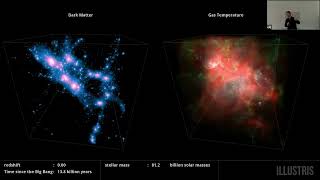
Exploring the Local Group with Constrained Simulations
Explore the Local Group using constrained simulations to study low-mass galaxies, including ultra-diffuse galaxies, and their implications for dark matter and galaxy evolution.
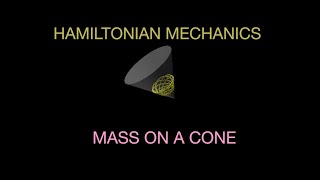
Hamiltonian Mechanics: Mass on a Cone with Gravity
Explore Hamiltonian mechanics through a mass-on-cone problem, using Python to model and analyze the motion in a gravitational field.
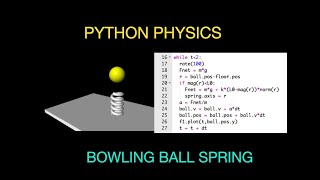
Python Physics: Modeling a Bowling Ball Landing on a Spring
Model a bowling ball's impact on a spring using Python, exploring energy conservation and force-based approaches to calculate compression.
Ocean Modeling: Stochastic Approaches to Numerical Simulations
Explore stochastic approaches in ocean modeling, including Monte-Carlo methods, perturbed initial conditions, and stochastic boundary conditions and dissipation operators for improved numerical simulations.
Recent Numerical Results on D0-Brane Matrix Model
Explore latest numerical simulations of D0-brane matrix model, confirming duality with type IIA superstring theory and uncovering new insights into M-theory and black holes.