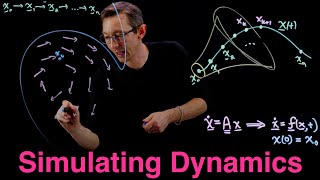
Numerical Simulation of Ordinary Differential Equations - Integrating ODEs
Explore numerical integration of ODEs to analyze nonlinear systems and generate trajectories. Learn techniques for solving complex dynamics where analytic methods fall short.

Numerical Modeling of the 2014 Oso, Washington, Landslide
Explore numerical simulations of the 2014 Oso landslide, examining factors behind its devastating runout. Learn how initial sediment conditions can dramatically influence landslide behavior and consequences.
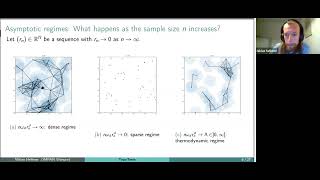
Topology-Driven Goodness-of-Fit Tests in Arbitrary Dimensions
Explore topology-driven goodness-of-fit tests using Euler characteristic curves for multi-dimensional samples, offering comparable power to state-of-the-art tests with controlled error rates.
Finite Point Blowup for the Critical Generalized Korteweg-de Vries Equation
Explore finite point blowup in critical generalized KdV equations, uncovering new blow-up dynamics and rates. Gain insights into recent advancements in nonlinear wave theory.
PDEs for Neural Assemblies - Analysis, Simulations, and Behavior
Explore PDEs for neural assemblies, analyzing their behavior through simulations and mathematical techniques with Professor Benoît Perthame from Sorbonne University.
Numerical Methods for SDEs with Singular Coefficients - Lecture 3
Explore numerical methods for SDEs with singular coefficients in this advanced mathematics lecture by Benjamin Jourdain, focusing on cutting-edge techniques and applications.
Numerical Methods for SDEs with Singular Coefficients - Lecture 1
Explore numerical methods for stochastic differential equations with singular coefficients in this advanced mathematics lecture by Benjamin Jourdain.
Numerical Methods for SDEs with Singular Coefficients - Lecture 2
Explore numerical methods for SDEs with singular coefficients in this advanced mathematics lecture by Benjamin Jourdain, focusing on cutting-edge techniques and applications.
Numerical Simulation of Timoshenko-Beam Models for Fiber-Based Materials
Numerical simulation techniques for modeling fiber-based materials using Timoshenko beam models, focusing on efficient preconditioners and applications in paperboard mechanics.
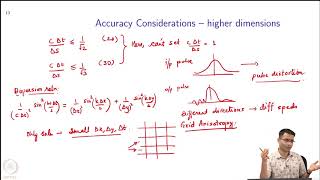
Finite Difference Time Domain Methods: Accuracy Considerations in Higher Dimensions
Explore accuracy considerations for Finite Difference Time Domain Methods in higher dimensions, enhancing understanding of numerical simulation techniques.
Mathematical Models of Electroporation Validated on Medical Data
Explore mathematical models of electroporation, focusing on medical data validation. Learn to evaluate treatments using numerical simulations and data assimilation strategies.

ME3255 - Quantitative Descriptions on Monte Carlo Models
Explore Monte Carlo models through quantitative descriptions, enhancing understanding of statistical simulation techniques and their applications in engineering and science.
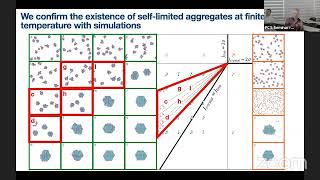
Principles of Self-Assembly for Particles with Simple Geometries and Complex Interactions
Explore self-assembly principles for particles with simple geometries and complex interactions. Discover stereotypical aggregates, predict outcomes using machine learning, and understand robust functional protein structures.
Orbital Evolution I - Selma De Mink, Sophie Schroder
Explore orbital evolution in binary systems, from stars to black holes. Learn about circumbinary gas, observational signatures, and numerical modeling techniques across astrophysical scales.
Well-Posed Formulation of Some Gravitational Effective Field Theories - Harvey Reall
Explores well-posed formulations of gravitational effective field theories, discussing challenges and recent advances in gravitational wave modeling for next-generation experiments and detectors.
Large Scale Simulations of Information Processing Within the Human Cortex
Explore large-scale simulations of the human cortex, examining emergent internal states and their implications for understanding consciousness and information processing in the brain.

Is There Evidence of Exponential Quantum Advantage in Quantum Chemistry - Quantum Colloquium
Explore theoretical and empirical evidence for exponential quantum advantage in ground-state energy determination for chemical problems, examining state preparation methods and numerical simulations.
Pendulum Simulation - Breaking Simple Harmonic Motion
Explore pendulum motion beyond simple harmonic approximations through coding, visualizing how small angle assumptions break down as amplitude increases.
Dark Energy by Varun Sahni
Explore the mysteries of dark energy and its implications for cosmology in this lecture by Varun Sahni, part of a comprehensive program on cutting-edge topics in modern astrophysics and cosmological research.
Dark Energy by Varun Sahni
Explore the mysteries of dark energy and its role in cosmic expansion. Delve into current theories, observational evidence, and implications for the Universe's future.
Galaxy Formation by Kandaswamy Subramanian
Explore galaxy formation processes, including dark matter's role, structure growth, and observational insights. Gain a comprehensive understanding of cosmic evolution and structure formation.