Unraveling the Dynamical Interactions Between Mesoscales and Submesoscales in Geophysical Fluid Dynamics
Explore dynamical interactions across oceanic scales, focusing on energy transfers, turbulent mixing, and instabilities. Learn cutting-edge techniques in geophysical fluid dynamics and climate modeling.
Meso- to Submesoscale Turbulence in the Ocean - Lecture 2
Explores meso- to submesoscale ocean turbulence, focusing on energy transfers, instabilities, and mixing processes. Examines theoretical frameworks and observational insights to enhance understanding of multi-scale oceanic dynamics.
The Balance Conundrum in Geophysical Fluid Dynamics
Explore geophysical fluid dynamics, covering eddies, waves, turbulence, and energy transfers in Earth's climate. Gain insights from theory, models, and observations, with tutorials on visualization and machine learning.
Exploring Internal Gravity Wave Interactions with Eddies and Waves
Investigación sobre interacciones entre ondas de gravedad internas, remolinos y otras ondas en fluidos geofísicos, examinando su impacto en la dinámica atmosférica y oceánica.
Impact of a Mesoscale Eddy on the M2 Internal Tide in 5km ICON-O
Explore the influence of mesoscale eddies on M2 internal tides using high-resolution ICON-O simulations. Gain insights into complex ocean dynamics and energy transfers in geophysical fluid systems.
The Geostrophic Eady Problem Revisited - Lecture 2
Revisiting the geostrophic Eady problem, exploring atmospheric and oceanic dynamics, instabilities, and energy transfers in geophysical fluid systems. Advanced analysis of multi-scale interactions in Earth's climate.
Impact of Tides and Eddies on Ocean Energy Spectra in Submesoscale Resolving Simulations
Explore the influence of tides and eddies on ocean energy spectra at submesoscale resolutions, examining their impact on energy transfers and dynamics in geophysical fluid systems.
Linking Submesoscale Frontal Dynamics to the Large Scale Background Environment
Explore the connection between submesoscale frontal dynamics and large-scale ocean environments. Gain insights into multi-scale interactions in geophysical fluid dynamics and their impact on Earth's climate.
Instabilities in Neural Autoregressive Models of Geophysical Flows
Explores instabilities in neural autoregressive models for geophysical flows, discussing challenges and advancements in predicting complex atmospheric and oceanic dynamics using machine learning techniques.
3D Hydraulic Modelling Essentials - Introduction to OpenFOAM
Explore 3D hydraulic modeling using CFD for water infrastructure. Learn workflows, solvers, and best practices for assessing vertical effects in hydraulic structures beyond 1D/2D models.
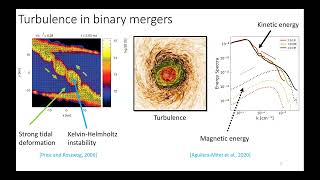
Modeling the Kelvin-Helmholtz Instability in BNS Mergers
Explore advanced modeling techniques for Kelvin-Helmholtz instability in binary neutron star mergers, enhancing understanding of gravitational wave sources and astrophysical phenomena.
Mechanisms of Offshore Solid and Liquid Freshwater Flux from the East Greenland Current
Explore mechanisms controlling freshwater export from East Greenland Current using numerical models and scaling theory. Analyze offshore ice flux, liquid freshwater flux, and key parameters influencing these processes.

Maximum Range Launch Angle for a Football - Python Simulation
Explore optimal football launch angles using Python, considering gravity and air resistance for maximum range.
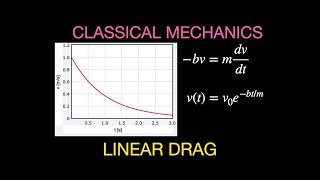
Classical Mechanics: Linear Drag without the Gravitational Force
Derive motion equations for objects with velocity-proportional drag, excluding gravity. Includes numerical modeling and Python code for practical application.
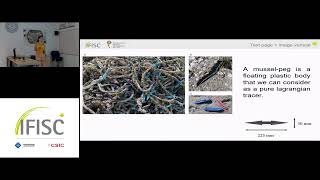
Lagrangian Transport of Floating Plastics at Local and Regional Scales Using MOHID-Lagrangian
Explore Lagrangian transport modeling for floating plastics using MOHID-Lagrangian, focusing on local and regional scale applications.
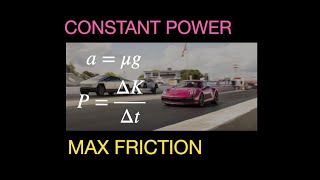
Python Physics - Modeling Motion of a Porsche on Quarter Mile Track
Explore Python-based physics modeling to simulate a Porsche 911's quarter-mile acceleration, using real data to analyze power, friction, and motion dynamics.
Disks Around Binaries and Binaries in Big Disks - Dong Lai
Explore the dynamics of circumbinary gas and its influence on binary systems, from stellar pairs to supermassive black holes. Gain insights into observational signatures and numerical modeling techniques.
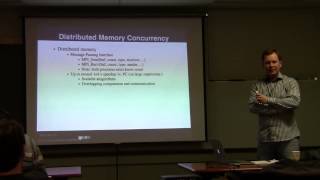
C++ in Space Plasma Model Development
Explore space plasma modeling using C++11, covering numerical methods, advanced algorithms, and concurrency for efficient simulations in astrophysics and space weather.
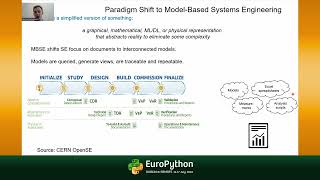
When Models Query Models
Explore a framework for large-scale engineering systems using notebook-encapsulated models, Docker containers, and REST APIs. Learn about model querying and dependency management for efficient design optimization.
Physics Lab: Modeling the Motion of a Falling Coffee Filter with Python
Model falling coffee filter motion with Python, exploring air resistance and drag coefficients using real data and numerical calculations.
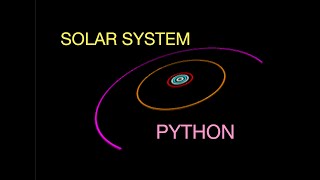
Building a 3D Model of the Solar System with Python
Construct a 3D solar system model using Python and Web VPython, exploring numerical modeling and adding multiple planets.