
Numerically Solving the Schrodinger Equation in Scilab - Harmonic Oscillator and Infinite Square Well
Learn to numerically solve the Schrödinger equation using Scilab, covering finite difference methods and applications to harmonic oscillator and infinite square well potentials.

Sort in NumPy - Python Programming
Learn to efficiently sort arrays in NumPy using the sort() function, exploring its parameters and applications in Python data analysis and manipulation.
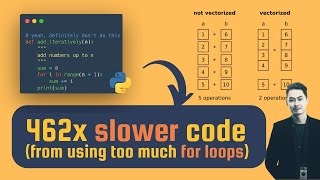
Use Less For-Loops, Use More Vectorization - Improving Code Efficiency
Optimize Python code by replacing for-loops with vectorization techniques, improving efficiency and speed while maintaining readability and functionality.
Coding a Neural Network - Full Stack Deep Learning - Spring 2021
Code a neural network from scratch using Google Colab, NumPy, PyTorch, and Keras. Learn linear regression and multi-layer perception models through hands-on implementation and visualization.
Diffrax - Numerical Differential Equation Solvers in JAX
Explore numerical differential equation solvers in JAX with Diffrax, covering implementation, features, and applications in machine learning and dynamical systems.
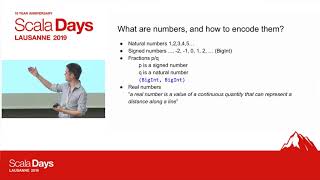
Pick Your Number Type With Spire
Explore Spire's versatile number types for Scala, enhancing numerical computations with precision and efficiency. Learn to choose the right type for your specific needs.
Deep Dive in Nx Backends - Lecture 1
Explore Nx Backends in Elixir, understanding their impact on performance and automatic differentiation. Learn about backend structure, runtime dispatching, and integration with Axon for deep learning.

Using Rust for Numerical Applications
Explore Rust's potential for numerical applications, covering optimization techniques, benchmarking, testing, and integration with Python for high-performance scientific computing.
Structured Arrays in Wolfram Language: Representation and Computation
Explore efficient representation and computation with structured arrays in Wolfram Language, focusing on matrices and their applications.
Optimizing Python Code Speed with Numba JIT Compiler
Accelerate Python code execution using Numba's JIT compiler, leveraging jit and njit decorators for enhanced performance.
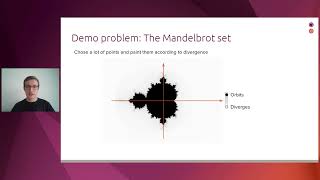
Introduction to Numerical Computation Applications Using Ubuntu WSL
Explore numerical computing on Ubuntu WSL for efficient solver development and deployment, with practical examples and insights on streamlining workflows for complex engineering problems.

Simulating the Magnus Effect in Football Free Kicks Using SCILAB
Explore the physics behind curved football kicks through SCILAB simulation. Learn about Magnus effect, projectile motion, and programming to visualize unpredictable ball trajectories.
Secure Numerical Computing is Hard: Lessons from 10 Years of Open Data Science and the Long Road Ahead
Explore key security challenges and lessons learned from a decade of open data science, focusing on enterprise adoption of ML/AI technologies and emerging threats in numerical computing.
Bridging Domain Science and HPC with Julia
Explore Julia's potential in HPC, combining scientific ecosystem with high performance. Gain insights on its strengths, limitations, and notable international projects from an experienced user.
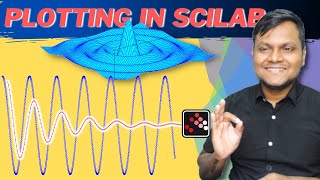
Plotting 2D and 3D Graphs in SCILAB - How to Plot Functions
Learn to create 2D, 3D, polar plots, and animations in Scilab. Master various visualization techniques for numerical computational tasks, enhancing your data representation skills.
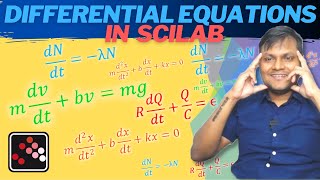
Solving Differential Equations in Scilab - First and Second Order ODEs
Learn to solve first and second order differential equations in Scilab using the ODE command, with practical examples from physics like radioactive decay, capacitor charging, and harmonic oscillators.
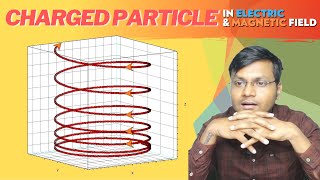
Simulating Charged Particle Motion in Electric and Magnetic Fields Using SCILAB
Explore charged particle motion in electric and magnetic fields through SCILAB simulations, covering physics concepts and programming techniques for various trajectories.
Introduction to Scilab for Beginners - Arrays, Conditional Statements, Loops, and Functions
Learn Scilab basics: mathematical operations, arrays, matrices, conditional statements, loops, and functions. Ideal for physics, math, and engineering students seeking numerical computation skills.
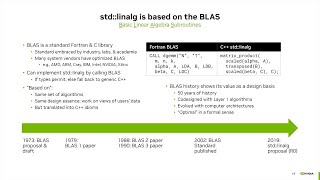
Linear Algebra Coming to Standard C++ - std::linalg
Explore std::linalg, a new C++ library for efficient linear algebra computations using modern C++ idioms. Learn its benefits, implementation, and potential impact on C++ development.
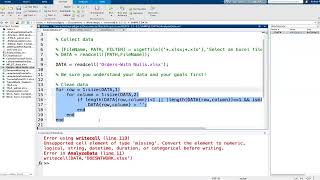
Data Cleaning with MATLAB - nanoHUB Tech Talk
Learn essential techniques for data cleaning in MATLAB, including handling missing values, removing outliers, and formatting data for analysis. Enhance your research and data processing skills.
Floating Point Computations Today and in the Future
Explore floating-point computations, IEEE 754 standard, data compression techniques, POSIT arithmetic, and C++ libraries. Gain insights into deep learning and alternative FP formats.