Root Finder in Space - Calculating Aphelion - Episode 2
Learn to calculate the aphelion of orbiting bodies using Scilab. This tutorial covers code setup for determining the farthest point in various celestial orbits.
Electric Potential Calculation Using Double Integral - Part 1
Explore numerical integration to calculate electric potential of charged shapes using Scilab, with code examples and practical applications in physics.
Police Chase Simulation with Obstacles - Episode 7
Explore a physics simulation of a police chase with random obstacles, analyzing motion, probability, and decision-making using Scilab programming.
Star Wars Fourier Lightsaber - Power Generation Analysis
Explore the power requirements of Star Wars lightsabers using Fourier series analysis, blending physics concepts with pop culture in an engaging 21-minute video.
Star Wars Fourier Lightsaber - Episode A
Explore the physics behind Star Wars lightsabers using Fourier series. Learn to model lightsaber behavior with code, blending sci-fi imagination with real-world mathematical concepts.
Police Chase: Impact of Reaction Times - Episode 6
Explore the impact of police officer reaction times on catching speeders through physics simulations and coding examples.
Police Chase - Variable Acceleration - Episode 5
Explore variable acceleration functions to model realistic police officer motion in a chase scenario using Scilab and gnuplot for visualization.
Root Finder in Space - Power Trip - Episode 6A
Explore gravitational potential energy's impact on aphelion and perihelion using different power laws. Discover the importance of log plots in analyzing orbital mechanics.
Potential Integrator 5 - Fun with Shapes: Exploring Electric Potential of Various Charged Objects
Explore electric potential of various charged shapes through numerical integration. Hands-on coding with Scilab to visualize and analyze electrostatic phenomena beyond simple rectangles.
Graphing Electric Potential in 3D - Potential Integrator Series Part 4
Explore 3-D visualization of electric potential using numerical integration. Learn to graph potential against x and y coordinates for various charged object shapes.
Potential Integrator - Checking Multipoles Against Electric Potential Code - Part 3
Explore numerical integration for electric potential of charged objects, comparing results with multipole expansion to verify accuracy.
Graphing Electric Potential vs Distance - Potential Integrator Series Part 2
Visualize electric potential through numerical integration, exploring various charged object shapes. Learn to graph V vs x using Scilab in this physics coding tutorial.
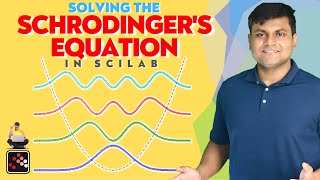
Numerically Solving the Schrodinger Equation in Scilab - Harmonic Oscillator and Infinite Square Well
Learn to numerically solve the Schrödinger equation using Scilab, covering finite difference methods and applications to harmonic oscillator and infinite square well potentials.

Simulating the Magnus Effect in Football Free Kicks Using SCILAB
Explore the physics behind curved football kicks through SCILAB simulation. Learn about Magnus effect, projectile motion, and programming to visualize unpredictable ball trajectories.
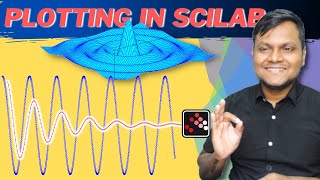
Plotting 2D and 3D Graphs in SCILAB - How to Plot Functions
Learn to create 2D, 3D, polar plots, and animations in Scilab. Master various visualization techniques for numerical computational tasks, enhancing your data representation skills.
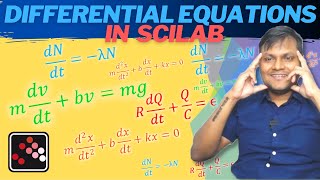
Solving Differential Equations in Scilab - First and Second Order ODEs
Learn to solve first and second order differential equations in Scilab using the ODE command, with practical examples from physics like radioactive decay, capacitor charging, and harmonic oscillators.
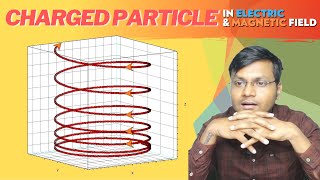
Simulating Charged Particle Motion in Electric and Magnetic Fields Using SCILAB
Explore charged particle motion in electric and magnetic fields through SCILAB simulations, covering physics concepts and programming techniques for various trajectories.
Introduction to Scilab for Beginners - Arrays, Conditional Statements, Loops, and Functions
Learn Scilab basics: mathematical operations, arrays, matrices, conditional statements, loops, and functions. Ideal for physics, math, and engineering students seeking numerical computation skills.