Computing Cyclotomic Polynumbers - Famous Math Problems
Explore cyclotomic polynomials, their factorization, and applications in algebra and number theory. Learn about Mersenne primes and the Schoenemann-Eisenstein criterion for irreducibility.
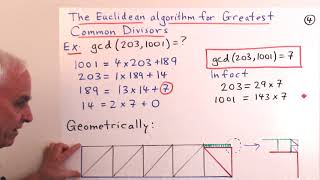
Turn Angles, Continued Fractions and Approximate Geometry - WildTrig: Intro to Rational Trigonometry
Explore turn angles and continued fractions to approximate geometry, using the Euclidean algorithm for angles and circular arcs. Learn about the natural unit of angle and its applications.
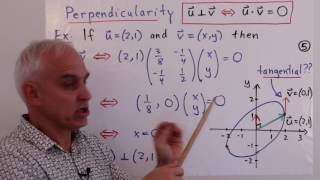
Geometry With a General Dot Product - WildTrig: Intro to Rational Trigonometry - N J Wildberger
Exploring advanced geometry using rational trigonometry and general dot products. Extends metrical geometry beyond chromogeometry, introducing new concepts of quadrance, perpendicularity, and spread.
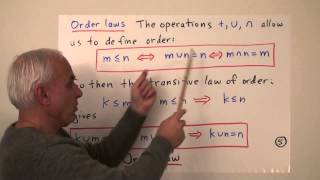
The Realm of Natural Numbers - Data Structures in Mathematics
Explore natural numbers through multisets, examining addition, union, and intersection operations. Discover unique properties, including a new distributive law that forms the basis for tropical calculus.
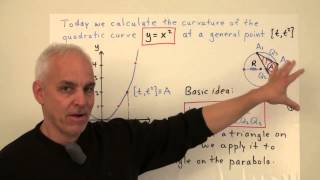
The Curvature of a Parabola, Without Calculus - Rational Geometry Math Foundations
Algebraic approach to calculate parabola curvature without calculus, using circle circumquadrance and triangle properties. Demonstrates wider applicability to various algebraic curves.
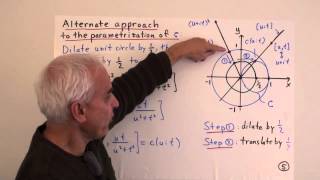
Relativistic Velocity, Core Circles, and Paul Miller's Protractor - Rational Geometry
Explores core circles in rational geometry, connecting projective and Euclidean geometry. Covers parametrization, quadrances, and theorems, bridging abstract concepts with practical applications.
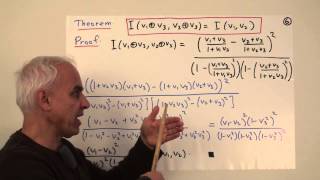
Relativistic Velocity, Core Circles and Paul Miller's Protractor - Rational Geometry
Explore core circles in rational geometry, connecting projective and Euclidean concepts. Learn about relativistic velocity addition and its implications for Einstein's special theory of relativity.
Absolute Versus Relative Measurements in Geometry - Rational Geometry Math Foundations
Explore the distinction between absolute and relative measurements in geometry, focusing on proportions and ratios. Learn about ancient Greek approaches and their relevance to modern mathematics.
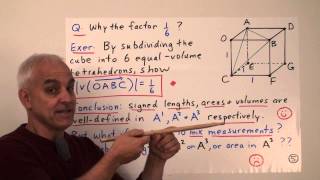
Higher Dimensions and the Roles of Length, Area, and Volume - Rational Geometry Math Foundations
Explore higher dimensions and the fundamental role of squared measurements in geometry. Discover how quadrance, quadrea, and quadrume offer more general and invariant alternatives to traditional length, area, and volume.
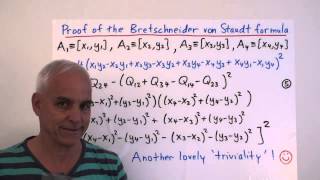
The Bretschneider Von Staudt Formula for a Quadrilateral - Rational Geometry Math Foundations
Explore the Bretschneider von Staudt formula for quadrilateral area, its history, and rational geometric formulations. Learn about generalizations of Archimedes' theorem and the importance of rational expressions in geometry.
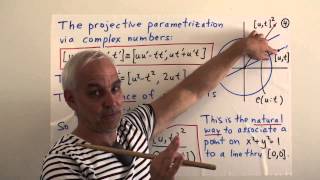
The Projective Line, Circles and a Proof of the CQQ Theorem - Rational Geometry Math Foundations
Explore projective parametrization of the unit circle, derive formulas for areas of triangles and quadrilaterals, and delve into circle geometry with applications to other conics.
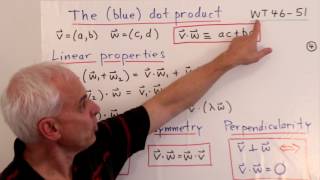
Spreads, Determinants and Chromogeometry - WildTrig: Intro to Rational Trigonometry
Explore spreads, dot products, and chromogeometry in linear algebra. Learn about vector operations, quadrance, perpendicularity, and the fascinating trilogy of blue, red, and green dot products.
Euclid and the Failure of Prime Factorization for Z - Data Structures Math Foundations
Explore the failure of prime factorization for z, challenging Euclid's theorem and examining ancient Greek mathematical foundations through a modern lens.
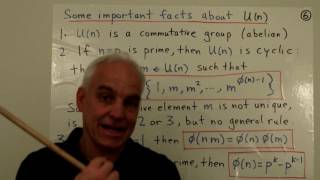
Reciprocals, Powers of 10, and Euler's Totient Function II - Data Structures Math Foundations
Explore unit groups, Euler's totient function, and number theory concepts. Learn how to calculate repeated cycles for fractions using algebraic techniques and group theory principles.
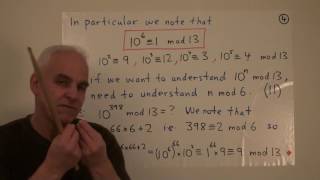
Modular Arithmetic With Fermat and Euler - Data Structures in Mathematics Math Foundations
Explore Fermat's and Euler's theorems in modular arithmetic, learning to simplify calculations and solve problems like z mod 13 through practical examples and applications.
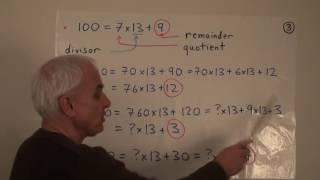
Back to Gauss and Modular Arithmetic - Data Structures in Mathematics Math Foundations
Explore modular arithmetic and its applications in number theory. Learn about congruences, divisibility, and efficient calculation of remainders without long division.
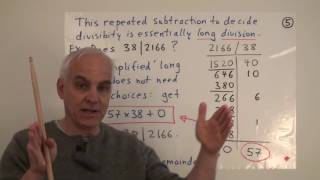
Divisibility of Big Numbers - Data Structures in Mathematics Math Foundations
Explore divisibility of large numbers, modular arithmetic, and long division techniques. Learn key concepts and practical applications in number theory and mathematical foundations.
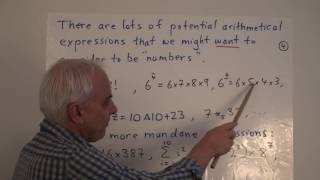
Arithmetical Expressions as Natural Numbers - Data Structures in Mathematics Math Foundations
Explores the complexities of representing large numbers through arithmetical expressions, discussing limitations, logical issues, and the challenges of creating a coherent system for such representations.

The Hindu Arabic Number System Revisited - Data Structures in Mathematics Math Foundations
Explores three approaches to Hindu Arabic numerals, examining their mathematical foundations and practical applications in arithmetic and number representation.
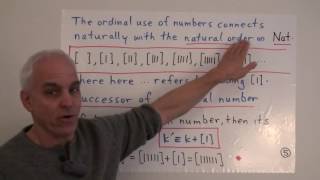
Naming and Ordering Numbers for Students - Data Structures in Mathematics Math Foundations
Explores naming, ordering, and using natural numbers, focusing on their fundamental nature as expressions of marks. Discusses counting, cardinal vs ordinal usage, and the successor operation.
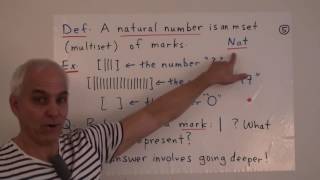
The Essential Dichotomy Underlying Mathematics - Data Structures Math Foundations
Explore the fundamental dichotomy underlying mathematics, challenging traditional views on natural numbers and geometry to uncover the core essence of mathematical thinking.