Circles and Spheres via Dot Products II - Wild Linear Algebra A
Explore 3D Euclidean dot products, quadrance, linear functionals, and spheres. Learn about projections, Pythagoras' theorem, and perpendicularity in three-dimensional space.
Dot Products, Pythagoras' Theorem, and Generalizations - Wild Linear Algebra A - NJ Wildberger
Algebraic approach to metrical geometry using dot products and quadrance. Introduces symmetric bilinear forms for understanding relativistic geometry, with applications to linear algebra and physics.
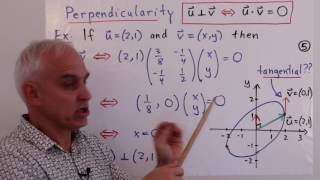
Geometry With a General Dot Product - WildTrig: Intro to Rational Trigonometry - N J Wildberger
Exploring advanced geometry using rational trigonometry and general dot products. Extends metrical geometry beyond chromogeometry, introducing new concepts of quadrance, perpendicularity, and spread.
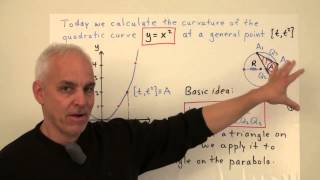
The Curvature of a Parabola, Without Calculus - Rational Geometry Math Foundations
Algebraic approach to calculate parabola curvature without calculus, using circle circumquadrance and triangle properties. Demonstrates wider applicability to various algebraic curves.
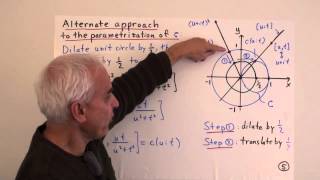
Relativistic Velocity, Core Circles, and Paul Miller's Protractor - Rational Geometry
Explores core circles in rational geometry, connecting projective and Euclidean geometry. Covers parametrization, quadrances, and theorems, bridging abstract concepts with practical applications.
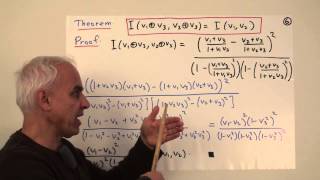
Relativistic Velocity, Core Circles and Paul Miller's Protractor - Rational Geometry
Explore core circles in rational geometry, connecting projective and Euclidean concepts. Learn about relativistic velocity addition and its implications for Einstein's special theory of relativity.
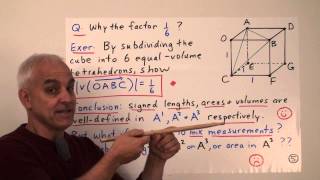
Higher Dimensions and the Roles of Length, Area, and Volume - Rational Geometry Math Foundations
Explore higher dimensions and the fundamental role of squared measurements in geometry. Discover how quadrance, quadrea, and quadrume offer more general and invariant alternatives to traditional length, area, and volume.
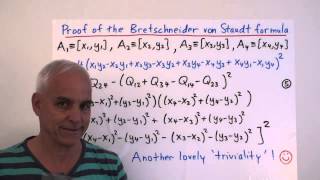
The Bretschneider Von Staudt Formula for a Quadrilateral - Rational Geometry Math Foundations
Explore the Bretschneider von Staudt formula for quadrilateral area, its history, and rational geometric formulations. Learn about generalizations of Archimedes' theorem and the importance of rational expressions in geometry.
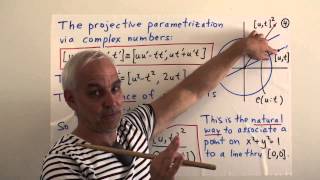
The Projective Line, Circles and a Proof of the CQQ Theorem - Rational Geometry Math Foundations
Explore projective parametrization of the unit circle, derive formulas for areas of triangles and quadrilaterals, and delve into circle geometry with applications to other conics.
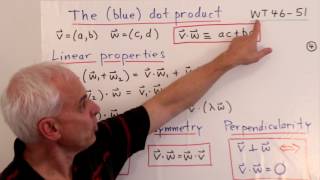
Spreads, Determinants and Chromogeometry - WildTrig: Intro to Rational Trigonometry
Explore spreads, dot products, and chromogeometry in linear algebra. Learn about vector operations, quadrance, perpendicularity, and the fascinating trilogy of blue, red, and green dot products.

Rational Trigonometry, Generalized Triangle Geometry and Four-Fold Incenter Symmetry
Explores rational trigonometry and generalized triangle geometry, introducing quadrances, spreads, and chromogeometry. Discusses Euler lines, incenters, and various triangle centers, culminating in a novel result on colored incenters.
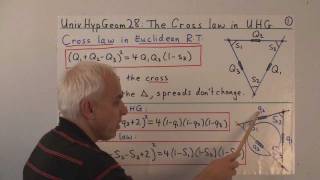
The Cross Law in Universal Hyperbolic Geometry - Universal Hyperbolic Geometry - NJ Wildberger
Explores the Cross law in Universal Hyperbolic Geometry, proving it with a polynomial identity and demonstrating its application to equilateral triangles. Includes exercises and comparisons to Euclidean geometry.
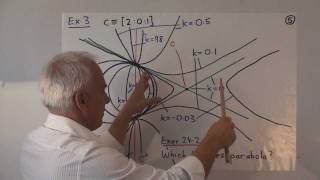
Visualizing Quadrance with Circles - Universal Hyperbolic Geometry - NJ Wildberger
Explore quadrance in universal hyperbolic geometry through circles, examining their appearance as ellipses, parabolas, or hyperbolas with different centers, enhancing understanding of this fundamental concept.
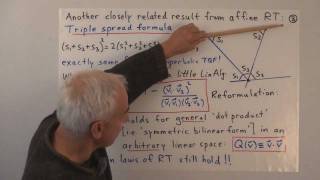
The Triple Quad Formula in Universal Hyperbolic Geometry
Explores the Triple quad formula in hyperbolic geometry, its proof, and related concepts. Compares with Euclidean geometry and discusses algebraic challenges, providing exercises for deeper understanding.
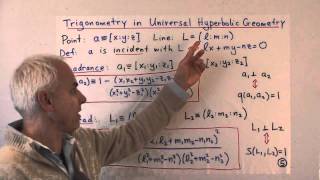
Quadrance and Spread - Universal Hyperbolic Geometry
Introduces algebraic definitions of quadrance and spread in Universal Hyperbolic Geometry, comparing with Rational Trigonometry and exploring main laws and exercises in this advanced mathematical framework.
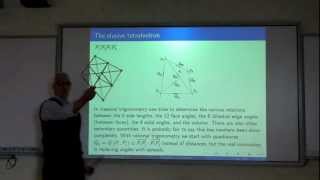
Three Dimensional Geometry, ZOME, and the Elusive Tetrahedron
Explore three-dimensional geometry using rational trigonometry and ZOME construction, focusing on tetrahedron trigonometry and new algebraic relations for a deeper understanding of spatial structures.
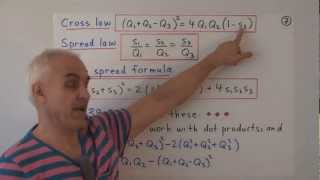
Rational Trigonometry - An Overview - Universal Hyperbolic Geometry
Introduces rational trigonometry using vectors, replacing distance and angle with quadrance and spread. Covers key concepts, formulas, and laws, offering a purely algebraic approach to trigonometry and geometry.
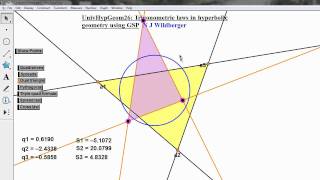
Trigonometric Laws in Hyperbolic Geometry Using Geometer's Sketchpad - Universal Hyperbolic Geometry 26
Explore trigonometric laws in hyperbolic geometry using Geometer's Sketchpad. Learn about Pythagoras' theorem, Triple quad formula, Spread law, and Cross law with practical examples and custom tools.
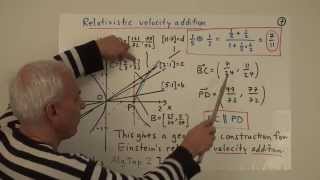
Relativistic Velocity and Core Circles in Rational Geometry - Lecture 4
Exploring relativistic velocity and core circles in rational geometry, extending Paul Miller's protractor concept to projective quadrance and comparing Euclidean and relativistic geometries.
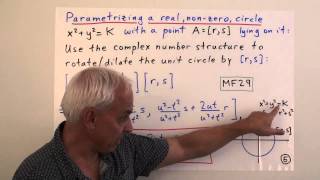
The Projective Line, Circles and the CQQ Theorem - Part 2
Explores advanced geometry concepts including general circles, complex numbers, and the Cyclic Quadrilateral Quadrea theorem, emphasizing projective parametrization and transformations in the complex plane.
Robbins' Formulas, Bellows Conjecture, and Polyhedra Volumes - Rational Geometry Math Foundations 128
Explore modern developments in polygon area formulas, cyclic pentagon theories, and 3D generalizations of Heron's formula. Discover connections between quadrances, polyhedra volumes, and algebraic geometry.